


A traveler in Mumbai’s bustling textile markets steps into a shop, dazzled by fabrics that claim to be natural linen but feel a bit off. The price is tempting, the display neat, but something in the way the material drapes and catches the light makes you pause. This moment, repeated in markets from Delhi to Dubai, reflects a larger truth: synthetic linen-look fabrics are flooding Indian menswear, offering affordability at the cost of authenticity. Understanding how to separate real from fake isn’t just about avoiding a poor purchase—it’s about dressing well, feeling confident, and respecting the craft of traditional textiles.
Real vs Fake Linen: What the Eyes and Fingers Reveal
Natural linen has a distinctive character. Genuine linen is woven from flax fibers, giving it a slightly rough texture and a uneven, slubby appearance. The weave is typically more open, allowing the fabric to breathe. Fake linen, often a polyester blend, feels smoother and more uniform. It may mimic the drape of linen but lacks the natural grain and slight stiffness that real linen possesses. When you run your fingers across the surface, real linen has a subtle texture, while synthetic versions feel almost plastic-like.
Recommended for You

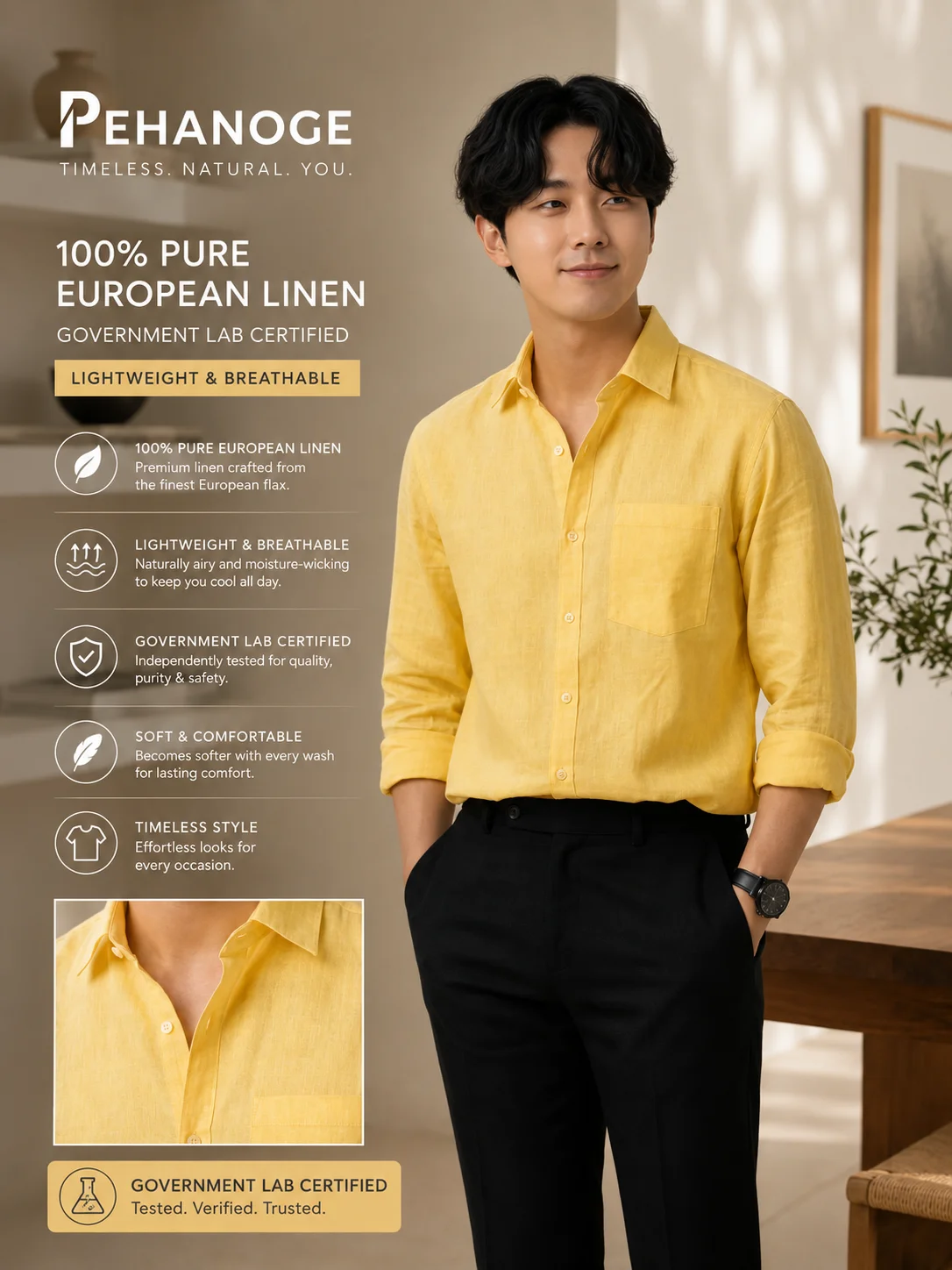
Oxy-Linen™ | Lemon Yellow – 60 Lea European Linen Shirt
Original price was: ₹4999.00.₹3399.00Current price is: ₹3399.00.-
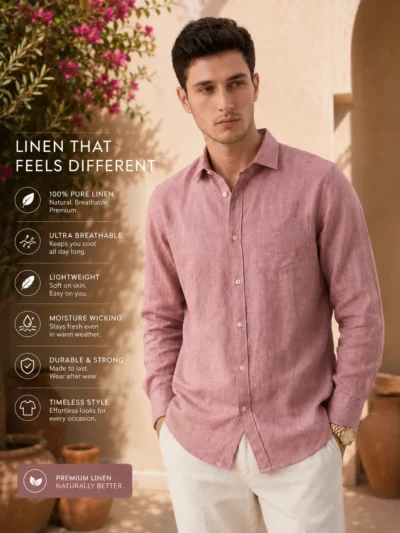
Oxy-Linen™ | Dusty Rose – 60 Lea European Linen Shirt
Original price was: ₹4999.00.₹3399.00Current price is: ₹3399.00. -
RUGGED-NAP | RUST CHECKED SHIRT
Original price was: ₹1499.00.₹1299.00Current price is: ₹1299.00.

Identifying Polyester Blends: The 3-Step Visual Test
Before touching or burning anything, inspect the fabric closely. Here’s what to look for:
- Reflection Test: Hold the fabric under a light. Polyester will reflect light uniformly, while linen scatters it unevenly.
- Edge Examination: Look at the raw edges of the fabric. Natural linen frays slightly and unevenly, whereas polyester edges tend to melt or curl when exposed to heat.
- Label Check: Many synthetic linens are labeled as “linen-like” or “linen blend.” If the tag doesn’t specify 100% linen, be cautious.
Fabric Burn Test Demystified: How to Safely Spot the Synthetic
The burn test is a reliable way to identify synthetic fibers. Take a small snip from an inconspicuous seam area and hold it with tweezers over a sink or bowl. Light the corner with a match or lighter:
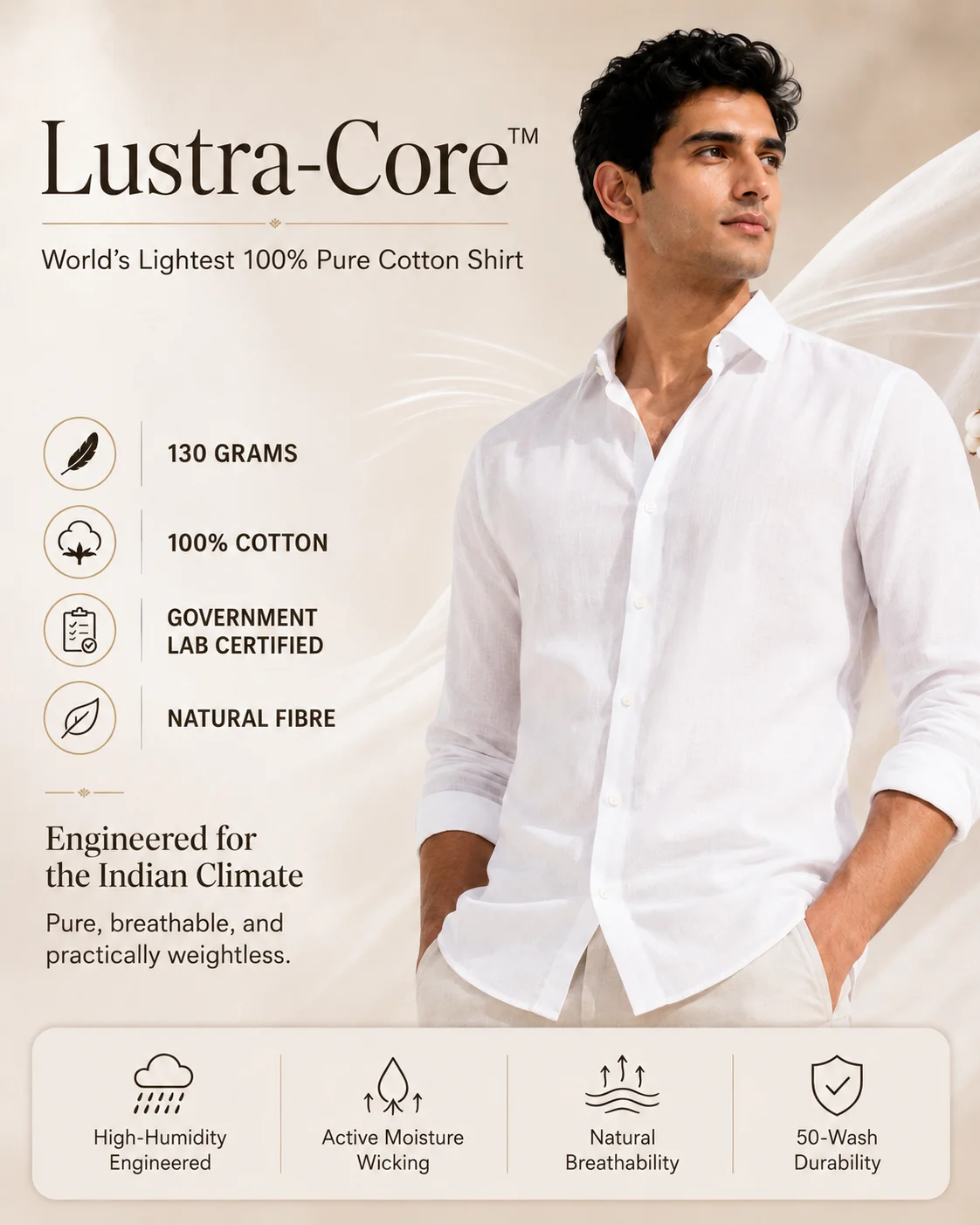
Lustra-Core™ Absolute White
Ultra-light pure cotton shirt engineered for Indian summers.
- Natural linen burns slowly, smells like burning paper, and leaves behind ash.
- Polyester melts, drips, and smells like plastic. It may also produce black smoke.
Always perform this test in a safe environment, away from flammable materials, and ensure the fabric is completely extinguished afterward.
Linen Texture Guide: Feel, Feel, and Feel Again
Touch is one of the most accurate tools for identifying linen. Genuine linen has a crisp, slightly rough feel that softens with wear. It also has a natural stretch and recovery—when pressed, it springs back slowly. Synthetic linen-look fabrics often feel softer initially but lack this memory. They may also cling or stick to the skin in humidity, unlike natural linen which remains comfortable even in India’s heat. When trying on a kurta or shirt—whether from a brand like Pehanoge or a local maker—notice how it moves with your body. Real linen breathes; fakes often trap heat.
When to Trust a Label: Common Misleading Claims in Men’s Fashion
Labels can be misleading. Terms like “linen blend” or “linen-style” often mean the fabric is mostly polyester with a small percentage of linen. In India, where price sensitivity is high, many manufacturers use these vague terms to justify lower costs. Look for specific fiber content: 100% linen should be clearly stated. Regional brands sometimes use local terminology that doesn’t align with international standards, so research the brand or ask for certifications if possible.
Styling Section: How Fabric Choice Affects Your Look
The choice between real and synthetic linen impacts both comfort and appearance. A lightweight polyester-blend kurta, common in casual wear, offers wrinkle resistance and is ideal for long days at the office. Pair it with minimal accessories—a simple watch and leather belt—to keep the look clean. For a weekend seaside outfit, a genuine linen shirt’s breezy feel and natural rumple add effortless style. The key is knowing your priorities: convenience or authenticity.
Buying Guide Angle: Checklist for Authentic Linen
Before purchasing, follow this checklist:
- Inspect weave and natural grain for irregularities that suggest natural fibers.
- Verify weight and drape; linen should fall naturally without stiffness.
- Perform the burn test at home for a definitive answer.
- Research reputable brands known for honest labeling.
- Consider the return policy for questionable purchases.
Indian Context Angle: Regional Trends and Market Insights
India’s textile hubs tell a story of their own. In Delhi’s Textile Town, you’ll find a mix of imported linen and local polyester blends, often priced competitively. Surat’s shawl markets favor lightweight linen for summer collections, though polyester blends dominate due to cost. Jaipur’s traditional weavers sometimes incorporate linen into kurta designs, but mass-produced versions are often synthetic. Price points in these cities heavily influence the prevalence of fakes—lower-cost items are more likely to be blends. When shopping in these markets, ask vendors directly about fiber content and request to see the original invoice or brand tags.
FAQs
What are the telltale signs that a linen-look fabric is actually polyester?
Look for a uniform texture, excessive sheen, and a lack of natural grain. Polyester also tends to cling and may develop a static charge.
Can I safely conduct a fabric burn test on a garment I bought online?
Yes, but use a small snip from an inconspicuous area, like an inside seam. Always do this over a sink and keep water nearby to extinguish flames.
How does the weave of genuine linen differ from synthetic blends?
Genuine linen has a more open, uneven weave with visible slubs. Synthetic blends are usually tighter and more uniform, lacking the organic irregularity of natural fibers.