


Unraveling the Science: How Bio-Engineered Flax Outperforms Traditional Linen
Bio-engineered flax represents a leap in textile innovation, leveraging genetic modification and controlled cultivation to enhance fiber quality. Unlike traditional linen, which relies on manual retting and weather-dependent harvesting, lab-grown flax fibers are produced in vertically integrated facilities. This process shortens production time by 30-40%, reduces water usage by up to 60%, and eliminates pesticide dependency. The resulting fibers exhibit superior tensile strength, resisting pilling and fading better than conventional counterparts.
Moreover, the bio-engineered process allows for precise fiber thickness control. Manufacturers can tailor the weave density for specific garments—lightweight shirts for summer wear or structured jackets for winter. This precision also means fewer fabric waste during production, a critical factor in sustainable manufacturing.
Recommended for You
-

RUGGED-NAP | Gray CHECKED SHIRT
Original price was: ₹1,499.₹1,299Current price is: ₹1,299. -

Oxy-Linen™ | Natural Beige – 60 Lea European Linen Shirt
Original price was: ₹4,999.₹3,399Current price is: ₹3,399. -

Noble Stitch | The Classic Cycle Giza Cotton Shirt
Original price was: ₹1,999.₹1,599Current price is: ₹1,599.
Sustainable Textile Tech: The Environmental Impact of Next-Gen Flax Production
Traditional linen production, while eco-friendlier than cotton, still faces challenges like soil degradation and water scarcity. Bio-engineered flax, however, addresses these issues head-on. By optimizing root systems through genetic tweaks, the crop enriches soil health instead of depleting it. Studies from the Central Institute of Cotton Research in Mumbai suggest that bio-flax cultivation could reduce agricultural runoff by 45% compared to conventional methods.
India’s push for sustainable textiles aligns with this innovation. In Gujarat’s Surat textile cluster, new bio-fabrication units are emerging, supported by state subsidies for eco-friendly production. Similarly, Tamil Nadu’s Tiruppur export zone has introduced certifications for bio-based fabrics, encouraging local artisans to adopt greener practices. These initiatives not only reduce the carbon footprint of Indian textile exports but also position the country as a global leader in sustainable fashion.
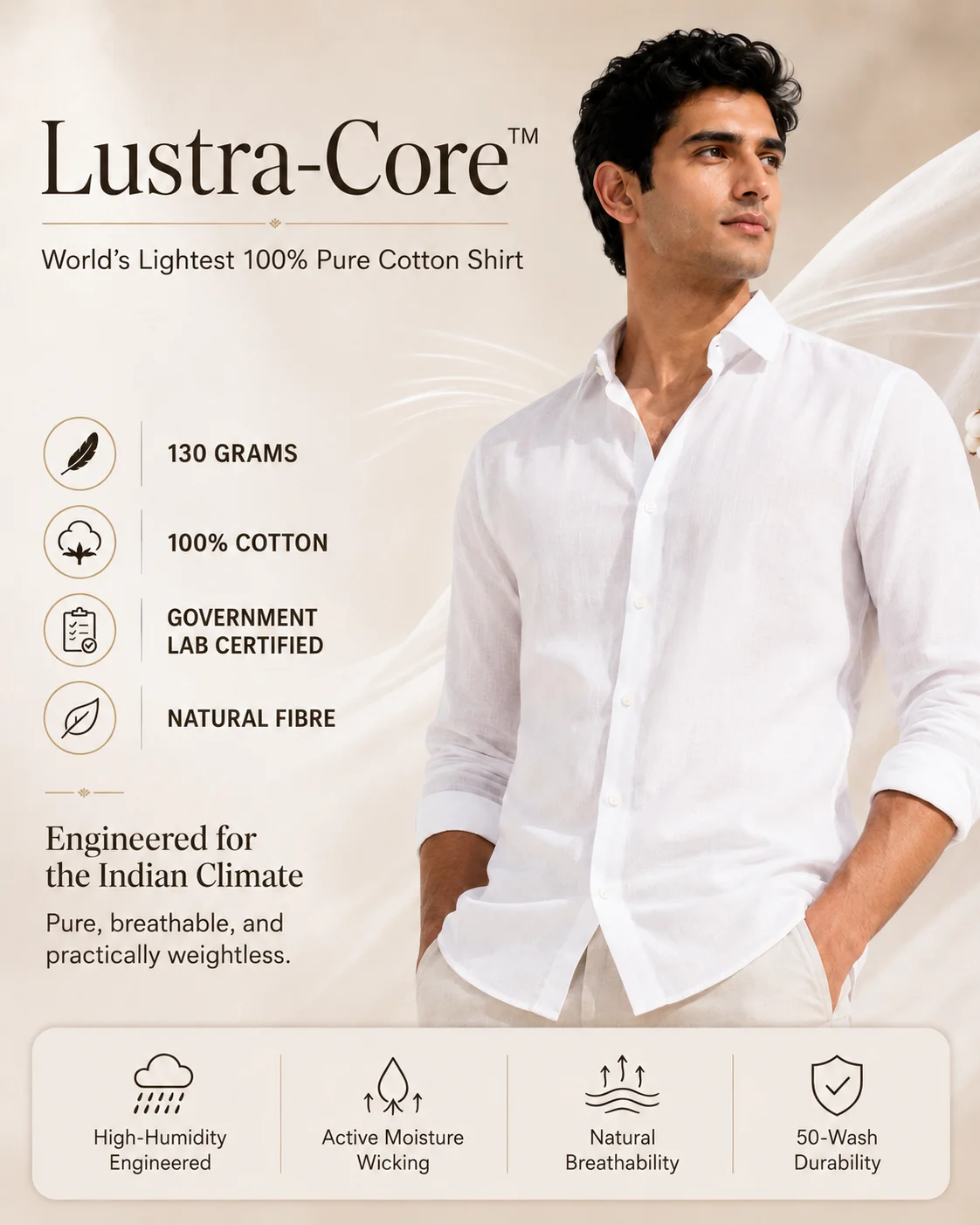
Lustra-Core™ Absolute White
Ultra-light pure cotton shirt engineered for Indian summers.
Innovation in Linen: From Lab to Closet – The Bio-Fabrication Journey
The journey of bio-engineered flax begins in bioreactors, where microbial cultures pre-process raw fibers to enhance uniformity. This is followed by a streamlined mechanical separation stage, replacing labor-intensive retting. Companies like Pehanoge, a Bangalore-based menswear brand, have embraced this technology to create shirts and casual wear that blend durability with breathability. Their signature “EcoWeave” collection uses bio-flax blended with recycled polyester, achieving a 70% reduction in water use compared to conventional linen.
The final step involves precision weaving and finishing. Unlike traditional linen, which often requires chemical treatments for softness, bio-flax fibers naturally possess a silky texture. This eliminates harsh chemicals, making the garments safer for both workers and consumers.
Men’s Fashion Evolution: Styling Bio-Engineered Flax for Modern Wardrobes
Bio-engineered flax’s versatility makes it ideal for modern menswear. Its lightweight nature suits India’s tropical climate, while its structured weave holds shape—perfect for both casual and semi-formal looks. Pehanoge’s relaxed-fit bio-flax shirts, for instance, pair effortlessly with chinos or tailored trousers, offering a polished yet relaxed aesthetic.
The fabric’s natural breathability is a game-changer for Indian summers. Unlike cotton, which can cling when damp, bio-flax’s moisture-wicking properties keep the wearer cool. Designers are also experimenting with bold textures—herringbone weaves and subtle tonal patterns—that add visual interest without compromising sustainability.
Future Outlook: When Will Bio-Linen Dominate Global Fashion Markets?
While adoption is still nascent, the trajectory is promising. Industry reports project a 15% annual growth in bio-fabricated textiles, driven by consumer demand for transparency and eco-conscious brands. India’s textile sector, contributing over $150 billion to GDP, is poised to capitalize on this trend. Collaborations between startups like Pehanoge and government-backed research institutes could accelerate scaling production.
Challenges remain, such as high initial investment costs and the need for standardized certifications. However, as more brands prioritize sustainability, bio-linen’s dominance seems inevitable within the next decade.
FAQs
How does bio-engineered flax differ from conventional linen in terms of texture and durability?
Bio-engineered flax fibers are more uniform in thickness and possess enhanced tensile strength. The result is a smoother texture with reduced roughness compared to traditional linen, alongside greater resistance to wear and tear.
What are the key environmental benefits of bio-fabricated linen compared to traditional cotton?
Bio-linen requires 60% less water, eliminates pesticide use, and enriches soil health. In contrast, conventional cotton is water-intensive and often reliant on harmful chemicals.
Are there affordable bio-linen clothing options available in India for budget-conscious men?
Brands like Pehanoge offer entry-level bio-flax shirts starting at ₹1,500, making sustainable fashion accessible. Additionally, local artisans in Tamil Nadu’s textile hubs are experimenting with cost-effective bio-fabrication methods.
What care instructions ensure longevity of bio-engineered linen garments?
Wash in cold water to preserve fiber integrity. Air-dry to prevent shrinkage and avoid high heat, which can weaken the weave. Iron on low settings if needed, as bio-flax naturally resists wrinkling.
The rise of bio-engineered flax signals a pivotal shift in menswear, blending innovation with responsibility. As Indian brands like Pehanoge lead the charge, the fusion of technology and tradition is redefining what it means to dress sustainably—without sacrificing style or comfort.