



Van life has become a movement among Indians seeking freedom and minimalism. Living on the road demands clothing that breathes, lasts, and is easy to care for. Linen, a natural fiber from flax, fits the bill perfectly. It’s breathable for hot climates, durable for the long haul, and low‑maintenance when water is scarce. In this guide, we’ll explore why linen is the ultimate fabric for van dwellers, how to style it for a minimalist aesthetic, and what to look for when buying linen travel wear—tailored to the Indian context.
Linen’s Breathability: The Perfect Match for Nomadic Lifestyle Gear
Linen’s loose weave and hollow fibers allow air to circulate freely, wicking moisture away. This keeps you cool and dry in humid or hot conditions, reducing sweat and odor. For van dwellers, that means fewer washes—a big plus when water is limited. In India’s tropical climate, linen’s cooling effect is especially valuable. Its ability to adapt to varying temperatures also makes it a versatile staple for any minimalist wardrobe.
Recommended for You
-

Giza-Silk | Absolute Black Long-Staple Giza Cotton Shirt
Original price was: ₹1,499.₹1,199Current price is: ₹1,199. -

Noble Stitch | Golden Quill Giza Cotton Shirt
Original price was: ₹1,999.₹1,599Current price is: ₹1,599. -

Giza-Silk | Lemon Yellow Long-Staple Giza Cotton Shirt
Original price was: ₹1,499.₹1,199Current price is: ₹1,199.
Durable Travel Wear: How Linen Outperforms Cotton in Van Life
Linen is about 30% stronger than cotton, resisting abrasion and thinning even after many washes. It actually softens with use without losing integrity. Cotton, by contrast, can develop holes over time. For van life, linen’s longevity means fewer replacements, saving money and reducing waste. Its natural resistance to moths and fading further extends its life. Indian travelers benefit from this durability, as it aligns with both budget and sustainability goals.
Easy‑Wash Care: Maintaining Linen Small Wardrobe Essentials on the Road
Linen is machine‑friendly and quick‑drying—ideal for remote campsites. A cold‑water wash with mild detergent keeps it fresh. Its natural dirt and odor resistance let you wear it multiple times between washes, conserving water. Air‑drying takes just a few hours. Wrinkles are part of linen’s charm; embrace them or use a travel steamer. For Indian nomads, where water can be scarce, linen’s easy‑care nature is a practical advantage.
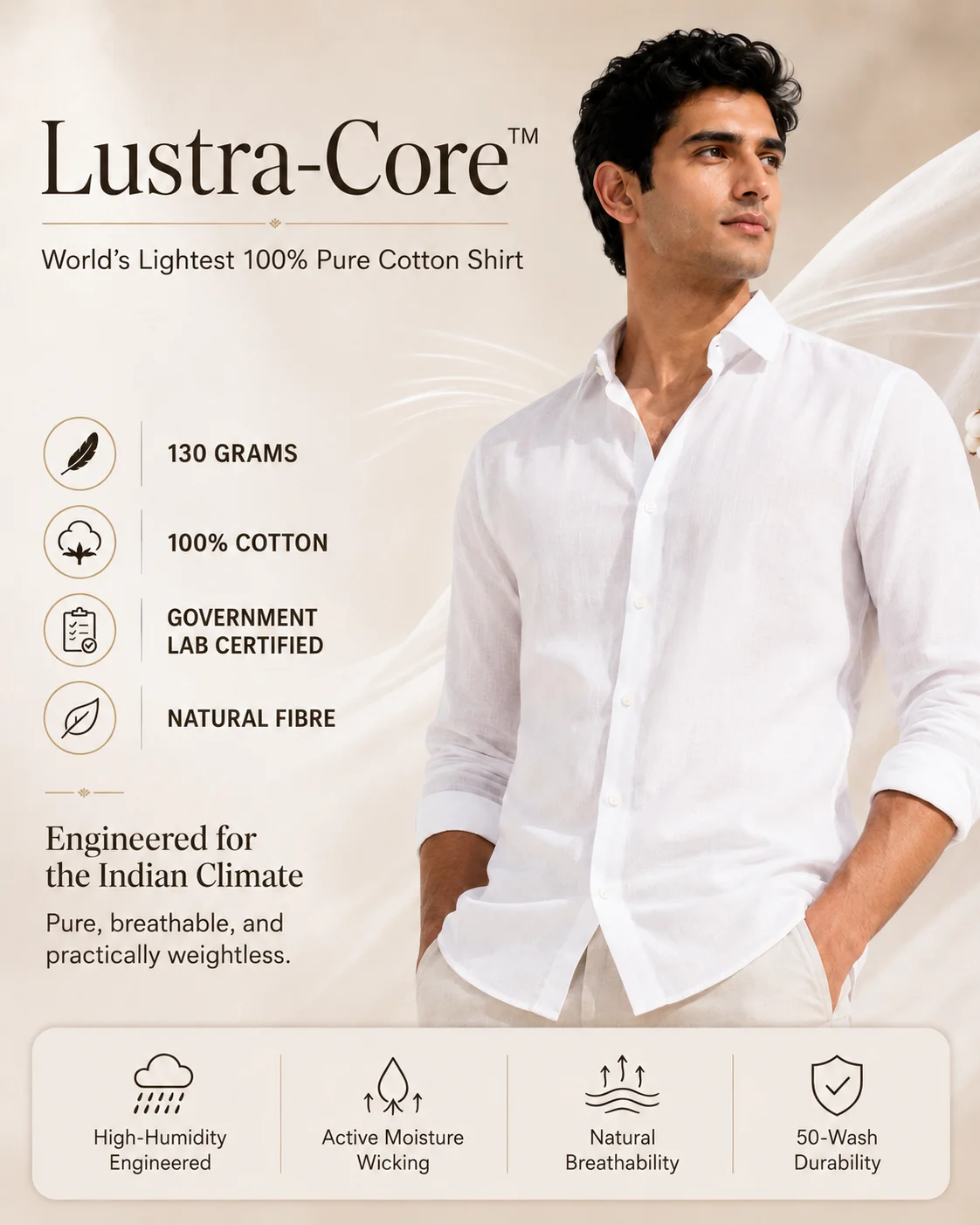
Lustra-Core™ Absolute White
Ultra-light pure cotton shirt engineered for Indian summers.
Styling Linen for a Minimalist Van Aesthetic
Build a versatile wardrobe with a few linen pieces: a classic shirt (like Pehanoge’s casual line), lightweight trousers, and a jacket. Stick to neutrals—beige, white, grey—for easy mixing. A linen shirt works solo on hot days, layered under a jacket when it cools, or as a cover‑up. Trousers offer comfort and mobility; a jacket adds warmth for chilly evenings. The fabric’s texture adds interest without bulk, keeping your pack light. Accessorize simply to elevate the look.
Buying Guide: Choosing the Right Linen Travel Wear
Consider these factors:
- Weight: Lightweight (150–180 GSM) for hot climates; medium (180–240 GSM) for versatility.
- Weave: Plain weave is crisp; twill drapes softer; herringbone adds texture.
- Certifications: Organic or Oeko‑Tex ensures eco‑friendly, safe production.
- Price vs. durability: Quality linen costs more upfront (shirts INR 1,500–4,000, trousers INR 2,000–5,000), but lasts longer, offering better value.
Brands like Pehanoge provide well‑crafted options that meet these criteria, with reinforced seams and quality buttons for lasting wear.
Why Indian Travelers Are Turning to Linen for Nomadic Lifestyle Gear
India’s varied climate makes linen ideal—from Himalayan chills to coastal heat, it adapts when layered. The country’s rich textile heritage means many artisans now weave linen, supporting local communities. The market has grown, offering stylish, affordable choices. For eco‑conscious van lifers, linen’s biodegradability aligns with low‑impact living. As more Indians embrace the nomadic lifestyle, linen stands out for its comfort, tradition, and practicality.
FAQs
Is linen really more durable than cotton for long‑term van travel?
Yes. Linen fibers are stronger, resisting wear and tear. With proper care, linen garments last years, making them ideal for long‑term travelers.
How often should I wash linen clothing while on the road?
Linen’s breathability and odor resistance let you wear it 3–4 times between washes. Air it out after each use to extend wear.
Can linen be layered for cooler evenings in a van?
Absolutely. Linen provides insulation when layered, so pair a shirt with a sweater or jacket for warmth without bulk.
What price range should I expect for high‑quality linen travel wear?
In India, quality linen shirts range from INR 1,500 to 4,000; trousers and jackets from INR 2,000 to 6,000. Investing in reputable brands ensures better fabric and construction, offering long‑term value.