


For many Indian men, the onset of summer brings a familiar dilemma: the desire to look polished and protected from the harsh sun versus the physical need to escape the stifling heat. We often default to short sleeves to stay cool, but this leaves our arms exposed to aggressive UV rays and the inevitable tan. The ultimate solution to staying cool and protected without sacrificing style lies in the linen long sleeve. Linen doesn’t just manage the heat; it redefines what full-sleeve comfort feels like in a tropical climate.
Why Linen Outperforms Cotton in Long Sleeve Summer Shirts
While cotton is a staple in every Indian wardrobe, linen operates on a different level when the mercury hits 40 degrees. The primary difference lies in the fiber’s structure. Linen is made from the flax plant, which possesses a natural rigidity and thickness that allows the fabric to sit away from the skin.
Recommended for You
-
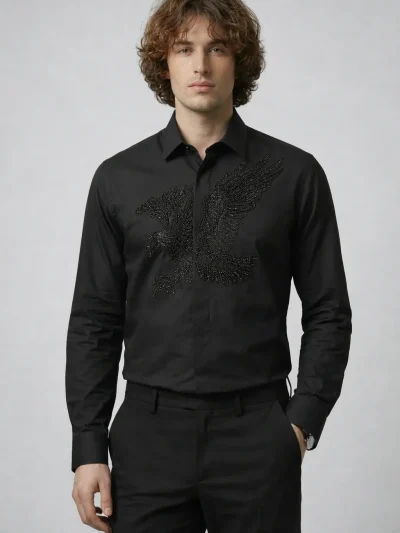
Noble Stitch | Midnight Eagle Giza Cotton Shirt
Original price was: ₹1,999.₹1,599Current price is: ₹1,599. -
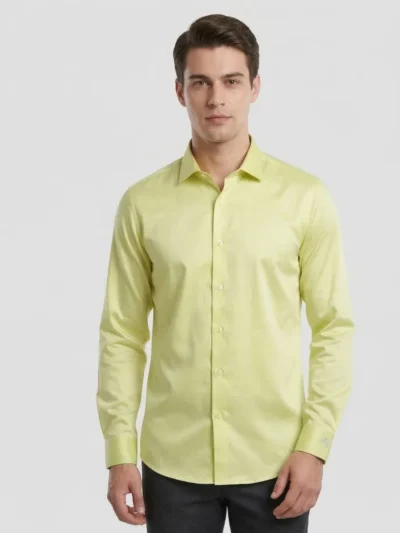
Giza-Silk | Lemon Yellow Long-Staple Giza Cotton Shirt
Original price was: ₹1,499.₹1,199Current price is: ₹1,199. -
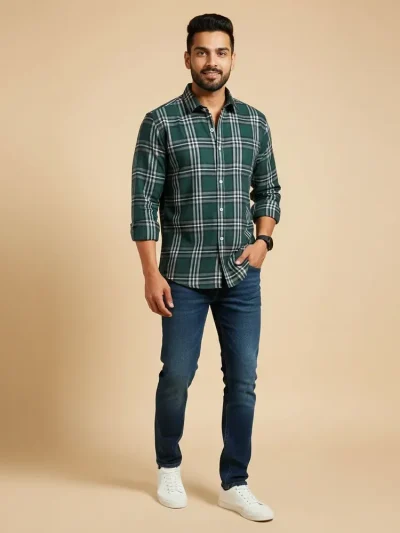
RUGGED-NAP | GREEN CHECKED SHIRT
Original price was: ₹1,499.₹1,299Current price is: ₹1,299.
Unlike cotton, which can cling to the body when damp with sweat, linen maintains a structural gap. This ensures that air circulates freely between the fabric and your skin. In the humid corridors of Mumbai or the dry heat of Delhi, this distinction is the difference between feeling suffocated and feeling refreshed. When you opt for Pehanoge shirts in linen, you are choosing a fabric that handles moisture far more efficiently than its cotton counterparts.
Sun Protection Without Heat: How Linen’s Weave Works
There is a common misconception that long sleeves are too hot for summer. However, a long-sleeve linen shirt acts as a lightweight shield. The loose, open weave of high-quality linen allows heat to escape while preventing direct sunlight from hitting the skin.
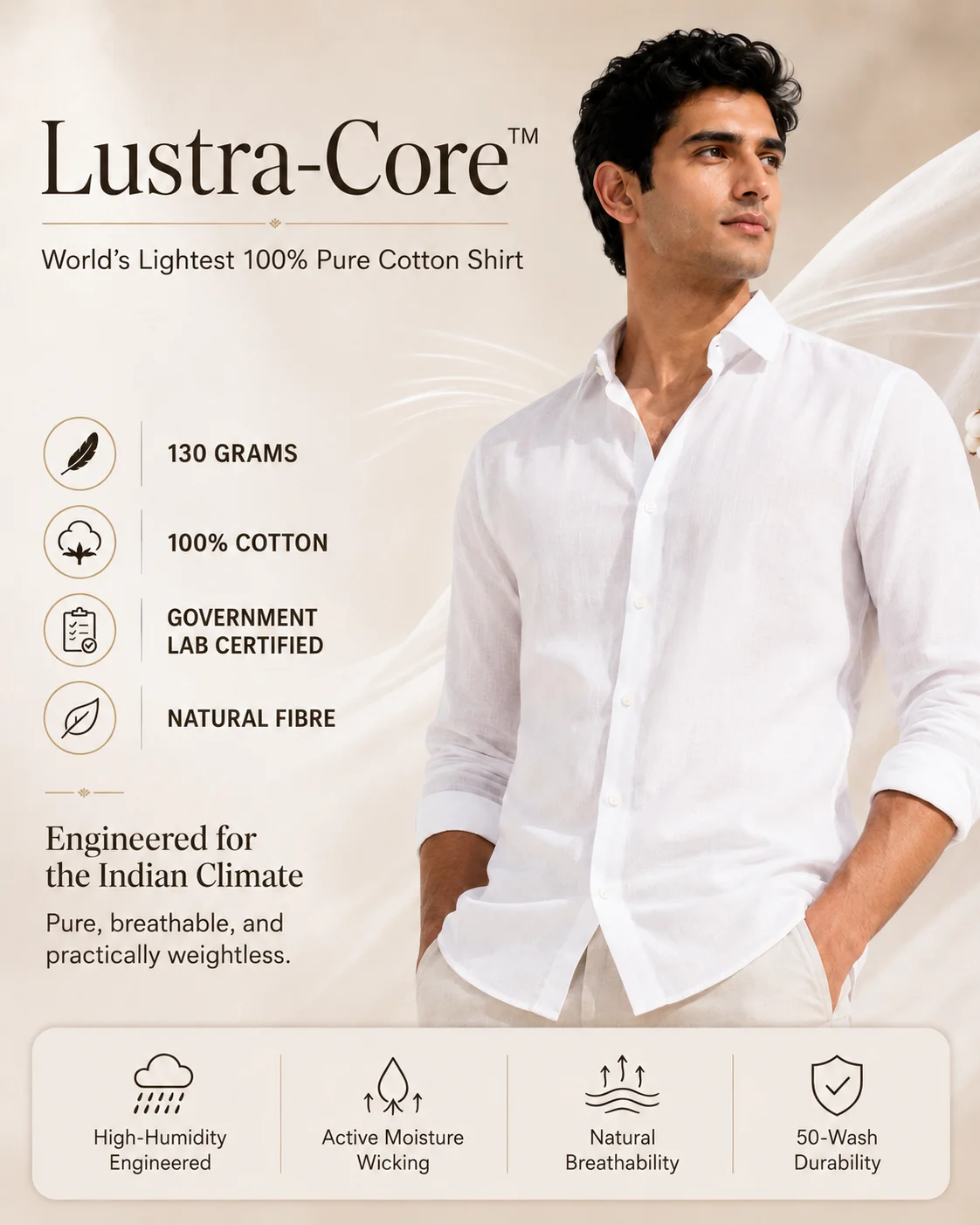
Lustra-Core™ Absolute White
Ultra-light pure cotton shirt engineered for Indian summers.
This creates a micro-climate around the arms, protecting you from sunburn and heat exhaustion. By wearing long sleeves, you actually reduce the amount of direct solar radiation absorbed by your skin, keeping your core temperature lower than if you were wearing a tight short-sleeved tee. It is the strategic choice for the modern Indian man who needs to move from a sunny street to an air-conditioned office without feeling the shock of temperature extremes.
Lightweight Sleeves That Don’t Compromise on Style
The beauty of linen lies in its effortless aesthetic. There is an inherent sophistication in the way a linen shirt drapes. Even when the sleeves are rolled up to the elbows—a classic summer move—the fabric retains a relaxed, airy silhouette that looks intentional rather than sloppy.
Whether it is a crisp white long sleeve or a muted pastel shade, linen manages to look “put together” while feeling completely unrestricted. It bridges the gap between formal wear and casual wear, allowing you to transition from a morning meeting to a sunset dinner without needing a wardrobe change.
The Science Behind Linen’s Natural Breathability
The breathability of linen is rooted in its high conductivity. Linen fibers conduct heat away from the body much faster than synthetic blends. Furthermore, linen is highly hydrophilic, meaning it can absorb a significant amount of moisture before it even feels damp to the touch.
This moisture-wicking property is critical in India’s humidity. It allows sweat to evaporate quickly, cooling the body through a natural process of transpiration. This is why linen is not just a fashion choice but a climate-smart investment. It works with your body’s natural cooling mechanism rather than trapping heat against your skin.
Styling Your Linen Long Sleeve Summer Shirts for Any Occasion
The versatility of linen is unmatched. For those heading to a beach wedding or a summer brunch, a light-colored linen shirt paired with beige chinos or linen shorts offers a breezy, sophisticated look. For the boardroom, a tucked-in linen shirt with lightweight trousers provides a professional edge that doesn’t result in sweat patches.
In the Indian context, linen’s versatility extends to cultural wear. Linen’s moisture-wicking properties make it an ideal choice for pairing with traditional dhotis or modern kurta sets. A linen long sleeve can be worn as a contemporary layer or a standalone piece that feels rooted in tradition yet tailored for the modern world. Whether you are exploring Pehanoge shirts for a casual outing or looking for something more structured for a formal event, the key is to lean into the fabric’s natural texture.
When purchasing premium linen, look for specific quality markers. Seek out unlined collars for better ventilation and an open weave that allows for maximum airflow. Additionally, certifications like Oeko-Tex are important, as they ensure the production process is eco-friendly and free from harmful chemicals, making the fabric gentler on the skin during the sweating season.
FAQs
Do linen shirts wrinkle easily, and how can I minimize this?
Yes, linen is prone to wrinkling due to its lack of elasticity. However, these “character creases” are part of the fabric’s charm and signify authentic linen. To minimize deep creases, avoid folding the shirts for long periods and use a steam iron. Hanging them immediately after washing also helps the fabric settle naturally.
Are long sleeve linen shirts suitable for both office and beach settings?
Absolutely. The versatility is the main draw. For the office, keep the sleeves buttoned and pair with formal trousers. For the beach or a casual outing, roll up the sleeves and pair with shorts or light linens. The fabric’s ability to look both crisp and relaxed makes it perfect for any setting.
How does the fabric’s breathability help with sun protection?
Linen provides a physical barrier against UV rays while its open weave allows heat to escape. This means you get the protection of a long sleeve without the heat trap associated with heavier fabrics, effectively keeping you cooler than if you were exposed to the sun in short sleeves.
What’s the best way to care for and maintain linen’s texture?
Avoid over-washing, as frequent agitation can break down the fibers. Wash in cold water on a gentle cycle and air dry in the shade to prevent the sun from fading the colors. Avoid using harsh bleaches; instead, rely on mild detergents to maintain the natural strength and texture of the flax fibers.