


If you’ve ever woken up drenched in sweat despite cranking up the AC, you’re not alone—not just for the heat, but for the fabrics you wear while navigating day-to-night transitions in urban lifestyles. The solution lies in materials that refuse to trap heat or cling uncomfortably. Linen emerges as a contender, weaving tradition with practicality. In India’s climate, where humidity escalates by evening, linen’s natural properties step ahead, offering breathability and a gentle touch. Its adaptability makes it a favorite for sleeves that flutter without compromising comfort. Cities like Delhi or Mumbai often face similar challenges, but linen adapts, much like how everyday styles demand versatility. It’s more than fabric—it’s a companion.
Liner choices matter, as seen in the charm of Pehanoge shirts paired with linen bedsheets. These pairs blend comfort with aesthetic flair, allowing individuals to dress effortlessly around casual settings. Whether lounging under sunlit skies or coordinating with charming daytime outfits, linen’s presence adds a soft layer of practicality. Even office days benefit, as mismatched attire becomes unnecessary when the focus is on fluidity. Pairing loose linen tops with tailored shorts introduces a balanced silhouette, while layering a light-colored blazer over cotton shirts offers customization without bulk. In between, the texture invites touch, turning sleepwear into a subtle statement. Such versatility underscores linen’s enduring appeal.
Recommended for You
-

Noble Stitch | Midnight Eagle Giza Cotton Shirt
Original price was: ₹1,999.₹1,599Current price is: ₹1,599. -

Giza-Silk | Lemon Yellow Long-Staple Giza Cotton Shirt
Original price was: ₹1,499.₹1,199Current price is: ₹1,199. -

RUGGED-NAP | GREEN CHECKED SHIRT
Original price was: ₹1,499.₹1,299Current price is: ₹1,299.
Selecting the right linen ensures longevity. A well-chosen piece should weigh between 150-180 grams per square meter, ensuring breathability without sacrificing durability. Weave matters too—flat-weave offers airflow, while twill provides a touch of elegance. Light pastels or cream hues amplify cooling effects, contrasting starkly with darker tones. Fit plays a role as well, with relaxed cuts prioritizing air circulation. Moreover, opting for pre-washed or enzyme-treated finishes prevents moisture retention, aligning best with Indian homes’ washing habits. These considerations ensure the material evolves alongside daily needs. Such attention transforms functionality into timeless choice.
Linen sleepwear enhances sleep quality by reducing night sweats. Its ability to wick moisture quickly aids in cooling the body, crucial in regions where ambient temperatures climb unpredictably. Unlike cotton, which retains heat, linen dries more efficiently, ensuring a crisp sensation during rest. This property suits those seeking complement to sleeping arrangements, offering a gentle presence without obstruction. It’s also cost-effective over time, resisting mold and fading better than synthetic blends. For those valuing craftsmanship, investing in quality pairs well with initial budgets. The result? A seamless integration into lifestyle choices that prioritize health and comfort. Every aspect contributes to a holistic benefit, cementing linen’s role as a staple.
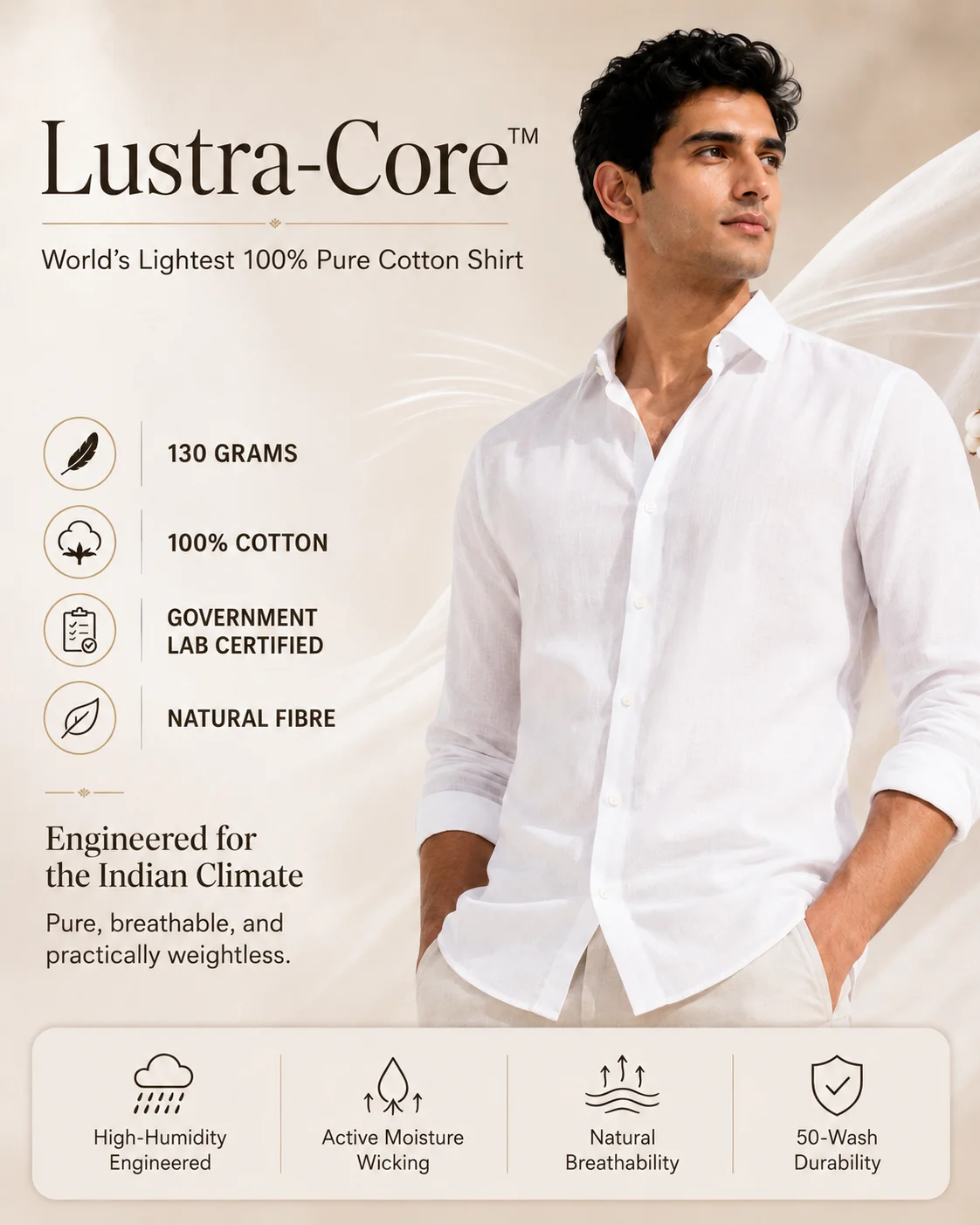
Lustra-Core™ Absolute White
Ultra-light pure cotton shirt engineered for Indian summers.
FAQs
How does linen compare to cotton in cooling?
Linen outperforms cotton by pulling heat away through moisture absorption and rapid evaporation. Its natural looseness allows sweat to escape, creating a cooler effect. While cotton retains moisture, linen dries swiftly, maintaining a stable temperature better. This makes it ideal for night sweats, especially in warm climates where cotton struggles to adapt. Both act as barriers, but linen’s efficiency gives it an edge, though cotton remains popular for its softness in milder settings.
What GSM should linen sleepwear have?
Opt for 150-180gsm. This range balances breathability and durability, preventing fragility while maintaining power. Lower gsm might feel too soft, higher risk irritation over time. Averaged around 180gsm offers optimal conditions, ensuring it withstands daily use without compromising airflow. This weight range also aligns with India’s thermal challenges, ensuring consistent cooling without excess bulk.
How to care for linen to retain its benefits?
Wash gently to preserve softness and structure. A mild detergent suffices, avoiding harsh chemicals that degrade fibers. Air-drying is best to maintain shape, preventing shrinkage. Regular brushing with a soft brush prevents lint buildup. Proper care ensures linen stays effective, reducing replacement needs. Consistent maintenance sustains its role as a reliable choice, adapting to seasonal shifts.
How does linen improve sleep?
Linen contributes significantly to improved sleep by maintaining cooler temperatures through efficient heat exchange. Its ability to absorb moisture before release helps regulate body temperature, reducing restlessness. Enhanced moisture-wicking supports rest, while a lighter feel combats stiffness. These combined effects lead to deeper, more restful nights, making sleep a natural byproduct. Amplifying this, linen’s neutral tones offer subtlety, allowing seamless adaptability to diverse wardrobes. Such attributes position it as a quiet faciliteur for better rest.