


Understanding the unique needsof hot sleepers in a climate where comfort meets performance requires innovative solutions. Linen’s superiority lies in its natural properties making it ideal for cooling sleepwear. In a country like India, where summers can be relentless and humidity often amplifies discomfort, finding fabrics that keep you cool overnight is not just a luxury—it’s a necessity. While traditional options like cotton have long dominated, they come with drawbacks in extreme heat, such as poor moisture management and slow drying. Linen, on the other hand, offers a dynamic solution that aligns with the demands of hot sleepers, especially when considering the fast-paced, varied lifestyles many Indian men navigate daily.
Linen vs. Cotton for Temperature Control
The debate between linen and cotton for sleepwear isn’t just about material preference; it’s about performance in specific conditions. Cotton, a fabric deeply rooted in Indian tradition, is praised for its softness. However, in hot and humid climates, it tends to retain moisture for longer periods, which can lead to clamminess and disrupted sleep. Linen, conversely, excels in moisture-wicking due to its microscopic hollow fibers that trap air while allowing sweat to evaporate quickly. This makes it particularly effective in reducing nighttime sweating. For instance, in cities like Chennai or Bangalore, where temperatures often soar past 40°C, linen’s breathability becomes a game-changer.
Recommended for You
-

RUGGED-NAP | BLACK CHECKED SHIRT
Original price was: ₹1,499.₹1,299Current price is: ₹1,299. -

Essentials | CHARCOAL GRAY Enriched Cotton Shirt
Original price was: ₹1,499.₹999Current price is: ₹999. -

Oxy-Linen™ | Earth Green – 60 Lea European Linen Shirt
Original price was: ₹4,999.₹3,399Current price is: ₹3,399.
Pehanoge shirts, known for their casual elegance, often incorporate linen blends in their designs. This adaptability of linen allows it to transition seamlessly from sleepwear to daywear without compromising comfort. Unlike cotton, which can feel heavy when wet, linen dries rapidly—ideal for places with limited ventilation or sudden monsoons that might trap moisture indoors.
How Linen Regulates Body Heat
Linen’s ability to regulate body temperature stems from its unique structure. The fibers are coarser than cotton, creating a natural insulation layer that keeps the body cool in summer and warm in winter—a property that’s less relevant for hot sleepers but worth noting. In India’s tropical climate, where nights can still be balmy, this thermo-regulation becomes a significant advantage.
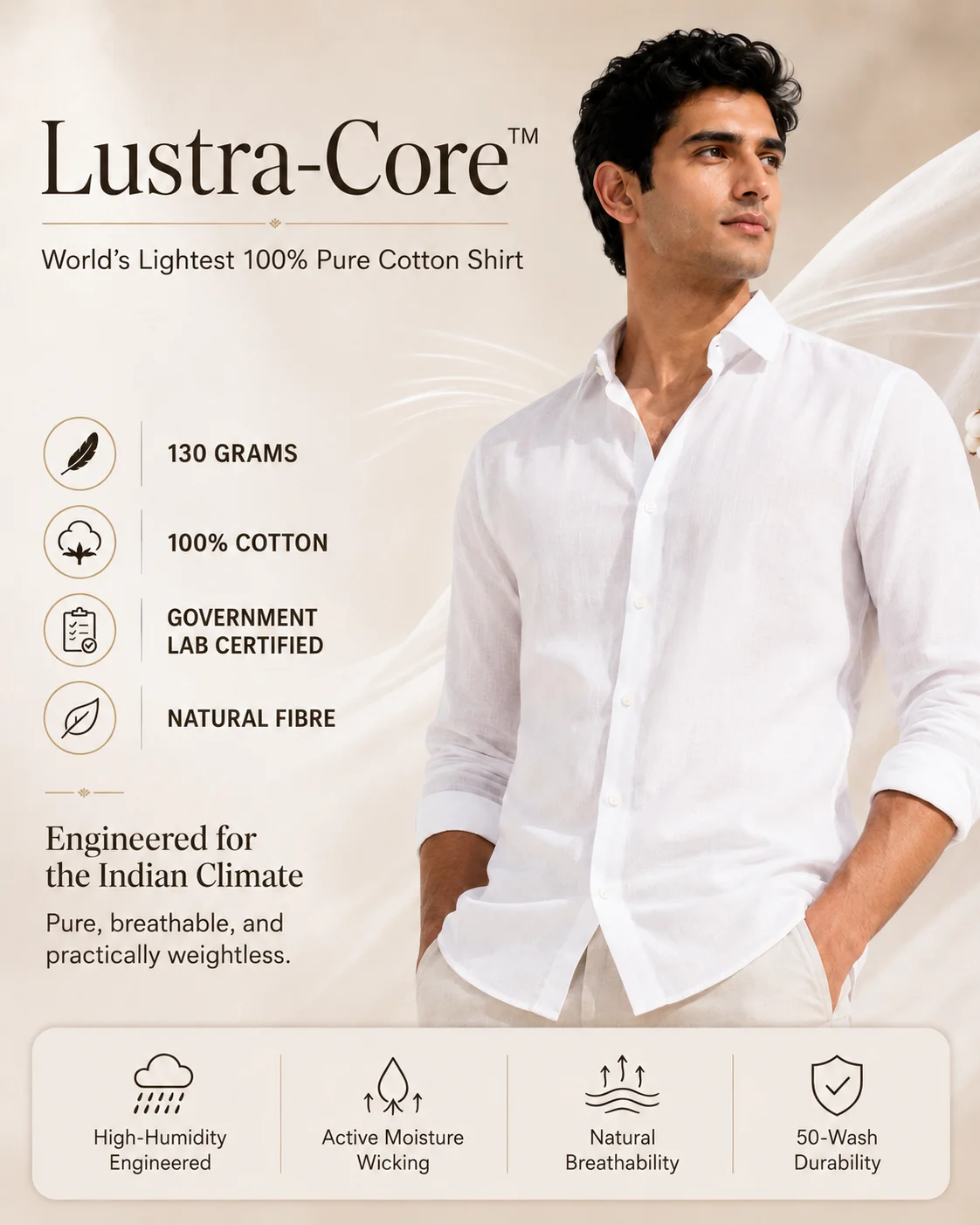
Lustra-Core™ Absolute White
Ultra-light pure cotton shirt engineered for Indian summers.
One of linen’s standout traits is its hygroscopic nature, meaning it can absorb and release moisture depending on the environment. This helps maintain a stable microclimate around the skin, preventing overheating. Additionally, linen has natural antibacterial properties, which reduce odor buildup—a common issue with synthetic materials in humid conditions. For those sleeping in regions like Mumbai or Delhi, where air quality or pollution can exacerbate nighttime discomfort, linen’s organic resistance to microbes offers an extra layer of protection.
Modern advancements have further enhanced linen’s performance. Brands now use tighter weaves or blend linen with micro-fleece to improve durability without losing breathability. This innovation ensures that even when worn repeatedly, linen sleepwear retains its cooling efficiency, making it a sustainable choice over time.
Modern Fabric Solutions for Sleep Comfort
While traditional linen remains unparalleled in its natural benefits, contemporary fabric engineering has expanded its potential. For instance, pre-shrunk linen or treated linen for reduced wrinkling addresses common care challenges, especially in India’s diverse climates where storage solutions might not always be ideal.
Pehanoge’s casualwear line often experiments with linen in relaxed cuts, perfectly suited for bed use. Their linen shirts, for example, are designed to be effortlessly worn from the bedroom to outdoor gatherings without changing—highlighting linen’s versatility. For hot sleepers, this means less friction and more practicality.
Another solution is the use of lighter linen weaves, such as summer-weight linens or linen-cotton hybrids. These cater to those who prefer a softer touch but still want the cooling properties of pure linen. In urban India, where fabric choices often need to balance cost and performance, these hybrid options provide a middle ground.
Optimal Styling Tips for Linen in Bedtime Wardrobes
Styling linen sleepwear isn’t just about comfort; it’s about confidence. A well-chosen linen set can elevate your evening routine. Opt for monochromatic or pastel tones like beige or light blue, which reflect sunlight and keep the room cooler. Loose, unstructured fits allow for better airflow, crucial in preventing heat traps.
For Indian men accustomed to layering, linen pajamas paired with a lightweight Pehanoge shirt can create a comfortable yet stylishruntime transition. During humid nights, a linen undershirt worn under a casual shirt mimics the breathable layers of traditional Mughlai attire adapted to modern needs.
Color coordination matters too. Darker linens absorb heat, so sticking to lighter shades aligns with temperature control. Additionally, ensuring linens are wrinkle-free before bed—a achievable feat with modern pre-washed options—keeps the fabric from dragging while moving, enhancing comfort.
Where to Find Premium Linen Quality at Retailers
Finding high-quality linen in India requires some know-how. Traditional handloom markets in places like Bengal or Gujarat often offer authentic, heritage-grade linen. These regions have practiced linen weaving for centuries, ensuring durability and natural fibers. For convenience, platforms like Meesho or Amazon feature curated listings of quality linen sleepwear, often highlighted by customer reviews about cooling performance.
Brand retail stores, both online and offline, are another reliable source. Pehanoge, for instance, offers linen-infused casualwear collections that cater to both daytime and nighttime needs. Their focus on blending heritage techniques with modern demands makes them a go-to for Indian consumers seeking authenticity and performance.
When browsing, prioritize brands that emphasize the weave density and fiber purity. Pehanoge’s approach to linen—where craftsmanship meets functionality—serves as a benchmark for quality.
Linen’s Heritage in Indian Textiles and Traditional Use
Linen has a storied presence in Indian textiles, though it’s often overshadowed by cotton or silk. Historically, linen was used in coarse fabrics for laborers in regions like Rajasthan, where durability was key. Today, it’s experiencing a revival, especially in sustainable fashion circles.
Traditional Indian garments like tarriks or kangri sometimes incorporated linen for its longevity. The fabric’s association with utility and resilience aligned with Indian lifestyles. In contemporary terms, this heritage translates to a fabric that’s not just comfortable but also culturally rooted—a significant selling point for Indian consumers who value tradition.
The Pehanoge brand, rooted in regional aesthetics, often draws inspiration from this heritage. Their linen wear pieces echo the minimalist elegance found in traditional Indian designs, making linen both a practical and stylish choice for hot sleepers.
FAQs
#### Why choose linen over synthetic sleepwear?
Linen is a natural fiber that doesn’t retain heat like synthetics such as polyester. It’s breathable, moisture-wicking, and resists odors—ideal for hot climates. Synthetic materials often trap sweat and feel sticky when wet, whereas linen dries quickly and stays fresh.
#### How do linen pajamas retain cooling properties?
Linen’s structure allows it to absorb moisture without clinging to the skin. Its porous nature ensures even airflow, preventing heat buildup. Even after washing, linen maintains these qualities better than many synthetics, which can lose elasticity or become stiff over time.
#### Is linen hypoallergenic for sensitive skin?
Yes, linen is naturally hypoallergenic. It resists dust mites and fungi due to its dense weave and antibacterial properties. For those in humid regions of India where skin irritations are common, linen’s organic nature makes it a safer choice compared to chemically treated fabrics.
#### How easy is linen care for hot sleep environments?
Linen is relatively low-maintenance. It can be machine washed without shrinkage concerns, especially modern pre-shrunk varieties. In hot environments, air-drying in shade is recommended to preserve fiber integrity. Avoiding harsh detergents ensures the fabric stays soft and effective at cooling. Compared to cotton, which may need frequent ironing or softening, linen’s resilience makes care simpler in the long run.