



You step off a flight into Mumbai in late June. The tarmac heat hits you like a wall. By the time you reach baggage claim, your shirt is clinging to your back like a second skin, and every stranger giving you disapproving looks thinks you just sprinted through the terminal. This is Indian summer — not the dry, tolerable kind you get in Rajasthan in February, but the wet, breathing-on-you kind that turns polyester into a personal sauna. If you have refused to surrender to looking like you ran a marathon before lunch, linen is not a style choice. It is a survival tool.
The problem is, most menswear advice treats linen like a European holiday fabric — something you drape over a beach body on the Amalfi Coast. Indian humidity does not care about aesthetics. It needs function first. So here is what actually works.
Recommended for You
-
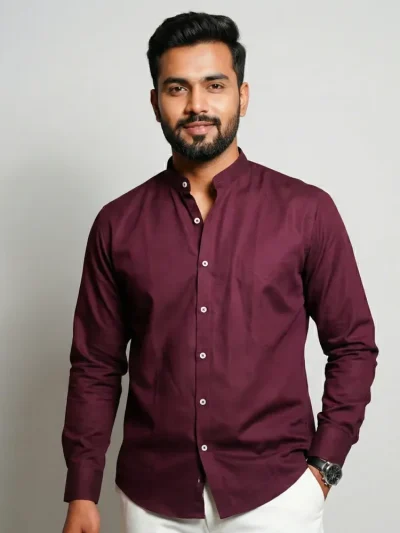
Essentials | WINE Enriched Cotton MANDARIN Coller Shirt
Original price was: ₹1,499.₹999Current price is: ₹999. -
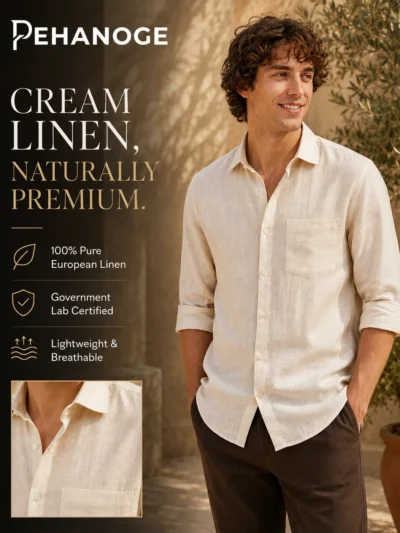
Oxy-Linen™ | Cream Linen – 60 Lea European Linen Shirt
Original price was: ₹4,999.₹3,399Current price is: ₹3,399. -
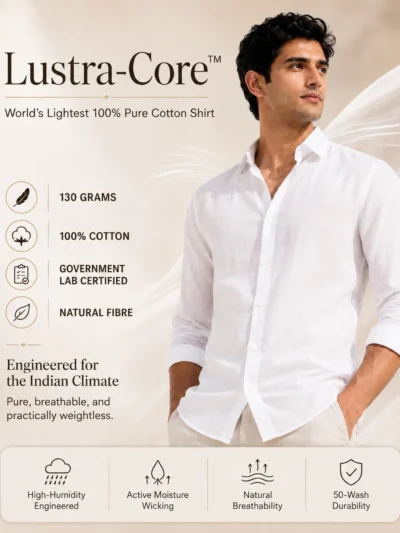
Lustra-Core™ | World’s Lightest 100% Pure Cotton Shirt | Government Lab Certified.
Original price was: ₹3,499.₹2,399Current price is: ₹2,399.
Humidity Clothing Guide: Why Linen Beats Cotton When the Air Won’t Let Go
Cotton absorbs moisture and holds it. That is the whole problem. In 80-plus-percent relative humidity, cotton stays damp, sticks, and takes forever to dry. Linen, made from flax fibres, has a hollow structure that wicks moisture away faster and dries significantly quicker. It also gets softer with every wash, unlike cotton which breaks down at the fibre level over time.
The tradeoff people mention is wrinkling. Yes, linen wrinkles. But if you are choosing between wrinkles and a sweat-stained back visible from across the room, the wrinkles win every time.
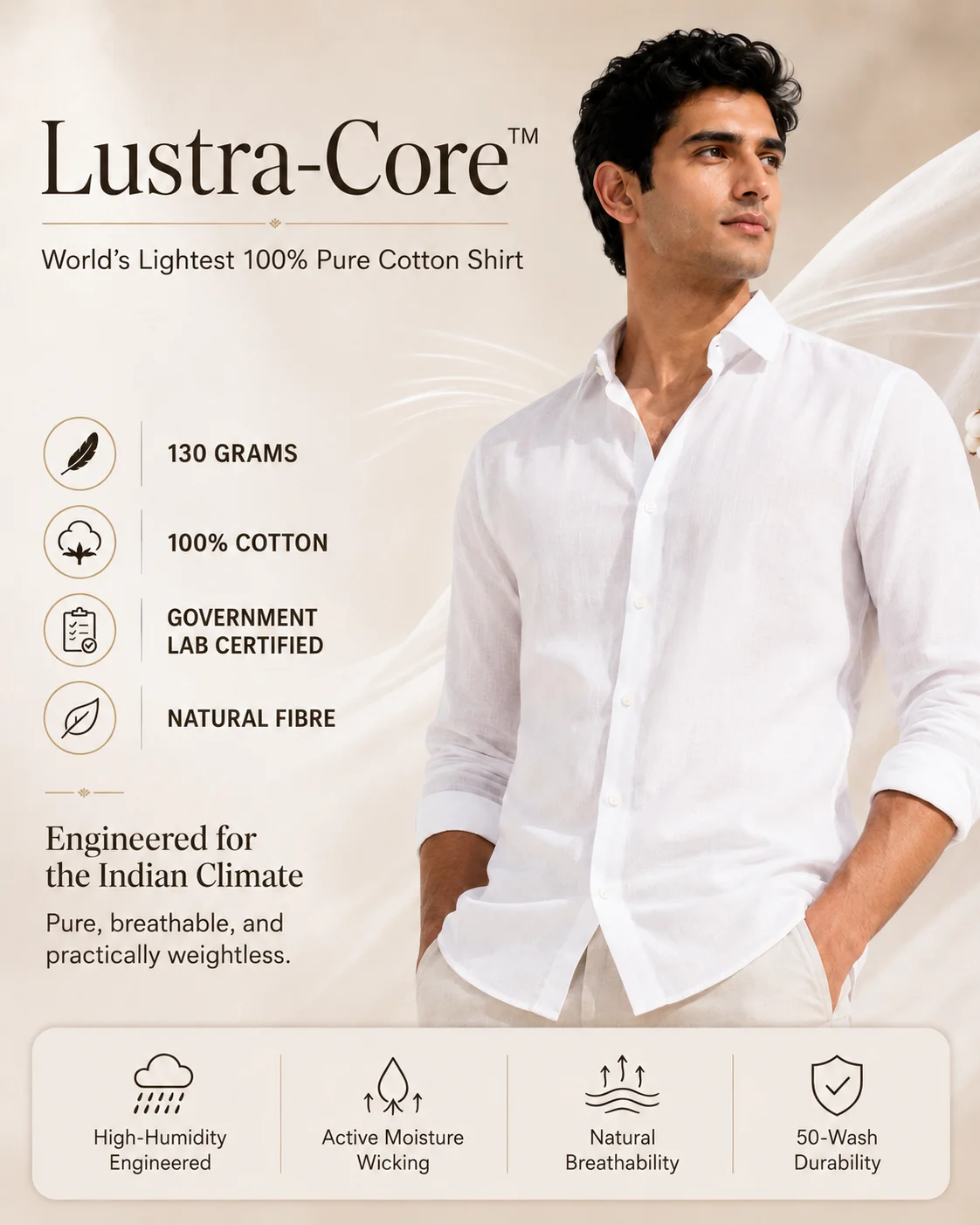
Lustra-Core™ Absolute White
Ultra-light pure cotton shirt engineered for Indian summers.
Tropical Travel Essentials That Actually Keep You Dry in Monsoon Weather
Packing for Indian monsoon travel requires more than one good shirt. You want:
- Two to three linen shirts in neutral tones — white, oatmeal, slate grey
- One pair of lightweight linen trousers that can handle both a restaurant dinner and a morning market walk
- A linen-blend kurta-style shirt if you want something that transitions from casual settings to slightly dressed-up dinners in Goa or Pondicherry
- Undergarments in moisture-wicking fabric, because linen on top means nothing if you are soaked underneath
Avoid dark colours in peak humidity. They absorb more heat, and sweat marks show more aggressively on black and navy linen.
Cooling Fabrics for Asia — What to Pack Beyond the Tourist Linen Shirt
Linen is the headline fabric, but it is not the whole story. Ramie, a plant-based fibre common in East Asian textiles, breathes almost as well and wrinkles less. Tencel, which is lyocell-based, handles moisture beautifully and drapes closer to the body. Some brands now blend linen with small percentages of Tencel to reduce the stiffness of pure linen without killing its breathability.
For everyday Indian wear, a lot of men already own cotton handlooms that work decently in heat. Bengali tant and South Indian handloom cotton are genuinely breathable, but they absorb moisture rather than wicking it. In sustained humidity — think Kolkata in May or Chennai in April — linen still outperforms them on dry speed and air circulation.
The Science of Breathable Fibres: How Linen Moves Moisture Before You Sweat
Flax fibres have a naturally ridged, irregular surface. These micro-channels allow air to circulate between the fabric and your skin, creating a convective cooling effect before sweat even accumulates. Linen can absorb up to 20 percent of its weight in moisture before feeling damp. Compare that to cotton at around 7 percent saturation before noticeable wetness.
Linen also has higher thermal conductivity than cotton, meaning it transfers heat away from your body faster. In practice, you feel cooler not just because the fabric is breathable but because it actively pulls warmth off your skin.
Style Hacks for Looking Sharp in Linen Without the Wrinkled Beach Dad Vibe
The secret is structure in the right places. A wrinkled linen shirt works when it is intentionally relaxed — think untucked, sleeves rolled to mid-forearm, collar slightly undone. What does not work is the same shirt paired with shapeless shorts and flip-flops and then blaming the fabric.
Tuck in a well-fitted linen shirt halfway — the French tuck — with chinos or linen trousers. Roll sleeves to just below the elbow. Stick to neutral tones: ivory, stone, muted olive. Layer a lightweight unstructured blazer over a linen shirt for dinner settings; the blazer hides the worst wrinkles while the linen underneath keeps you from overheating.
For footwear, structured leather sandals or suede loafers in the city. Canvas boat shoes at the beach. Avoid rubber flip-flops unless you are actually on the beach.
The Buying Guide: GSM, Weave, and What Indian Brands Get Wrong
Linen weight is measured in GSM (grams per square metre). For Indian summers, you want shirts in the 140 to 180 GSM range. Anything below 130 tends to go translucent under sweat and indoor lighting. Anything above 200 is too heavy for sustained humidity.
Weave matters. Plain weave linen is more textured and breathable. Herringbone or twill weaves in linen are more structured but slightly warmer — better for Delhi autumn than Mumbai monsoon.
Pre-washed linen has been softened and pre-shrunk, so it drapes better out of the packet. Raw linen is stiffer initially but breaks in over time. Either works; just know what you are buying.
Common pitfalls include brands labelling cotton-linen blends as “linen shirts” when the blend is 70 percent cotton. Check the label. Also, avoid ultra-premium “heritage linen” collections that repackage standard linen at three times the price with heritage branding. Quality linen does not need a mythology.
Brands like Pehanoge have been bridging some of this gap by offering linen and linen-blend shirts tailored for Indian body types — not just Western fits scaled down — and keeping prices reasonable for everyday wear rather than positioning linen as an occasion-only luxury fabric.
Indian Context: Monsoons, Body Types, and Regional Traditions
Indian humidity is not uniform. Mumbai monsoons bring sustained dampness where drying any natural fabric becomes a multi-hour project. Delhi pre-monsoon heat is drier but sweat volume is brutal. Goa humidity is relentless. Hill stations like Munnar or Coorg swing between cool mornings and warm afternoons, where a layerable linen shirt outperforms single-weight cotton.
South India already has a strong handloom tradition — tant, khadi, poplin cotton — but these are cotton-dominant. Linen is still relatively niche in regional Indian wardrobes, viewed as expensive or foreign. Global linen brands often miss the mark on sizing for broader Indian shoulders and shorter torso lengths, which is why homegrown options that offer relaxed Indian-friendly fits are gaining ground.
FAQs
Does linen actually keep you cooler than cotton in humid weather, or is it just marketing hype?
No, it is not hype. Linen wicks moisture faster, dries quicker, and conducts heat away from the body more efficiently than cotton. The difference is most noticeable in sustained humidity above 70 percent relative humidity, which is most of coastal and central India from April to September.
What GSM weight of linen is best for Southeast Asia and South Indian summers?
Aim for 140 to 180 GSM for shirts and kurtas. Below 130 GSM risks translucency under sweat. Above 200 GSM feels too heavy when the air is already thick.
How do I stop linen from looking wrinkled and sloppy after a long travel day?
Accept some wrinkles — linen is meant to have texture. But to reduce excessive creasing, pack shirts rolled rather than folded, spritz lightly with water and smooth by hand, and choose pre-washed linen which softens wrinkle lines naturally. A halfway tuck and rolled sleeves also make minor wrinkles look intentional.
Can linen work for formal events like weddings or business meetings in tropical cities?
Yes, with the right weight and styling. A 180 GSM linen shirt in white or muted grey, tucked in with well-fitted trousers and structured leather shoes, reads perfectly at a semi-formal wedding or a daytime business meeting. Add an unstructured blazer for extra polish. Avoid anything below 150 GSM for formal contexts — it will look too casual and crease excessively under jacket pressure.