



Have you ever stood up from your sofa only to hear that unmistakable crackle of static, or noticed your shirt leaving a faint trail of dust on the armrest? If you have, chances are you were wearing a synthetic blend. But if you’ve ever draped a linen shirt over your shoulders and felt absolutely nothing — no cling, no spark, no dust magnet situation — then you already know linen works differently. This post is about why linen is the unsung hero of anti-static clothing, especially for Indian men navigating brutal summers, sticky monsoons, and everything in between.
Linen vs. Synthetics: Why Static Hates Your Linen Shirt
The reason is science, not marketing. Synthetic fabrics like polyester and nylon are notorious charge generators. When they rub against your skin or other fabrics, electrons transfer freely, building up static electricity. That is why your polyester shirt clings to your torso the moment the air conditioning kicks in, or why it attracts every speck of lint in the room.
Recommended for You
-

Noble Stitch | Golden Bloom Giza Cotton Shirt
Original price was: ₹1,999.₹1,599Current price is: ₹1,599. -
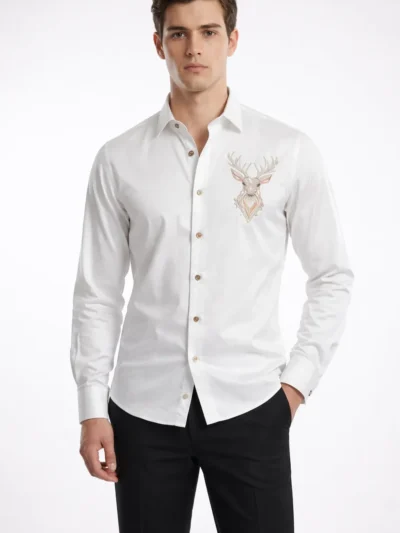
Noble Stitch | The Geometric Stag
Original price was: ₹1,999.₹1,599Current price is: ₹1,599. -

Noble Stitch | Forest Songbird Giza Cotton Shirt
Original price was: ₹1,999.₹1,599Current price is: ₹1,599.
Linen, on the other hand, is a completely different beast. Derived from the flax plant, linen fibers have a natural moisture content that sits around 8 to 12 percent. This might sound trivial, but that moisture acts as a conductor, allowing any charge to dissipate almost instantly instead of accumulating. Compare that to polyester, which has virtually no moisture absorption, and you understand why static builds up so aggressively with synthetics.
For Indian men dealing with dry, air-conditioned offices one moment and humid streets the next, this moisture-regulating quality is not just a comfort thing — it is a practical wardrobe essential.
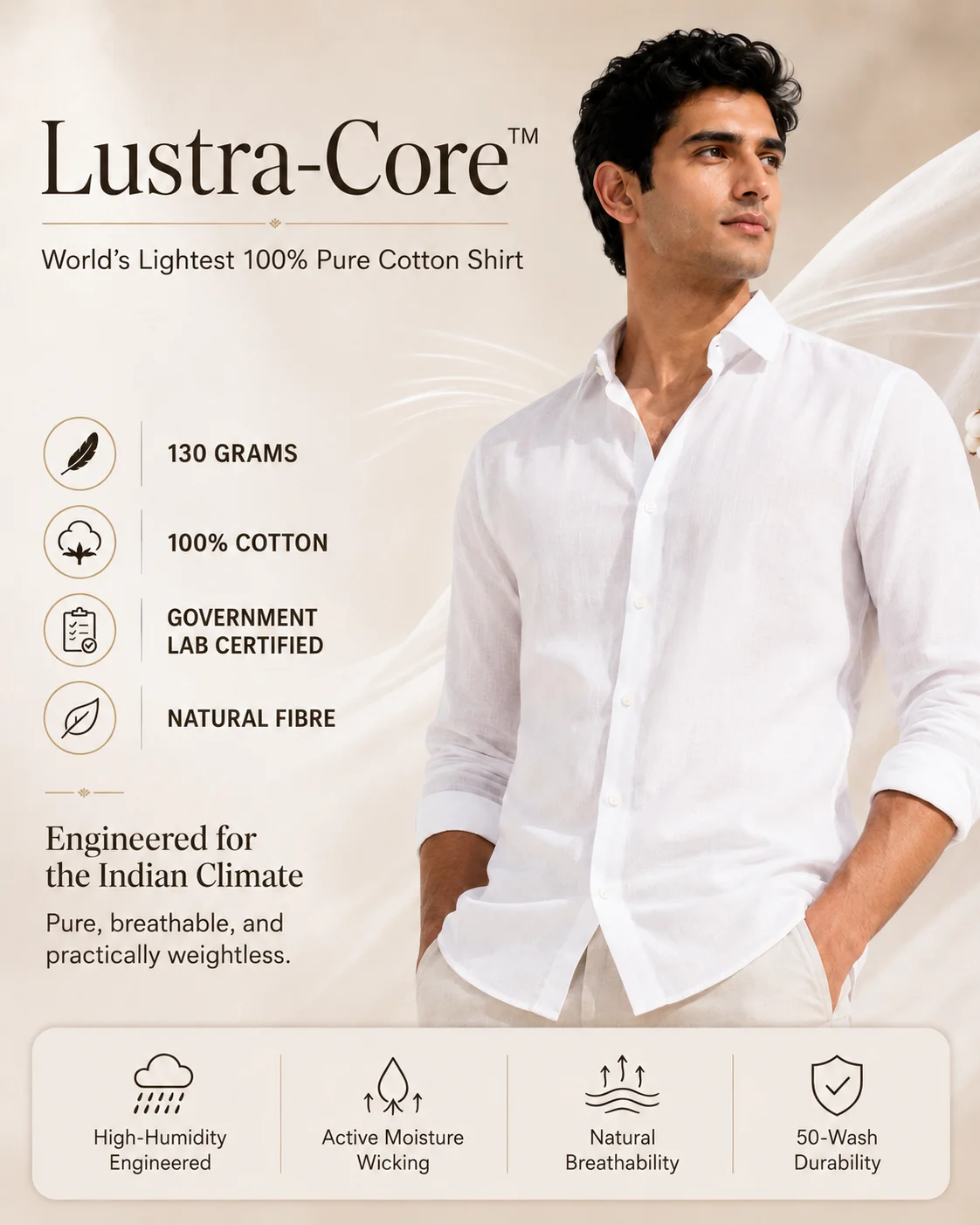
Lustra-Core™ Absolute White
Ultra-light pure cotton shirt engineered for Indian summers.
How the Waxy Cuticle of Linen Keeps Static at Bay
Here is where it gets interesting. Linen fibers have a natural waxy coating called the cuticle. This waxy layer serves as a protective barrier on each individual fiber, and one of its functions is to reduce friction between fibers. Less friction means fewer electrons jumping from one surface to another, which directly translates to lower static buildup.
Think about it this way. When you slide a polyester shirt over your head, the fibers grab onto each other and onto your hair, creating that frustrating staticky mess. A linen shirt glides. The cuticle makes the fiber surface smoother at a microscopic level, allowing fibers to move past one another without generating excess charge.
This is also why Pehanoge shirts, particularly their casual linen button-downs, feel so effortless on the skin. The fabric does not fight you — it moves with you.
Dust-Resistant Linen: Why Your Wardrobe Needs This Anti-Dusty Fabric
Static electricity and dust are best friends. A statically charged garment acts like a magnet, pulling dust, pollen, and tiny particles out of the air and holding them tight. If you have ever noticed your black shirt looking grey by evening, static is partly to blame.
Because linen naturally resists static charge, it repels dust rather than attracting it. This makes linen an excellent choice for men who spend long hours outdoors — whether commuting through Delhi’s dusty roads or working in construction-heavy neighborhoods. Your linen kurta or shirt stays cleaner longer, not because of any special treatment, but because of the fiber’s inherent properties.
It also means less frequent washing, which extends the life of your garments. For anyone investing in quality linen pieces, this is an underrated benefit that saves both time and money.
Cling-Free Shirts: Linen vs. Cotton — The Comfort Comparison
Cotton is India’s go-to summer fabric, and for good reason — it is breathable, affordable, and widely available. But when it comes to static resistance, cotton falls short compared to linen. Cotton absorbs moisture well but dries quickly, and once dry, it can generate moderate static, especially in low-humidity environments like air-conditioned rooms.
Linen retains its moisture balance more consistently. It absorbs and releases moisture at a steadier rate, which keeps the fiber surface less prone to charge buildup. In practical terms, this means:
- Linen shirts do not cling to your body the way cotton sometimes does after hours in AC
- Linen layers smoothly under blazers without pulling or bunching
- Linen trousers do not awkwardly stick to your legs
For everyday casual wear, consider pairing a relaxed-fit linen shirt with tailored chinos or shorts. Brands like Pehanoge offer easy-to-wear linen options that work for both casual outings and semi-formal settings, making the fabric versatile enough for weekend plans and office days alike.
Styling and Buying Anti-Static Linen
Styling anti-static linen basics is all about balance. A linen blazer over a fitted tee keeps the look polished without the cling. Navy, camo, and oatmeal tones work particularly well for summer, giving you a clean aesthetic while staying static-free. Linen jumpsuits and kurta-shalwar sets are also monsoon-ready options worth exploring.
When shopping for anti-static linen clothing, look for labels that say “100% linen” or check for certifications like OEKO-TEX, which ensures no harmful chemical treatments that could alter the fiber’s natural properties. Be cautious with linen-cotton blends — some mixes, especially those marketed as “silk-cotton,” can reintroduce clinginess. Short-staple linen tends to be coarser but less static-friendly, while long-staple linen gives you that soft, smooth drape.
Indian brands have increasingly caught on to this demand. Oberoi Garments, for instance, offers linen kurta-shalwar sets with natural fibers designed to resist static, while several D2C brands now carry 100% linen dress shirts suited for office wardrobes.
FAQs
Does linen make you feel less static than cotton shirts?
Yes. Linen’s natural moisture retention and waxy cuticle reduce charge buildup significantly compared to cotton, especially in dry or air-conditioned environments. You will notice the difference most after a few hours indoors.
How do you keep anti-static linen clothing clean without adding static?
Avoid fabric softeners and synthetic dryer sheets, which coat the fibers and can reduce natural anti-static properties. Instead, air-dry your linen garments or tumble-dry on low heat. A light steam iron also helps maintain the fiber’s natural texture.
Can I mix linen with synthetic fabrics or clothes?
You can, but mixing linen with polyester or nylon may reduce the anti-static benefits. If you do layer, try to keep the garment closest to your skin in linen so the static-resistant properties work where they matter most.
What is the best way to wash anti-static linen clothing?
Wash linen in lukewarm water with a mild, chemical-free detergent. Avoid overloading the machine, as friction between garments can cause pilling. Gentle cycles and line drying will keep your linen pieces feeling fresh and static-free for seasons.