



GSM in fabric determines durability, comfort, and suitability for different climates and uses.
Understanding GSM: The Basics of Fabric Weight
GSM stands for grams per square meter, a unit that measures the weight of fabric. It is a key factor in determining the feel, durability, and suitability of a fabric for various purposes. A higher GSM indicates a heavier, more durable fabric, while a lower GSM suggests a lighter, more breathable material. This measurement is crucial when selecting fabrics for different seasons and occasions. For instance, a lightweight fabric with a lower GSM is perfect for summer, offering breathability and comfort, while a higher GSM fabric is ideal for winter, providing warmth and sturdiness.
Recommended for You

Essentials | RUST Enriched Cotton MANDARIN COLLER Shirt
Original price was: ₹1,499.₹999Current price is: ₹999.-
Noble Stitch | Orbit Geometric Giza Cotton Shirt
Original price was: ₹1,999.₹1,599Current price is: ₹1,599. -
Essentials | WINE Enriched Cotton MANDARIN Coller Shirt
Original price was: ₹1,499.₹999Current price is: ₹999.



Fabric GSM Meaning and Its Impact on Shirt Quality
The GSM of a fabric directly impacts the quality and performance of a shirt. A shirt with a higher GSM tends to be more durable and less prone to wear and tear. It often has a more structured appearance, making it suitable for formal occasions. On the other hand, a lower GSM fabric results in a softer, more relaxed shirt that drapes well, perfect for casual wear. Understanding GSM helps in choosing the right shirt for the right occasion, ensuring both comfort and style. For example, a shirt with a GSM of around 180-200 is versatile, suitable for both office wear and casual outings, while a GSM of 150-170 is ideal for a breezy, casual look.
GSM vs. Fabric Thickness: What’s the Real Difference?
While GSM is a measure of fabric weight, it does not always directly correlate with fabric thickness. A fabric can be lightweight yet dense, or heavy but loosely woven. For instance, a high-quality cotton shirt with a lower GSM might feel luxurious and soft, while a thicker fabric with a higher GSM might be more rigid. Understanding this distinction is important when selecting fabrics for specific needs. For instance, a lightweight but dense fabric is perfect for hot climates, offering breathability without sacrificing durability.
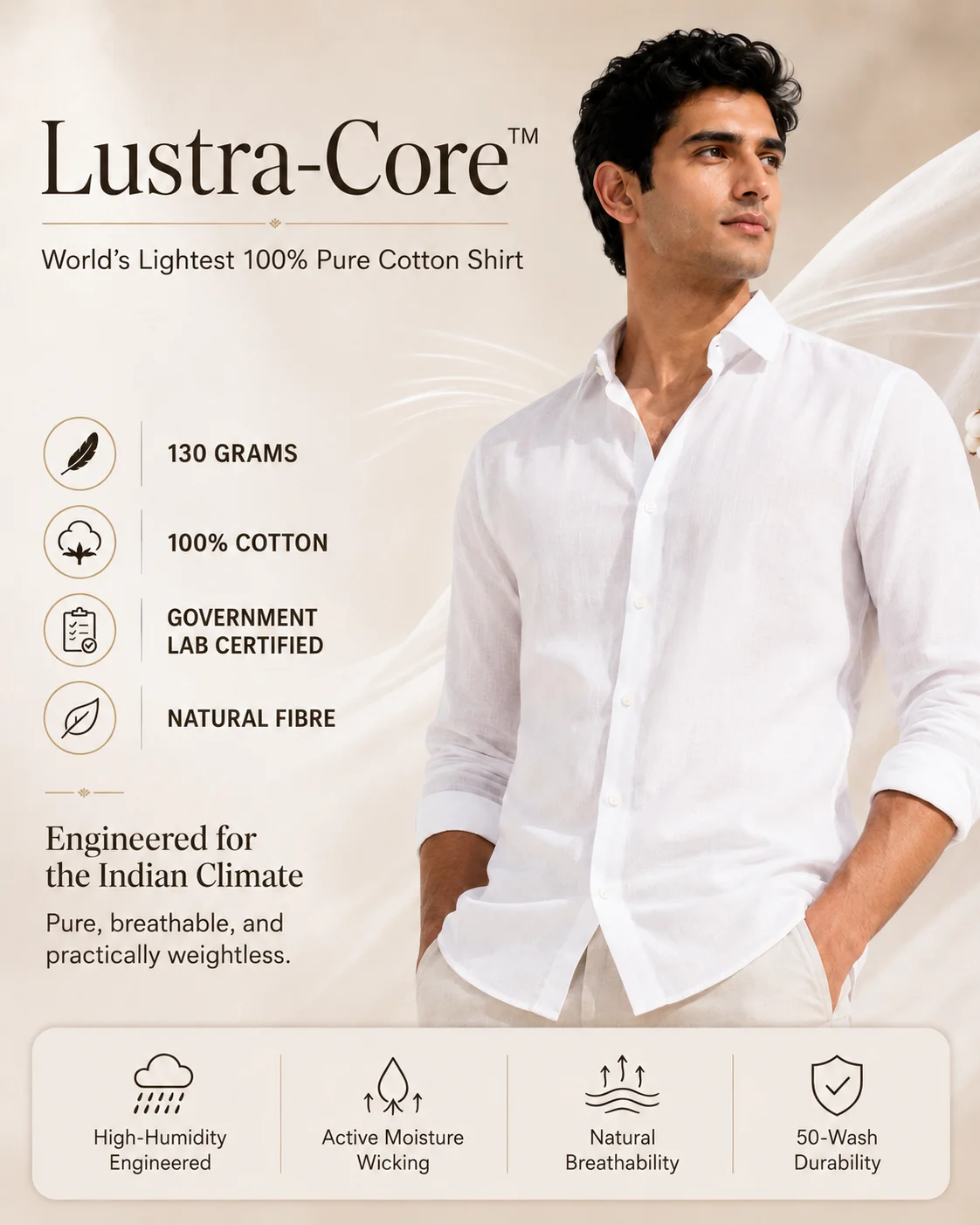
Lustra-Core™ Absolute White
Ultra-light pure cotton shirt engineered for Indian summers.
Choosing the Right GSM for Your Climate and Lifestyle
Selecting the right GSM for your climate and lifestyle is essential for comfort and practicality. In India, where the climate varies significantly across regions, choosing the appropriate fabric weight is crucial. For hot and humid summers, a fabric with a GSM of 130-170 is ideal, providing breathability and comfort. In contrast, for cooler winters, a higher GSM of 200-250 offers warmth and coziness. Lifestyle also plays a role; for active individuals, a mid-range GSM of 150-180 provides a balance of comfort and durability, suitable for both casual and semi-formal settings.
Pairing GSM with Style: How Fabric Weight Influences Fit and Drape
The GSM of a fabric significantly influences the fit and drape of a garment. A higher GSM fabric tends to hold its shape better, providing a structured fit that is ideal for formal shirts and tailored outfits. Conversely, a lower GSM fabric drapes more fluidly, offering a relaxed and casual look. This characteristic is particularly important when choosing shirts for different occasions. For instance, a formal shirt with a higher GSM will maintain a crisp appearance throughout the day, while a casual shirt with a lower GSM will offer a laid-back, comfortable fit.
Decoding GSM Labels: A Buyer’s Guide to Smart Fabric Choices
When shopping for shirts, understanding GSM labels can help you make informed decisions. GSM is often mentioned on fabric labels, providing insight into the fabric’s weight and suitability. For instance, a label indicating a GSM of 180 suggests a medium-weight fabric, versatile for various occasions. Being aware of GSM helps in selecting the right fabric for your needs, whether you’re looking for a durable shirt for everyday wear or a lightweight option for summer. It’s also useful when comparing different brands and styles, ensuring you choose a shirt that meets your expectations in terms of comfort and durability.
GSM in Indian Fashion: What Works for Hot Summers and Cool Winters
In the context of Indian fashion, GSM plays a vital role in adapting to the diverse climate. For the scorching summers, fabrics with a GSM of 130-170 are popular, offering breathability and comfort. Cotton and linen, with their natural cooling properties, are often preferred in these weights. During the cooler months, fabrics with a GSM of 200-250 provide the necessary warmth, making them ideal for layering. Understanding the role of GSM in Indian fashion helps in curating a wardrobe that is both stylish and practical, catering to the varied climatic conditions across the country.
FAQs
What is GSM in fabric?
GSM stands for grams per square meter, a measurement that indicates the weight of a fabric. It helps determine the fabric’s thickness, durability, and suitability for different uses.
How does GSM affect shirt quality?
The GSM of a fabric impacts the shirt’s durability, comfort, and appearance. Higher GSM fabrics are generally more durable and structured, while lower GSM fabrics are softer and more breathable.
Is higher GSM always better?
Not necessarily. The ideal GSM depends on the intended use and climate. Higher GSM is better for durability and warmth, while lower GSM is preferable for breathability and comfort in hot weather.
What GSM is ideal for summer shirts?
For summer shirts, a GSM of 130-170 is ideal. This range offers breathability and comfort, making it suitable for hot and humid conditions.