



When it comes to building a wardrobe that works for both comfort and style, fabric choice plays a crucial role. Two of the most common fabrics in Indian menswear are polyester and cotton. While both have their place, understanding their differences can help you make smarter choices for every occasion. Whether you’re shopping for a crisp formal shirt, a casual tee, or something in between, knowing how these fabrics behave can make all the difference.
Polyester vs Cotton: What’s the Real Difference?
Polyester is a synthetic fabric made from petroleum-based fibers. It’s known for its durability, wrinkle resistance, and ability to retain shape. Cotton, on the other hand, is a natural fiber derived from the cotton plant. It’s soft, breathable, and has been a staple in Indian wardrobes for generations.
Recommended for You
-

Noble Stitch | Midnight Eagle Giza Cotton Shirt
Original price was: ₹1,999.₹1,599Current price is: ₹1,599. -

Giza-Silk | Lemon Yellow Long-Staple Giza Cotton Shirt
Original price was: ₹1,499.₹1,199Current price is: ₹1,199. -

RUGGED-NAP | GREEN CHECKED SHIRT
Original price was: ₹1,499.₹1,299Current price is: ₹1,299.
The key difference lies in their properties. Polyester is less breathable and can trap heat, making it less ideal for hot and humid climates. Cotton, however, allows air to circulate, keeping you cooler. But polyester’s strength lies in its low maintenance—it dries quickly and doesn’t require ironing, which is a big plus for busy lifestyles.
Durability and Longevity: Which Fabric Lasts Longer?
When it comes to durability, polyester takes the lead. It’s resistant to stretching, shrinking, and abrasion, which means it can withstand frequent washing and wear. Cotton, while strong, tends to wear out faster, especially if not cared for properly. However, high-quality cotton, like Egyptian or Pima, can last for years with the right care.
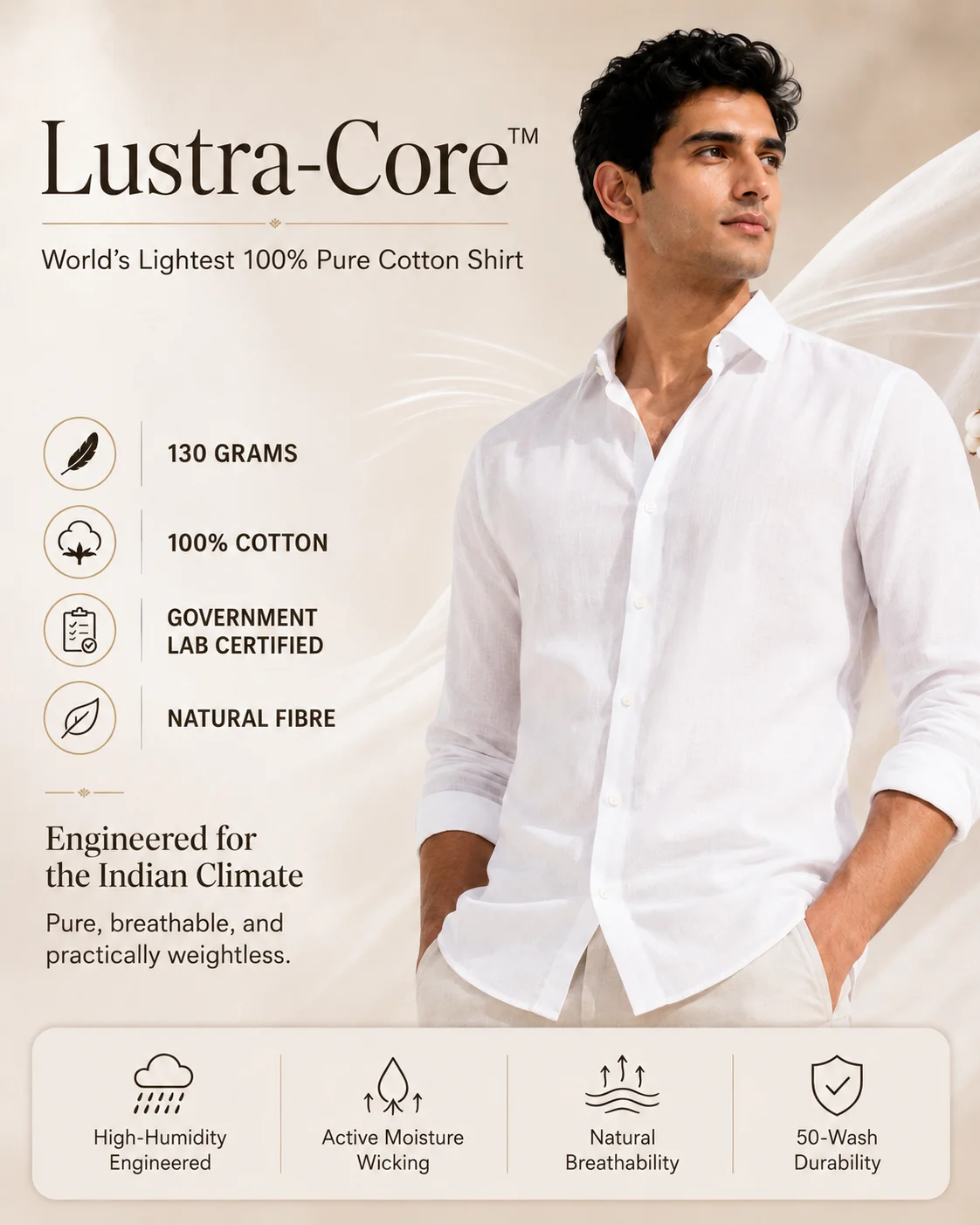
Lustra-Core™ Absolute White
Ultra-light pure cotton shirt engineered for Indian summers.
For everyday wear, polyester blends are often preferred for their longevity. But if you’re looking for a fabric that ages gracefully and gets softer over time, cotton is the way to go.
Comfort and Breathability: How Do They Compare?
Comfort is subjective, but breathability is a key factor, especially in India’s tropical climate. Cotton is naturally breathable, making it the go-to choice for summer wear. It absorbs moisture, keeping you dry and comfortable. Polyester, being synthetic, doesn’t absorb sweat as well, which can lead to discomfort in hot weather.
That said, modern polyester blends are designed to wick moisture away from the body, offering a middle ground between comfort and performance. For casual outings or light activities, a polyester-cotton blend can be a practical choice.
Environmental Impact: Polyester vs Cotton Sustainability
The environmental impact of these fabrics is a growing concern. Polyester is derived from non-renewable resources and is not biodegradable, contributing to microplastic pollution. Cotton, while natural, requires significant water and pesticide use during cultivation, which can harm the environment.
However, organic cotton and recycled polyester are emerging as more sustainable options. Brands like Pehanoge are increasingly focusing on eco-friendly practices, offering shirts and casual wear that balance style with sustainability.
Choosing the Right Fabric for Different Occasions and Outfits
The choice between polyester and cotton often depends on the occasion. For formal settings, a crisp cotton shirt from Pehanoge can exude elegance and professionalism. For casual outings, a polyester-cotton blend tee offers comfort and ease of care.
In India, where the climate varies from region to region, it’s wise to have a mix of both fabrics in your wardrobe. Cotton is ideal for summer and humid regions, while polyester blends work well for travel or active lifestyles.
How to Select the Best Fabric for Your Needs: A Practical Guide
When choosing between polyester and cotton, consider the following:
- Climate: Cotton for hot, humid weather; polyester for cooler or less humid conditions.
- Activity Level: Polyester for active wear; cotton for relaxed settings.
- Maintenance: Polyester for low-maintenance needs; cotton for those who don’t mind ironing.
- Sustainability: Look for organic cotton or recycled polyester if eco-friendliness is a priority.
Polyester vs Cotton in India: Climate, Culture, and Consumer Preferences
In India, cotton has deep cultural roots and is often associated with traditional wear like kurtas and sarees. However, the rise of fast fashion and urban lifestyles has increased the demand for polyester blends, which offer affordability and convenience.
Consumers are becoming more conscious of sustainability, leading to a growing interest in organic cotton and recycled fabrics. Brands like Pehanoge are catering to this shift by offering stylish, eco-friendly options that resonate with modern Indian consumers.
FAQs
Is polyester or cotton better for hot weather?
Cotton is generally better for hot weather due to its breathability and moisture-absorbing properties. However, lightweight polyester blends with moisture-wicking technology can also be suitable.
Can polyester and cotton be blended together?
Yes, polyester and cotton are often blended to combine the benefits of both fabrics—durability from polyester and comfort from cotton.
How do I care for polyester and cotton garments?
Polyester garments can be machine washed and dried, and they require minimal ironing. Cotton should be washed in cold water to prevent shrinking and can be air-dried or tumble-dried on low heat.
Which fabric is more eco-friendly: polyester or cotton?
Neither is inherently eco-friendly. Organic cotton and recycled polyester are more sustainable options. Look for certifications like GOTS (Global Organic Textile Standard) when shopping.