


The climate in India demands practicality without compromise. Whether navigating Punjabi heat or urban pitter-patterns, understanding fabric nuances becomes a cornerstone. Among materials, linen’s allure persists but requires careful consideration. Its transition from weight to feel shapes daily rituals, turning simple items into staples of identity. Pehanoge shirts find their niche here, balancing breathability with durability. Casual wear thrives under right-gauge choices, ensuring comfort remains uncompromised. Such insights bridge tradition with modernity, offering sustainable solutions that align with local needs while meeting global standards.
Understanding GSM: How Grain, Weight, and Comfort Interact in Linen
GSM stands as a nuanced metric, reflecting both material properties and wear experience. Linen’s natural resistance to pests and mildew complicates its handling, necessitating precise handling during preparation. A 120-150 GSM balance optimizes density without sacrificing flexibility, ensuring linen maintains its pliability while resisting wear. This range also accommodates varied climates, from humid monsoons to milder months, making it a versatile ally. Comfort here hinges on sleep-over-sleeves scenarios where thickness matters, though lighter cuts can suffice elsewhere. Mastery of these factors transforms linen from fabric into a trusted companion.
Recommended for You
-

Oxy-Linen™ | Rusty Red – 60 Lea European Linen Shirt
Original price was: ₹4,999.₹3,399Current price is: ₹3,399. -
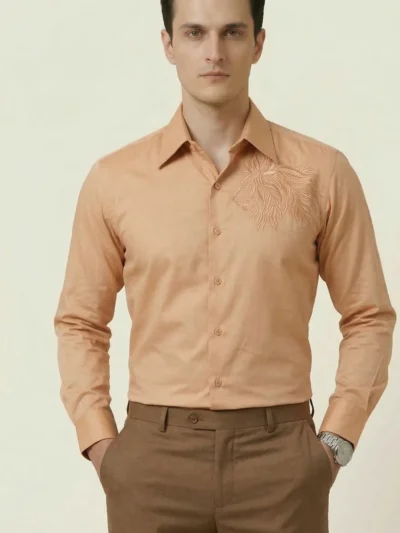
Noble Stitch | Copper Lion Giza Cotton Shirt
Original price was: ₹1,999.₹1,599Current price is: ₹1,599. -
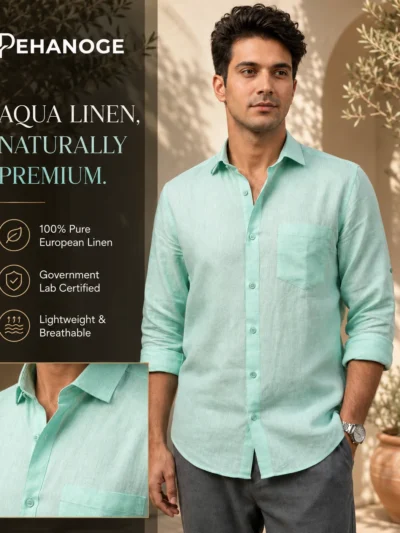
Oxy-Linen™ | Seafoam Green – 60 Lea European Linen Shirt
Original price was: ₹4,999.₹3,399Current price is: ₹3,399.
Fabric GSM Guide: Why 120-150 GSM Reigns as the Sweet Spot for Affordable Yet Premium Linen
Accurate GSM evaluation isn’t merely about numbers; it’s about context. For casual wear, calculating total top weight ensures that layers align seamlessly, preventing bulk. Premium linens command higher price points, yet mid-budget buyers find 120-150 GSM a pragmatic compromise. This GSM ensures sturdiness without overt cost escalation, preserving quality without excessive expenditure. Fabric composition also plays a role—tighter weaves enhance resilience, while looser ones allow air penetration. Such nuances underscore GSM’s centrality in crafting practical yet refined products.
Lightweight vs Midweight Linen: When to Choose 120 GSM Over 100 GSM
Comparative analysis reveals subtle distinctions. A 120 gsm linen might offer quicker drying time, ideal for unpredictable weather, but could compromise structure. Lighter weights suit everyday attire where fluid movement is key, yet may lack the when-to-prepare for fuller-body wear. Conversely, 100 gsm suits seminatural versatility, prioritizing minimal effort in shifting conditions. Choosing 120 gsm balances practicality and fabric integrity, making it a popular default for beginners or those seeking balance. The decision hinges on specific usage patterns rather than rigid uniformity.
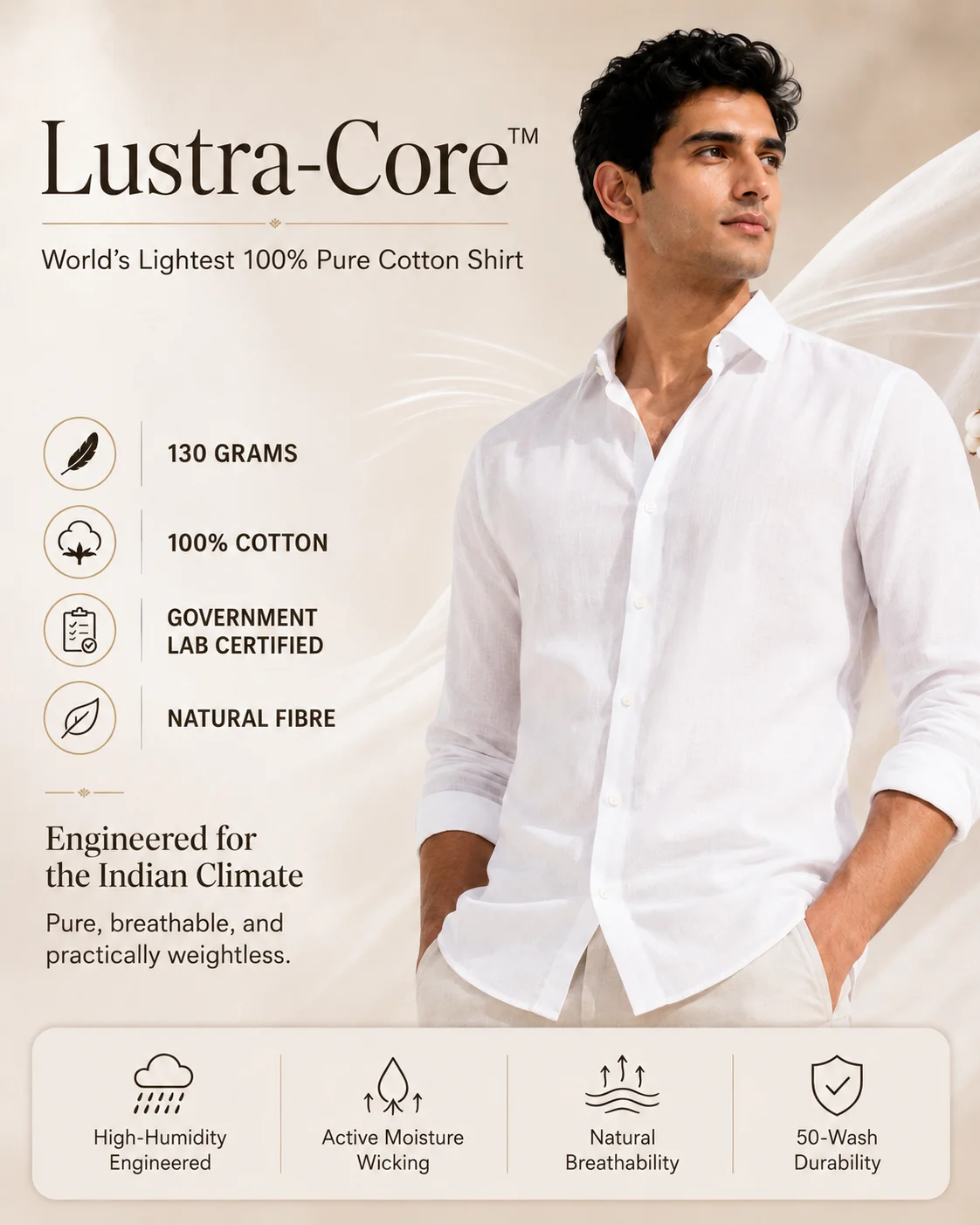
Lustra-Core™ Absolute White
Ultra-light pure cotton shirt engineered for Indian summers.
Performance Matters: How 120-150 GSM Stands Up to Real-World Wear and Care
Real-world application tests GSM’s mettle. 120-150 gsm linen resists creasing under regular use, maintaining form without stiffness. Its grip properties serve well in transitional settings, providing stability while accommodating personal adjustments. Proper care—such as avoiding excessive moisture exposure—further enhances longevity, largely dependent on GSM’s inherent resilience. As care continues, functionality remains unattainable without this foundational metric, making GSM a silent ally. Consistent use ensures consistent results, aligning with long-term value.
FAQs
What does GSM stand for and why does it matter for linen?
GSM summarizes grain count, weight, and fabric quality. A higher value indicates denser weave, offering better durability but possibly bulkier feel. This distinction matters for different use cases, guiding selections that suit specific needs.
How can I test if a linen shirt feels within the 120-150 GSM range?
Checking fiber content and thickness guides can be simulated by measuring the shirt’s weight or opting for comparable products in similar price ranges as weight equivalents.
Are brands with GSM claims reliable in India?
Trust relies often on certified manufacturers who validate GSM claims, though occasional discrepancies require scrutiny, ensuring alignment with wear needs.
Can I use 120-150 GSM linen in colder weather?
While suitable, its structure can still feel light, making it less ideal for drafty spaces. However, layering over warmer base layers mitigates this, though such use cases necessitate careful planning.