



You’re scrolling through yet another “summer essentials” list, and there it is—linen shirts promising breathability and effortless style. But three washes later, you’re left with a saggy, pilled mess that barely resembles the crisp fabric you bought. Here’s how to separate the 真正 premium linen from the overhyped cotton‑linen blend pretending to be something it’s not.
The Quality Linen Checklist: 7 Fabric Features to Inspect Before You Buy
- Feel the weave – Genuine linen has a slightly coarse, textured feel. A too‑soft fabric usually signals a blend.
- Check the edges – Clean, uninterrupted hems without fraying indicate a higher thread count.
- Look for puckering – Prima‑dolce linen swells evenly; visible bumps suggest weaker fibers.
- Hold it near the light – Real linen reflects a soft glow; synthetic blends often look opaque.
- Test the weight – A hand‑pressed sheet around 140–180 GSM is ideal for Indian summers.
- Inspect the twist – A consistent twist means the yarns are uniform; uneven twists hint at inferior spinning.
- Ask about the dye – Light natural dyes preserve fiber integrity; heavy chemical dyes can weaken linen.
Weight and GSM: Why 140-180 GSM Linen Is the Sweet Spot for Indian Summers
In the monsoon‑to‑post‑monsoon climate, linens that are too light feel airy but lack durability, while ultra‑heavy ones can feel suffocating. The 140‑180 GSM band strikes a balance:
Recommended for You
-

Giza-Silk | Ivory Cream Long-Staple Giza Cotton Shirt
Original price was: ₹1,499.₹1,199Current price is: ₹1,199. -
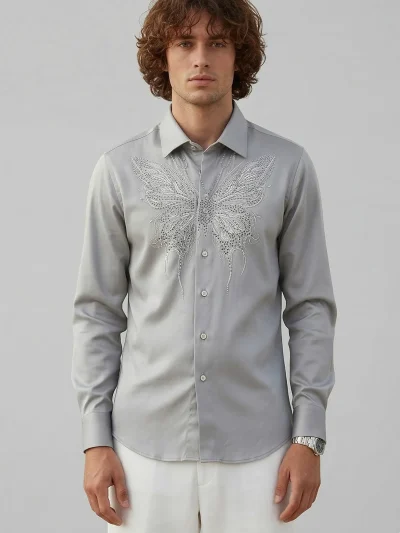
Noble Stitch | Silver Butterfly Giza Cotton Shirt
Original price was: ₹1,999.₹1,599Current price is: ₹1,599. -

Noble Stitch | Orbit Geometric Giza Cotton Shirt
Original price was: ₹1,999.₹1,599Current price is: ₹1,599.
- Breathability – Air circulates freely, keeping you cool in June‑August.
- Durability – Enough heft to resist tearing during frequent washes.
- Aesthetic – Figures the right drape, neither clingy nor saggy.
Brands like Pehanoge often list GSM in their product specs; lean toward those within this range when choosing shirts or even chinos.
The Thread Count Myth: What Actually Matters in Linen Weave Quality
Thread count is used in cotton to gauge density, but with linen:
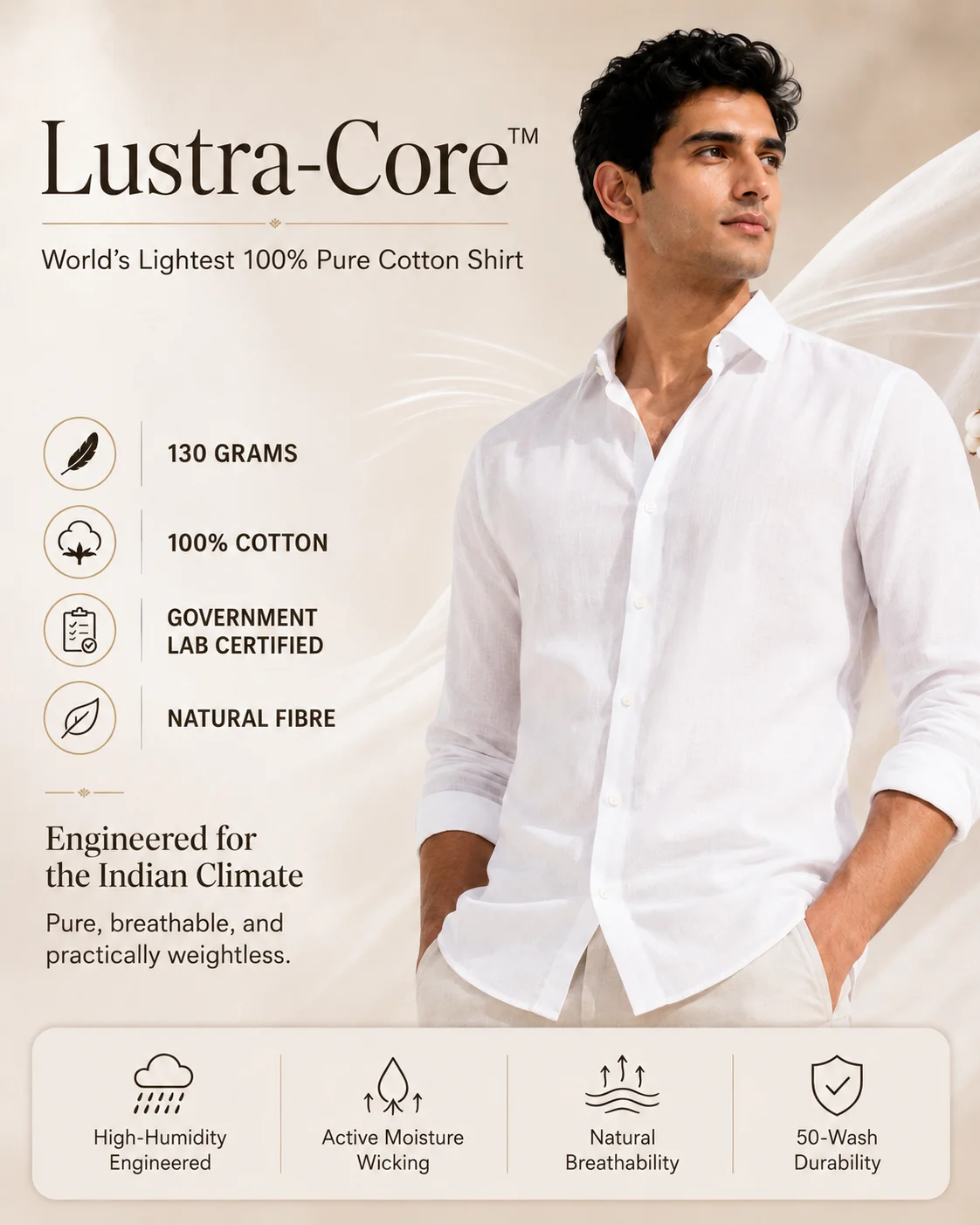
Lustra-Core™ Absolute White
Ultra-light pure cotton shirt engineered for Indian summers.
- A lower thread count (200‑300) often means hand‑knotted fibers, richer texture.
- A higher thread count (500+) can create a slick, almost synthetic finish—mirroring a blend’s look.
Look at the weave pattern instead: tighter Twill or Sergentè weaves produce a smoother hand while still preserving linen’s natural breath. In the Indian market, labels that mention “Twi‑Linen” or “Baracoa” are cues to quality.
How to Spot Poor-Quality Linen: Red Flags That Most Shoppers Miss
- Unnatural stiffness that doesn’t soften after the first wash.
- Persistent pilling or fuzzy surface immediately after spot‑cleaning.
- Color bleeding when paired with other garments.
- Label says “linen” but product description mentions “cotton‑linen blend.”
- Price anomaly – extremely low prices for a supposedly “premium” line often signal cheaper blends.
If the store can’t give a buy‑back or return after a wash, hesitate.
Linen vs. Linen-Blend: Decoding Labels for Genuine 100% Linen
- 100% Linen – No other fibers listed.
- Linen (blend) – Typically paired with 20–30% cotton or viscose for stretch.
- Composition note – Look for “Manufactured in Europe” or “French flax” tags; these denoting origin often mean truly pure linen.
In India, local swatches offered by reputable retailers can confirm authenticity.
Styling Your Premium Linen
Once you’ve locked in quality, styling becomes second nature.
- Daytime – Pair a 100% linen shirt with relaxed‑fit chinos and leather sandals. Add a canvas cap for that Mumbai‑city vibe.
- Evening – Layer an unstructured linen blazer over a plain white tee; finish with loafers.
- Casual wear – Pehanoge shirts offer a perfect balance: breathable yet structured, ideal for office wear that transitions to garden parties.
Remember, quality linen actually improves with wear: those natural wrinkles become part of the aesthetic rather than indicating neglect.
Buying Guide: Verify Before You Purchase
- Inspect return policy – Ensure you can return within 7–14 days.
- Read product descriptions – Note GSM, weave type, and country of origin.
- Order a fabric swatch if possible; it’s a small upfront cost that saves headaches later.
- Check for stiffness when new – it softens dramatically after the first wash.
For first‑time buyers, especially online shoppers, a swatch or visit to a physical store can mean the difference between a crisp shirt and a pilled tangle.
Indian Context: Navigating the Local Market
The Indian market has seen a surge in “linen” products, yet many are viscose‑rayon blends marketed as premium. When buying online, look for labels that explicitly state “100% European flax linen” or “French linen.”
- Local fabric stores in metros like Mumbai and Delhi let you feel the weave and gauge weight—something online can’t replicate.
- Budget‑conscious shoppers can hunt for end‑of‑season sales from premium Indian fashion houses; genuine linen pieces often drop 30–40% in price.
- Brands like Pehanoge often collaborate with European mills, ensuring authenticity while keeping designs fresh for the Indian aesthetic.
FAQs
What’s the ideal GSM for men’s linen shirts suitable for Indian weather?
A GSM between 140 and 180 is optimal. It keeps you cool yet offers durability against the humid summer heat.
How can I verify if a product is genuinely 100% linen and not a blend?
- Look for 100% linen stated on the label.
- Check the composition note; “European flax linen” or “French linen” are strong indicators.
- Request a fabric swatch or examine the product in a reputable store.
Does expensive linen always mean better quality, or are there budget-friendly options?
Price isn’t the sole determinant. A well‑woven 140‑GSM linen can be cheaper than a thicker, poorly made blend. Focus on weave, GSM, and origin rather than sticker price.
What’s the best way to care for linen to maintain its quality over multiple washes?
- Wash in cold water with mild detergent, preferably by hand or a gentle cycle.
- Avoid bleach; it damages fiber integrity.
- Dry flat or hang to preserve shape; ironing can soften unwanted wrinkles.
By following these guidelines, you’ll ensure that your linen wardrobe stands the test of time—kept crisp, durable, and stylish across India’s diverse climates.