



I met a tailor in the lanes of old Delhi who could tell the quality of a linen shirt just by running his fingers along the grain. He pulled a cuff away from the body of the shirt and let it snap back. “Feel this,” he said, “the threads running this way are strong, the ones going that way are soft. If you don’t know which is which, you will buy the wrong shirt for the season.” That was my first real lesson on warp and weft. For Indian men moving toward a more relaxed wardrobe, the difference matters more than you think.
Warp vs. Weft: Defining the Two Core Threads in Linen Weaving
At the most basic level, every woven fabric is built on two sets of yarn. The warp is the set of threads that run vertically on the loom and are held under tension. The weft is the thread that is woven horizontally through the warp. In linen, these threads are long fibers of the flax plant. The warp is usually finer and stronger because it bears the load of the fabric. The weft can be a bit thicker or softer, contributing more to the hand feel. When you look at a piece of linen, the warp gives it structure, while the weft gives it texture and drape.
Recommended for You

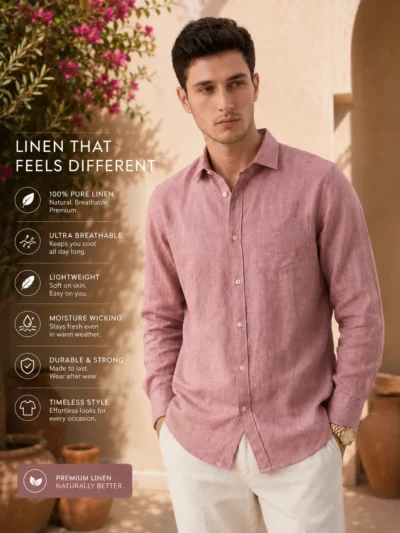
Oxy-Linen™ | Dusty Rose – 60 Lea European Linen Shirt
Original price was: ₹4999.00.₹3399.00Current price is: ₹3399.00.-
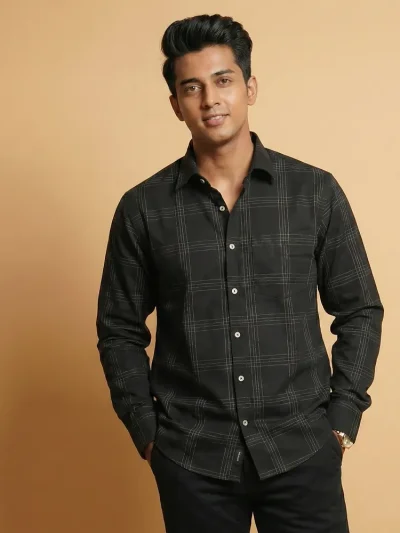
RUGGED-NAP | BLACK CHECKED SHIRT
Original price was: ₹1499.00.₹1299.00Current price is: ₹1299.00. -
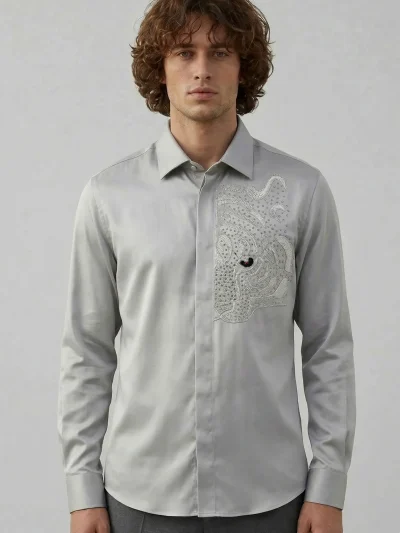
Noble Stitch | White Tiger Giza Cotton Shirt
Original price was: ₹1999.00.₹1599.00Current price is: ₹1599.00.
How Weaving Techniques Influence Linen Durability and Performance
The way these threads are interlaced decides how the linen behaves. A plain weave, where each weft thread goes over one warp and under the next, produces a balanced fabric that is durable but can wrinkle easily. A twill weave, where the weft floats over several warp threads, creates a diagonal pattern and adds strength without sacrificing softness. Basket weaves use multiple weft threads at a time, resulting in a thicker, more casual fabric that is perfect for shirts you want to look relaxed in.
The Role of Fabric Construction in Achieving a Crisp Yet Comfortable Look
For a crisp linen shirt, the warp is kept taut and the weave is tight. This gives the fabric a stiffer hand but a sharper silhouette. For comfort, the weft is given more slack or the weave is looser. This is why some linen shirts feel stiff when you first buy them but soften beautifully after a few washes, while others feel soft from day one but may lose shape faster. A well-made shirt balances both.
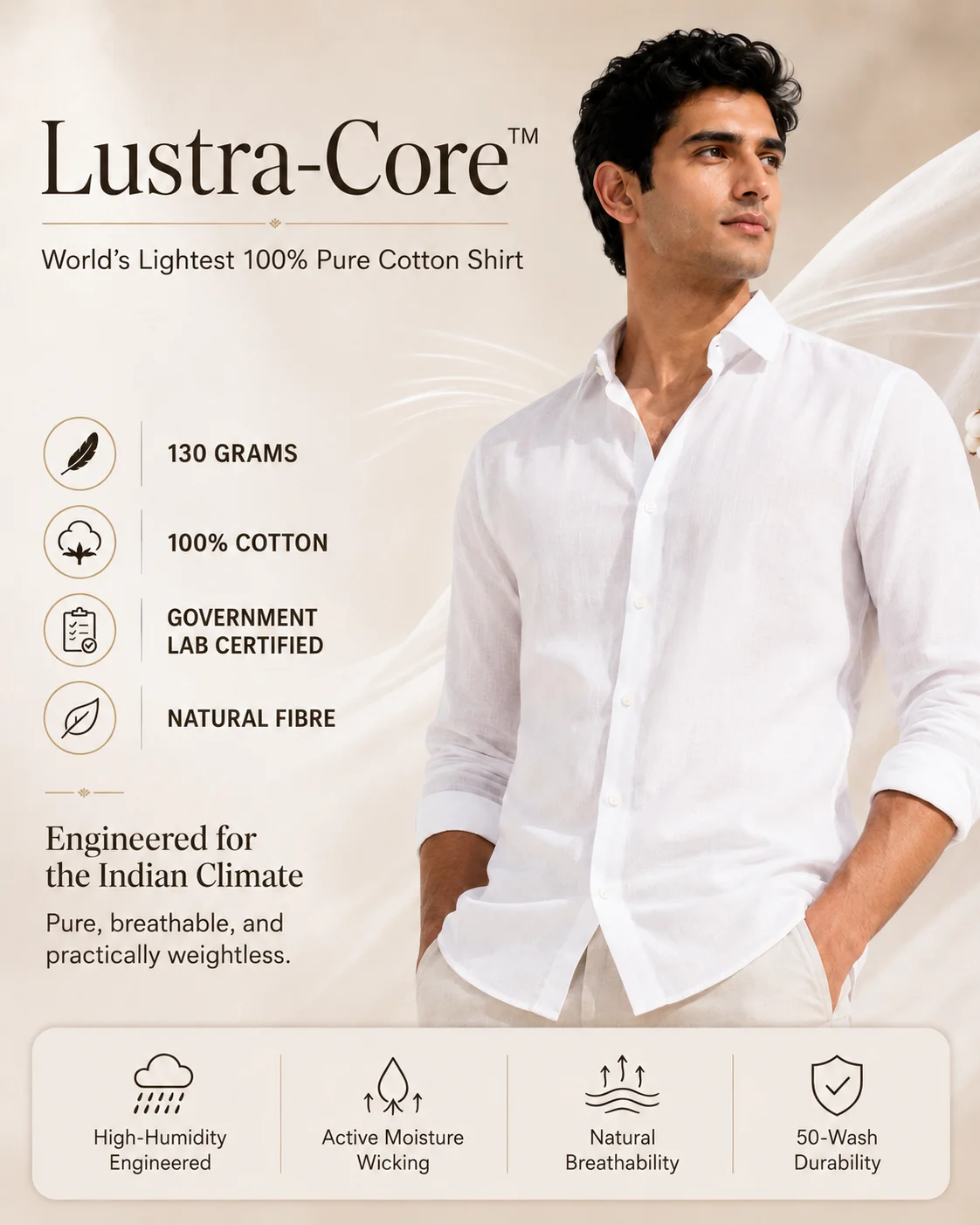
Lustra-Core™ Absolute White
Ultra-light pure cotton shirt engineered for Indian summers.
Textile Engineering Insights: What Happens When the Warp Tension Changes?
If the warp tension is too high, the fabric becomes brittle. It might snap at the seams after a few wears. If the warp tension is too low, the fabric will sag and lose its shape entirely. The weft density also plays a role. When the weft is packed tightly, the fabric becomes heavier and less breathable. When it is loose, the fabric is lighter but may show through more easily. This is why you cannot judge linen by weight alone; construction is key.
Practical Style Tips: Choosing Linen Garments Based on Their Thread Direction
- Align patterns with the warp direction for sharper silhouettes.
- Use the weft’s softness for relaxed weekend wear. A loosely woven linen shirt lets the weft fibers do their thing, giving you a rumpled, lived-in look without looking messy.
- For summer lookbooks, look for fabrics where the weft is slightly uneven. This creates a natural texture that catches light beautifully.
When you look at brands like Pehanoge, you will notice they pay attention to this interplay. Their formal shirts often have a tighter weave for crispness, while their casual linen pieces allow the weft to breathe. This distinction is subtle but essential for a modern Indian wardrobe that moves between the office and the weekend.
To evaluate linen quality, feel the tension. A good shirt should feel firm but not stiff. Check the consistency of the weft by looking at the fabric closely; it should be even. On labels, look for terms like “plain weave” or “basket weave.” When buying online, ask for a swatch or check return policies because texture is hard to judge on a screen.
Indian handloom traditions have always understood this balance. In Kutch, weavers use a high warp tension to create sturdy, long-lasting yardage. In Bengal, the weft is often looser, creating the famously soft “Tant” linen. These regional textures are now appearing in global menswear brands, and you can find Indian-made linen that carries this heritage without compromising on contemporary tailoring.
FAQs
What is the difference between warp and weft in linen fabrics?
The warp runs vertically and provides structural strength. The weft runs horizontally and contributes to softness and texture.
Why does the direction of the weave affect linen durability?
The warp bears the primary mechanical load. If the weave is too loose along the warp, the shirt loses shape; if too tight, it becomes brittle.
Can I tell the quality of a linen shirt by looking at its weave pattern?
Yes. A consistent, even weave usually indicates good quality. Irregularities often mean inconsistent thread tension during weaving.
How do I care for linen garments to preserve both warp and weft integrity?
Wash in cold water with mild detergent. Avoid wringing the fabric aggressively, as this can distort the weft. Line dry in shade to prevent the warp fibers from becoming brittle due to UV exposure.