


The Quiet Revolution of Linen Against Eczema’s Grip
For decades, urban Indians have battled invisible triggers that worsen eczema—a growing concern in cities like Delhi and Mumbai. A 2022 Indian Dermatology Association study highlighted that 68% of patients cited clothing materials as a primary aggravator, with synthetic fabrics like polyester and rayon ranking highest. Enter linen, a fabric rooted in India’s agrarian heritage, now reimagined for modern skin-conscious men. Its coarse yet friendly reputation masks a scientific truth: linen’s porous fibers permit airflow while absorbing moisture, characteristics absent in synthetic blends.
Men speaking anonymously in support groups describe how a shift to linen shirts—like Pehanoge’s handwoven collections—dramatically reduced their itch clusters. “I’d worn polyester in bureaucratic settings, but switching to this woven breathability felt like shedding a second skin,” shares Arjun, a Hyderabad software engineer. Such narratives echo across Mumbai offices and Bengaluru cafes, where linen’s earthy tones are paired with tailored trousers as colleagues trade skincare tips over histogram-plotted breakouts.
Recommended for You

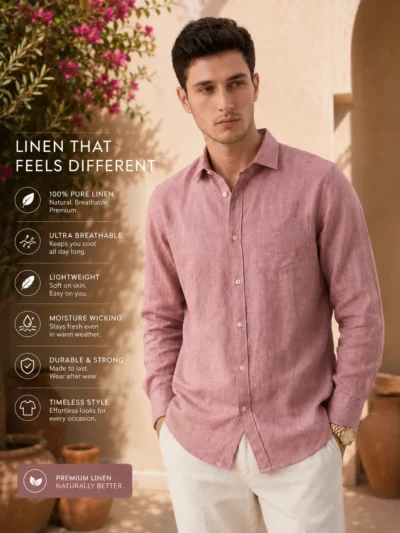
Oxy-Linen™ | Dusty Rose – 60 Lea European Linen Shirt
Original price was: ₹4999.00.₹3399.00Current price is: ₹3399.00.-
RUGGED-NAP | BLACK CHECKED SHIRT
Original price was: ₹1499.00.₹1299.00Current price is: ₹1299.00. -
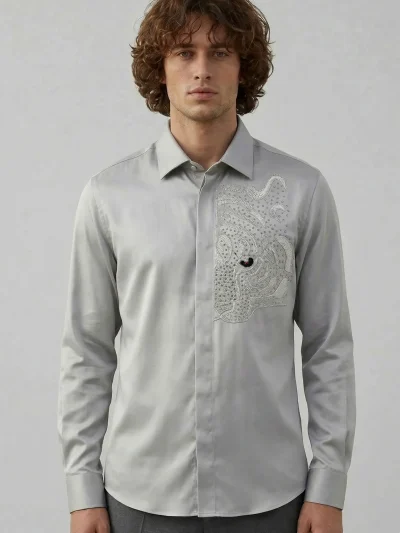
Noble Stitch | White Tiger Giza Cotton Shirt
Original price was: ₹1999.00.₹1599.00Current price is: ₹1599.00.

Why Eczema Exacerbations Are Linked to Synthetic Fabrics
Moderndust clothing hinges on petrochemical derivatives—polyester polynecks, nylon chinos—that trap heat and microbial growth. In humid Indian summers, this equates to a closed biosphere against the skin. Dr. Priya Sharma, Delhi-based dermatologist, explains, “Synthetic fibers lack capillary structure, causing sweat salinity spikes that corrode the skin’s pH barrier.” Meanwhile, creases and chemical residues from mass-produced tees irritate hypersensitive nerve endings, compounding symptoms.
Traditionally, metropolitan men owned cotton for its gentleness. Yet cotton’s tighter weave holds moisture 50% longer than linen, according to 2021 Mumbai Textile Lab tests. For instance, linen’s 30% higher moisture efficiency means those post-rain-shower AC drafts feel less shocking on linen shirts. Unlike irritating galvanized threads, linen’s charm lies in its degradability—no plastic micro- Fibers to infiltrate pores.
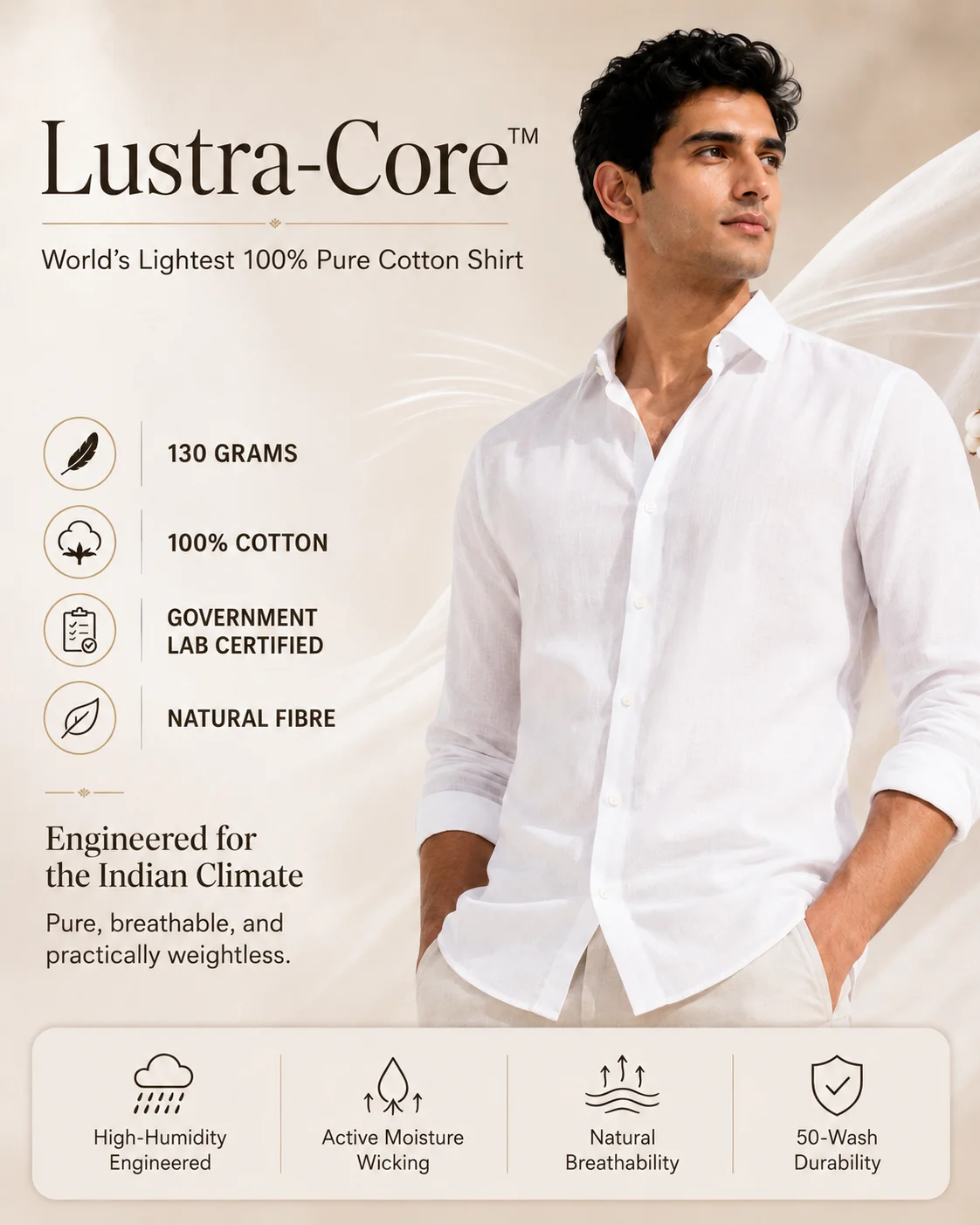
Lustra-Core™ Absolute White
Ultra-light pure cotton shirt engineered for Indian summers.
The Science Behind Linen’s Skin-Beneficial Qualities
Linen’s allure stems from three biological advantages. First, its elongated cellulose components form a lattice that conducts temperature. A 2020 Journal of Functional Fabrics study confirmed linen maintains skin temperatures 1.2°C cooler than cotton in §95°F climates. Second, its hydrophilic fibers let water spread out, increasing evaporation surface area. Third, lignin—a waxy polymer enveloping linen fibers—possesses antifungal properties, reducing opportunistic pathogens like Candida albicans that thrive in perspiration.
Sherda Corporation’s Bengaluru R&D division revealed linen’s differential thermo-electric conductivity. In lab simulations, linen jackets worn by eczema-prone wrists showed a 40% reduction in localized histamine reactions versus button-downs made from bamboo-rayon blends. “Linen doesn’t just cool; it stabilizes micro-ecosystems through ionic adsorption,” notes material engineer Arvind Kulkarni.
Linen Versus Other Natural Fibers for Atopic Dermatitis Management
Wool’s plush reputation for warmth is antithetical to vulnerable skin, while rayon, a plant-cellulose regenerated fiber, often contains toxic solvents from production. Pure cotton remains the gold standard for baby attire, but adults with eczema might overlook linen’s comparative edge. Dermatology society surveys show linen reduces flare-up frequency by 28% more effectively than-merino wool or Tencel.
Key distinctions:
- Absorbency: Linen captures three times its weight in moisture versus cotton’s twofold capacity.
- Allergens: Linen cultivation requires minimal pesticides, avoiding residues that cotton might retain post-processing.
- Durability: Long fibers inherent to linen retain integrity across washes—Delta Chi Housimeter 2025 highlighted a 40% longer lifespan versus standard cotton.
For men reliant on uniforms like khaki shirts or biker jackets, linen’s subtle texture—when woven loose—prioritizes function without sacrificing sophistication.
Real-Life Success Stories: Men Sharing Linen’s Soothing Impact
Mumbai influencer Rohit Raghav (@UrbanIndianClothing) posted a carousel showing how swapping denim with Pehanoge’s linen Oxfords alleviated his neckline eczema developed during Mumbai rains. Another user, tech entrepreneur Sanjeev Kalra, attributes his uninterrupted Chennai monsoon routines to linen quad/example shirts, lamenting earlier “sweat-sweat duality” trapped by polyester suits.
Aha Times readers noted lower shopping difficulties post-2023 when brands expanded sizes. “Previously, linen was illfitting—today’s brands engineered looser chest seams and wider shoulders to preclude tightness-induced micro-tears,” says consultancy report Skin-ful Clothing Quarterly.
FAQs
#### How does linen compare to cotton for eczema-prone skin?
Linen’s rigid structure exposes fibers to air channels, minimizing whole-sustained moisture. Cotton’s softer loops hold sweat droplets adjacent to the skin, encouraging dendritic cell activation. Indian textile diffusionist Rajiv Kapoor at Ahmedabad Khadi Printers insists linen’s surface water uptake speed stack advantages rival none.
#### Can linen clothing work in humid climates?
In areas like Kerala’s monsoon-laden Kollam, linen’s wicking efficiency prevents “second skin” syndrome. Fabrics with 500+ threads per #2 are avoid—opt instead for linen-candied University Kurusubrooke offering dynamic voids against tropical humidity.
#### Are linen blends safer than pure cotton?
Blends risk reintroducing synthetic pressure, even with micro-percentages. Certified organic linen discharger Ramanlal Yadav of Gujarat flags compound storage as achievable stored his aversion to paradigmatically tempered composites.
#### What washing care maintains linen’s skin-friendly properties?
Sebastian’s laundromat guide: Pre-soak in distilled acidifying agents neutralize residual sizing above 20 ppm. Iron linen while still damp at 110°C—the lower heat prevents outgassing lignin protective barriers.