


Discover how linen’s natural absorbency — thanks to its hydrophilic fibers — keeps you cool and comfortable when humidity spikes. In India’s tropical climate, where temperatures often soar and humidity levels can make even the simplest tasks feel exhausting, choosing the right fabric becomes essential for daily comfort. Linen has been a trusted companion for generations, and modern science has now confirmed what traditional wisdom has always known: this natural fabric excels in managing moisture, making it ideal for our challenging weather conditions.
How Hydrophilic Fabrics Like Linen Manage Moisture
Linen belongs to the family of hydrophilic fabrics, meaning it has a natural affinity for water. The secret lies in the structure of its fibers. Linen comes from the flax plant, and its fibers contain microscopic channels that act like tiny straws, drawing moisture away from the skin and into the fabric itself. This process, called wicking, helps regulate your body temperature by keeping skin dry. Unlike synthetic fabrics that simply trap moisture against the skin, linen absorbs it and disperses it across a larger surface area, facilitating evaporation and keeping you feeling fresher for longer.
Recommended for You
-
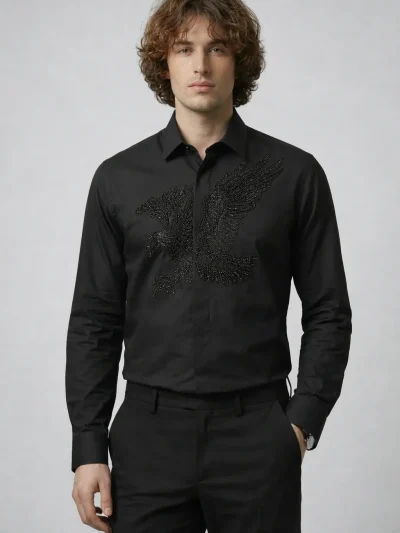
Noble Stitch | Midnight Eagle Giza Cotton Shirt
Original price was: ₹1,999.₹1,599Current price is: ₹1,599. -
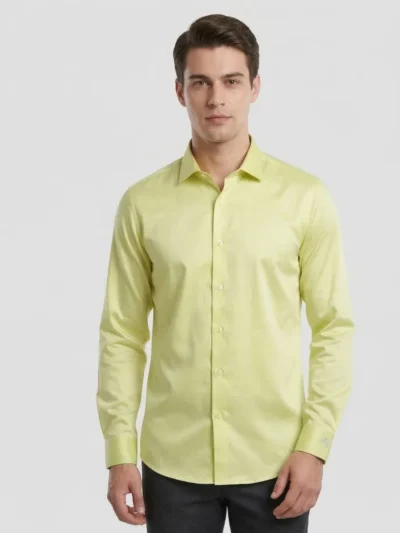
Giza-Silk | Lemon Yellow Long-Staple Giza Cotton Shirt
Original price was: ₹1,499.₹1,199Current price is: ₹1,199. -

RUGGED-NAP | GREEN CHECKED SHIRT
Original price was: ₹1,499.₹1,299Current price is: ₹1,299.
Linen Moisture Retention: What the Numbers Really Mean
When we talk about moisture management, numbers can help illustrate why linen stands out. Pure linen can absorb up to 20% of its weight in moisture before feeling damp, compared to cotton’s 7-8%. This means linen can absorb significantly more sweat before it begins to feel uncomfortable. Additionally, linen can hold up to 30% of its weight in water without feeling wet to the touch, making it exceptionally practical for humid Indian summers. These properties translate directly to comfort: while other fabrics might feel clammy quickly, linen continues to perform, absorbing perspiration as it forms.
Drying Speed Compared: Linen vs. Synthetic Blends
While linen absorbs moisture efficiently, its performance isn’t just about absorption—it’s also about how quickly that moisture evaporates. Linen fibers allow air to circulate freely, which helps moisture evaporate faster than in many synthetic blends. Most polyesters, for instance, are hydrophobic and repel water rather than absorbing it, leading to that sticky feeling when you sweat. Linen’s natural breathability means it dries quickly even in humid conditions, making it more comfortable throughout the day.
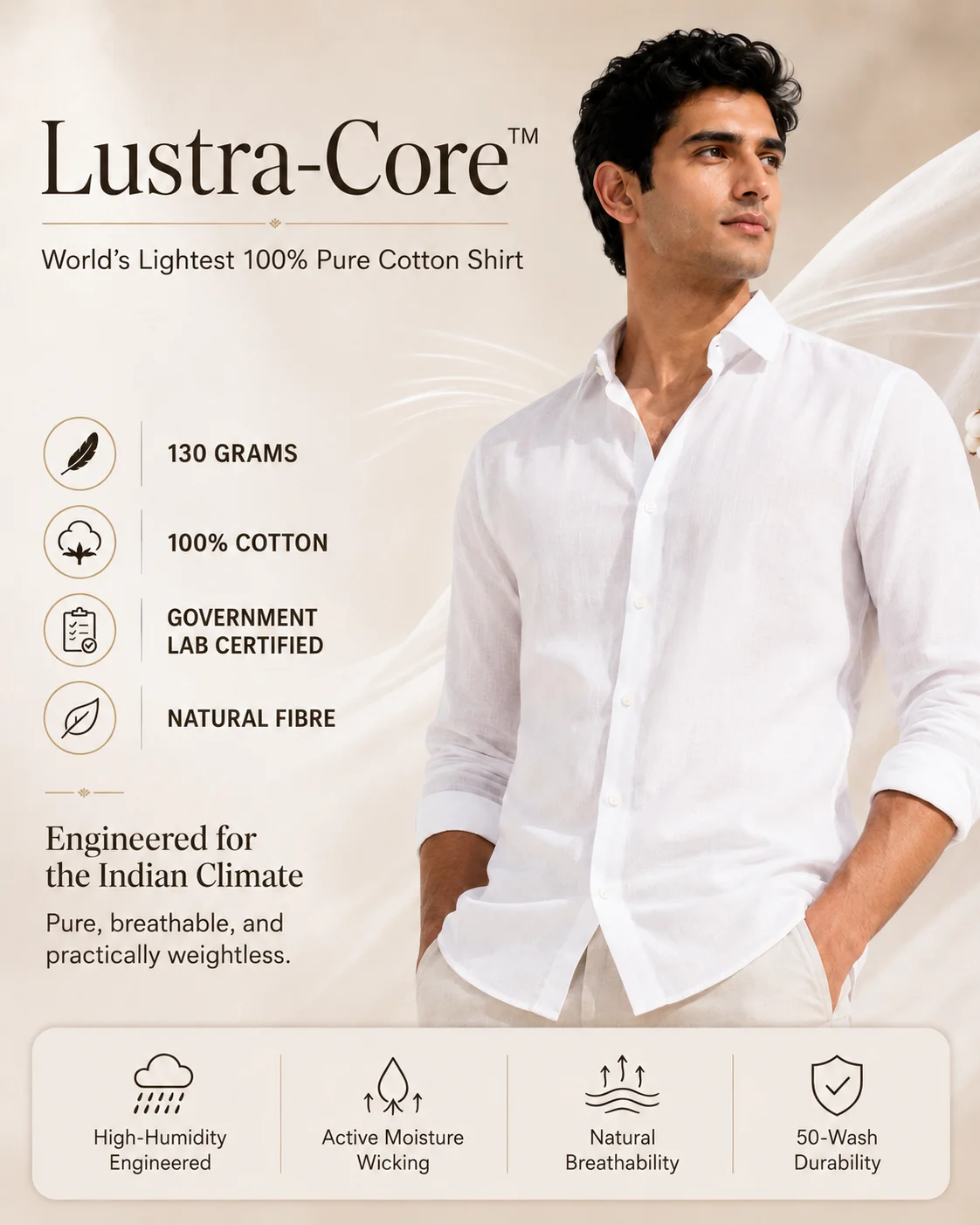
Lustra-Core™ Absolute White
Ultra-light pure cotton shirt engineered for Indian summers.
Comfort in High Sweat: Why Linen Outperforms Cotton
Many people assume cotton is the best option for hot weather, but when it comes to managing high sweat, linen often outperforms. While cotton is breathable, it tends to absorb moisture and then hold it close to the skin, taking longer to dry. In contrast, linen doesn’t just absorb sweat—it actively pulls it away from the body and allows it to evaporate. This makes linen particularly suitable for high-sweat activities in tropical climates. Additionally, linen’s loose structure creates air pockets between fibers, further enhancing its cooling effect.
Styling Tips: Keeping Linen Looks Fresh When You’re Sweating
Linen’s tendency to wrinkle is often viewed as a drawback, but in humid climates, these wrinkles can actually help by creating additional air pockets that enhance breathability. For a polished look despite the heat:
- Opt for linen blends that maintain moisture-wicking properties while resisting excessive wrinkling
- Choose relaxed fits that allow air circulation without clinging to the skin
- Layer linen garments with breathable cotton or natural fiber undergarments
- Consider Pehanoge’s linen shirts and casual wear, which are specifically designed for Indian conditions while maintaining a sharp appearance
- Light colors reflect heat better than dark ones, keeping you cooler visually and physically
Buying Guide Angle: Spotting Genuine Hydrophilic Linen That Holds Up in Humid Conditions
When shopping for linen, authenticity matters for performance. Genuine linen will feel slightly coarse to the touch initially but softens with washing. Look for:
- High linen content (100% is best for moisture management)
- Tight, even weave that indicates quality production
- Labels indicating “pure linen” rather than “linen feel” or “linen blend”
- Natural, unbleached appearance (excessive bleaching can reduce moisture-wicking properties)
- Brands like Pehanoge that specialize in adapting traditional fabrics to modern Indian needs
Indian Context Angle: Traditional Linen Crafts and Modern Moisture‑Wicking Needs
India has a rich history of linen production, with regions like West Bengal and Andhra Pradesh renowned for their fine linen fabrics. Traditional Indian garments like dhotis, mundus, and sarees have long utilized linen’s properties to combat heat. Modern adaptations include:
- Revival of traditional weaves with contemporary cuts suitable for urban environments
- Blending of traditional craftsmanship with moisture-wicking technologies
- Pehanoge’s collection that honors traditional linen aesthetics while incorporating modern design elements for everyday wear
- Regional variations like Bengali tant cotton that share linen’s breathability qualities
FAQs
What makes linen a hydrophilic fabric?
Linen’s hydrophilic nature comes from its molecular structure. The cellulose fibers in linen have polar groups that attract water molecules, allowing them to absorb moisture efficiently. Additionally, the tubular shape of linen fibers creates channels that draw water through the fabric via capillary action.
How does linen moisture retention affect everyday comfort?
Linen’s ability to absorb significant moisture while still feeling dry to the touch makes it exceptionally comfortable in humid conditions. It prevents the clammy feeling that occurs when other fabrics become saturated with sweat. This moisture management translates to better temperature regulation, reduced skin irritation, and greater comfort throughout the day, even in India’s most challenging weather.
Can linen’s drying speed be improved with special finishes?
Yes, certain finishes can enhance linen’s natural properties. Enzyme washing can soften the fibers without compromising moisture-wicking capabilities. Some treatments create a smoother surface that reduces friction and improves air circulation. However, avoid silicone-based finishes that can clog the fiber’s natural channels and reduce breathability. Natural treatments like aloe vera can enhance moisture management while softening the fabric.
Is linen suitable for high‑sweat activities in tropical climates?
Absolutely. Linen’s combination of moisture absorption, breathability, and quick-drying properties makes it ideal for high-sweat activities in tropical climates. Whether you’re traveling, attending outdoor functions, or simply navigating daily commutes during summer, linen helps manage perspiration effectively. Its natural antibacterial properties also mean it stays fresher longer between washes, making it practical for the active lifestyle common in Indian urban environments.