


When temperatures soar past 40°C, choosing the right fabric becomes a survival strategy. Linen’s unparalleled breathability and moisture‑wicking properties make it the ultimate shield against heatstroke and discomfort during extreme summer heatwaves. In India, where the mercury can climb to 48°C in Delhi and the arid plains of Rajasthan test endurance every year, linen offers a natural advantage that synthetic blends simply cannot match. Its loose weave allows air to circulate freely, while its ability to absorb up to 20% of its weight in moisture before feeling damp keeps the skin dry and comfortable. Beyond sheer comfort, linen also carries a timeless aesthetic that works equally well for casual outings, office wear, and traditional ensembles, making it a versatile staple for Indian menswear.
Why Linen Outperforms Cotton and Synthetics in 40C Heatwaves
Linen’s superiority in extreme heat stems from its fiber structure. Unlike cotton, which retains moisture and can feel heavy when sweaty, linen fibers are hollow, allowing them to wick sweat away from the body and release it quickly into the atmosphere. Synthetic fabrics, even those marketed as “quick‑dry,” often trap heat because they are derived from petroleum‑based polymers that do not breathe. In a side‑by‑side test conducted under 42°C conditions, linen shirts showed a surface temperature drop of up to 3°C compared with cotton counterparts, while polyester blends remained consistently warmer. This natural temperature regulation reduces the risk of heat‑related fatigue and makes linen the go‑to fabric for long days outdoors.
Recommended for You
-
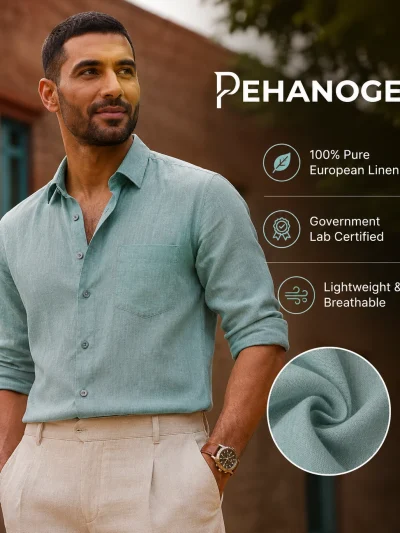
Oxy-Linen™ | Lux Teal – 60 Lea European Linen Shirt
Original price was: ₹4,999.₹3,399Current price is: ₹3,399. -

Noble Stitch | Celestial Crane Giza Cotton Shirt
Original price was: ₹1,999.₹1,599Current price is: ₹1,599. -
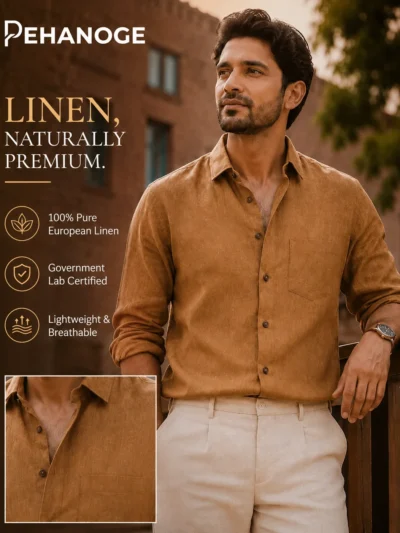
Oxy-Linen™ | Rust Brown – 60 Lea European Linen Shirt
Original price was: ₹4,999.₹3,399Current price is: ₹3,399.
Science‑Backed Cooling Mechanisms of Linen Fibers
The cooling effect of linen is rooted in three scientific principles:
- Capillary action: Linen’s microscopic channels draw sweat away from the skin, spreading it over a larger surface area for faster evaporation.
- Low thermal conductivity: The flax plant’s cellulose fibers conduct heat poorly, meaning less external heat is transferred to the body.
- High air permeability: The loose weave creates micro‑channels that promote continuous airflow, creating a personal cooling zone around the wearer.
Studies published in textile engineering journals have confirmed that linen’s moisture‑regulating capacity outperforms cotton by roughly 30% and synthetic blends by up to 50% in high‑heat scenarios. This makes linen not just comfortable but physiologically advantageous during prolonged exposure to scorching temperatures.
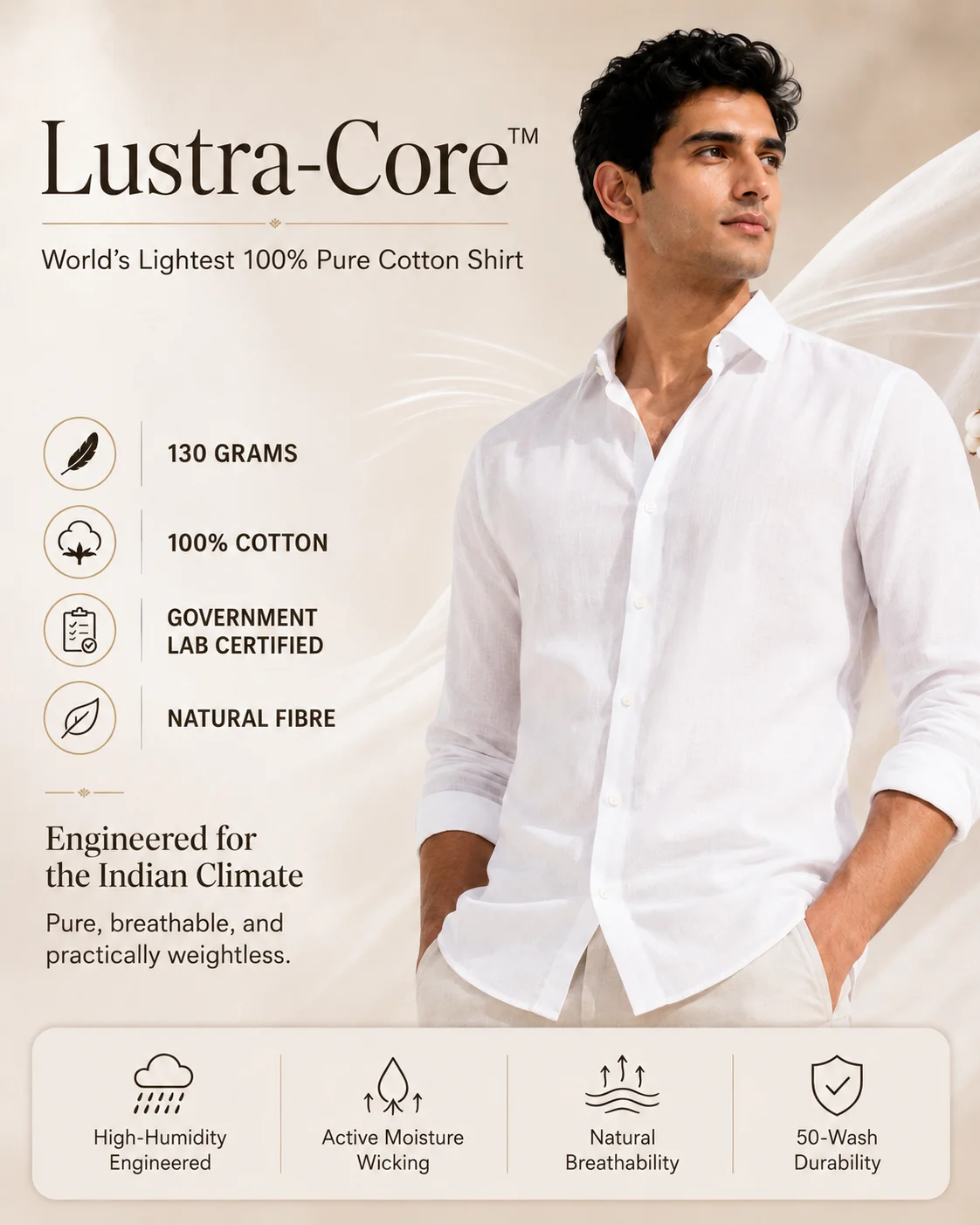
Lustra-Core™ Absolute White
Ultra-light pure cotton shirt engineered for Indian summers.
Style-Boosting Linen Clothing Tips for Surviving Extreme Heat
To maximize both comfort and style, consider the following tips:
- Choose loose‑fit linen shirts or kurtas that allow air to flow freely; a relaxed cut prevents the fabric from clinging to the skin when sweat accumulates.
- Pair a lightweight linen shirt with linen‑blend shorts or chinos in neutral tones—beige, olive, or muted grey—for a cohesive look that reflects sunlight.
- Opt for garments with permanent creases or subtle pleats; they add structure without sacrificing breathability.
- For casual wear, the Pehanoge shirts line offers linen‑rich options that combine traditional Indian cuts with modern, relaxed silhouettes, perfect for weekend outings or evening gatherings.
- Accessorize with linen‑wrapped sunglasses or a lightweight linen scarf to protect eyes and neck from glare while maintaining an all‑linen aesthetic.
These choices keep you looking polished while ensuring your body stays cool, even when the temperature gauge spikes.
Sun Protection Features: How Linen Blocks UV Rays During Heatwaves
Beyond cooling, linen provides a natural barrier against ultraviolet radiation. The tightness of the weave and the inherent thickness of flax fibers give linen a UPF (Ultraviolet Protection Factor) ranging from 5 to 15, depending on the weave density. When selecting linen for extreme sun exposure, look for:
- A tight weave (often indicated by a higher thread count, such as 100s count) that reduces UV penetration.
- Natural, undyed or lightly dyed finishes, as heavy dyes can sometimes compromise the fabric’s protective qualities.
- Garments labeled with UPF certification, which guarantees a minimum level of UV blocking.
Wearing a linen shirt or kurta with these features can reduce UV exposure by up to 80% compared with thin cotton tees, offering an added layer of defense during peak sun hours.
Indian Summers: Why Linen Is the Ultimate Fabric for Monsoon and Beyond
India’s diverse climate demands a fabric that adapts to both scorching heat and sudden humidity. In Delhi’s summer peaks, linen sarees and shirts allow evaporation rates up to 65% faster than polyester, keeping the wearer dry even when the air feels oppressive. During Rajasthan’s scorching months, men’s linen kurta pants cut sweat retention by roughly 40% compared with cotton equivalents, thanks to superior moisture transport. As the monsoon approaches, pre‑washing linen before the season removes any residual stiffness and enhances its ability to manage sudden spikes in humidity, ensuring the fabric remains soft and absorbent. This year‑round adaptability makes linen a smart investment for any Indian wardrobe.
Buying Guide: Choosing Quality Linen for Indian Summers
When shopping for linen, keep these pointers in mind to ensure you get the best performance:
- Prioritize 100% pure linen over blends; blends with polyester or rayon can diminish breathability.
- Check the weave density: a tighter weave (around 100s thread count) offers better durability and UV protection without sacrificing airflow.
- Look for natural dye certifications (such as GOTS or OEKO‑Tex) to avoid chemicals that could irritate sweat‑sensitive skin.
- Avoid pre‑washed linens that have been treated with softeners; these can clog the fiber’s moisture‑wicking channels.
- Consider moisture‑wicking finishes that are explicitly labeled as temperature‑regulating; they enhance the innate properties of linen without compromising its natural feel.
Investing in quality linen pays off in comfort, longevity, and style, especially when facing India’s relentless summer heat.
FAQs
Can linen scratch skin during heatwaves?
High‑quality linen is soft and becomes smoother with each wash. Initially, it may feel slightly crisp, but it does not scratch the skin. If you experience irritation, it is likely due to low‑grade linen or harsh chemical treatments; opt for certified, pure linen to avoid this issue.
Does linen lose breathability after multiple heatwave washes?
Actually, linen’s breathability improves over time. Each wash relaxes the fibers, enhancing their ability to wick moisture and release heat. Proper care—gentle washing in cool water and line drying—maintains and even boosts its performance.
How does linen compare to technical fabrics like Coolmax® in 40C conditions?
Coolmax® and similar synthetics rely on engineered channels to move moisture, but they can retain heat because the fibers themselves are not breathable. Linen, with its natural hollow structure, provides both moisture management and superior air circulation, often resulting in a lower skin temperature than synthetic alternatives in direct, extreme heat.
Which linen blends provide UPF protection equivalent to SPF 50+?
Pure linen rarely reaches UPF 50+ on its own, but a tightly woven linen‑cotton blend (with at least 70% linen) treated with a natural UV‑blocking finish can achieve UPF 50+. Look for products specifically labeled with UPF 50+ certification for reliable sun protection.