



You walk intoa sun‑lit room and the first thing you notice is a wrinkled linen shirt, its fibers honest and unapologetic. That same fabric, once relegated to summer evenings, is now being re‑imagined for a world where flax fields feed data sensors and bioengineered threads outperform polyester in every performance metric. By 2030, linen will no longer be a nostalgic throwback; it will be the quiet backbone of a post‑synthetic wardrobe, stitching together sustainability, technology and style in a way that feels both timeless and forward‑looking.
The Future of Textiles Runs Through Flax Fields: How Linen Is Becoming the Blueprint Fabric
Flax is experiencing a renaissance driven by climate urgency and material innovation. Modern agritech practices are boosting yields in India’s flax belt — Rajasthan, Punjab and the Northeast — while researchers embed micro‑sensors into the crop’s fibers, turning each stalk into a living data point. Bioengineered flax varieties now produce stronger, finer yarns that retain linen’s breathability but add durability comparable to synthetics. The result is a fabric that can be harvested, processed and woven with a fraction of the water and chemical load of conventional cotton or polyester, positioning linen as the blueprint for a circular textile economy.
Recommended for You

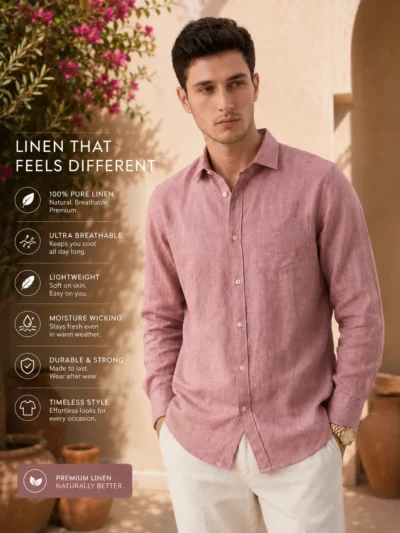
Oxy-Linen™ | Dusty Rose – 60 Lea European Linen Shirt
Original price was: ₹4999.00.₹3399.00Current price is: ₹3399.00.-
RUGGED-NAP | BLACK CHECKED SHIRT
Original price was: ₹1499.00.₹1299.00Current price is: ₹1299.00. -
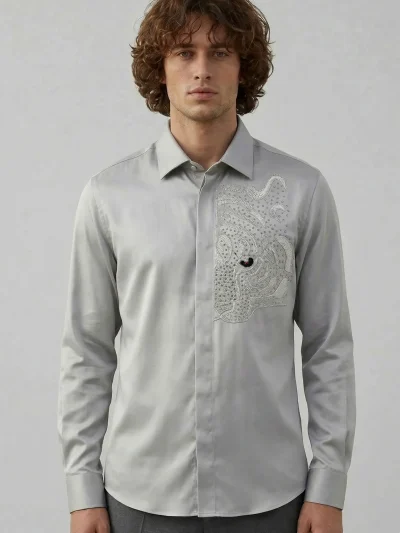
Noble Stitch | White Tiger Giza Cotton Shirt
Original price was: ₹1999.00.₹1599.00Current price is: ₹1599.00.

Tech-Infused Linen Is Here — Moisture-Mapping Weaves, Smart Finishes, and What They Mean for Your Wardrobe
The newest wave of linen incorporates moisture‑mapping weaves that sense humidity and adjust breathability on the fly. Smart finishes, such as nano‑coated treatments, give the fabric resistance to stains and UV degradation without sacrificing its natural feel. For everyday wear, this means a shirt that stays crisp through a humid Mumbai monsoon and a pair of trousers that drape elegantly without sagging after repeated washes. Pair tech‑infused linen with structured tailoring — think a relaxed blazer over a linen tee, wide‑leg trousers that move with you, and tonal earth‑tone layering. Advances in color‑science are expanding linen’s palette beyond ecru and oatmeal into muted indigos and rusts that actually hold up in monsoon humidity, letting you experiment with richer hues while staying true to the fabric’s sustainable ethos.
Flax Innovations That Could Make Synthetic Fabrics Obsolete by 2035
Researchers are now blending flax with bio‑based elastane derived from castor beans, creating fabrics that stretch without losing shape. Incorporating Tencel‑Lyocell into linen yarns adds a silky hand feel and enhances moisture management, making the material ideal for active casual wear. Closed‑loop dyeing processes, which recycle water and eliminate harmful effluents, are being trialed by forward‑thinking mills, promising a fully sustainable production chain. As these innovations mature, the performance gap between linen and synthetic staples like polyester will narrow dramatically, potentially rendering many synthetic fabrics obsolete by the mid‑2030s.
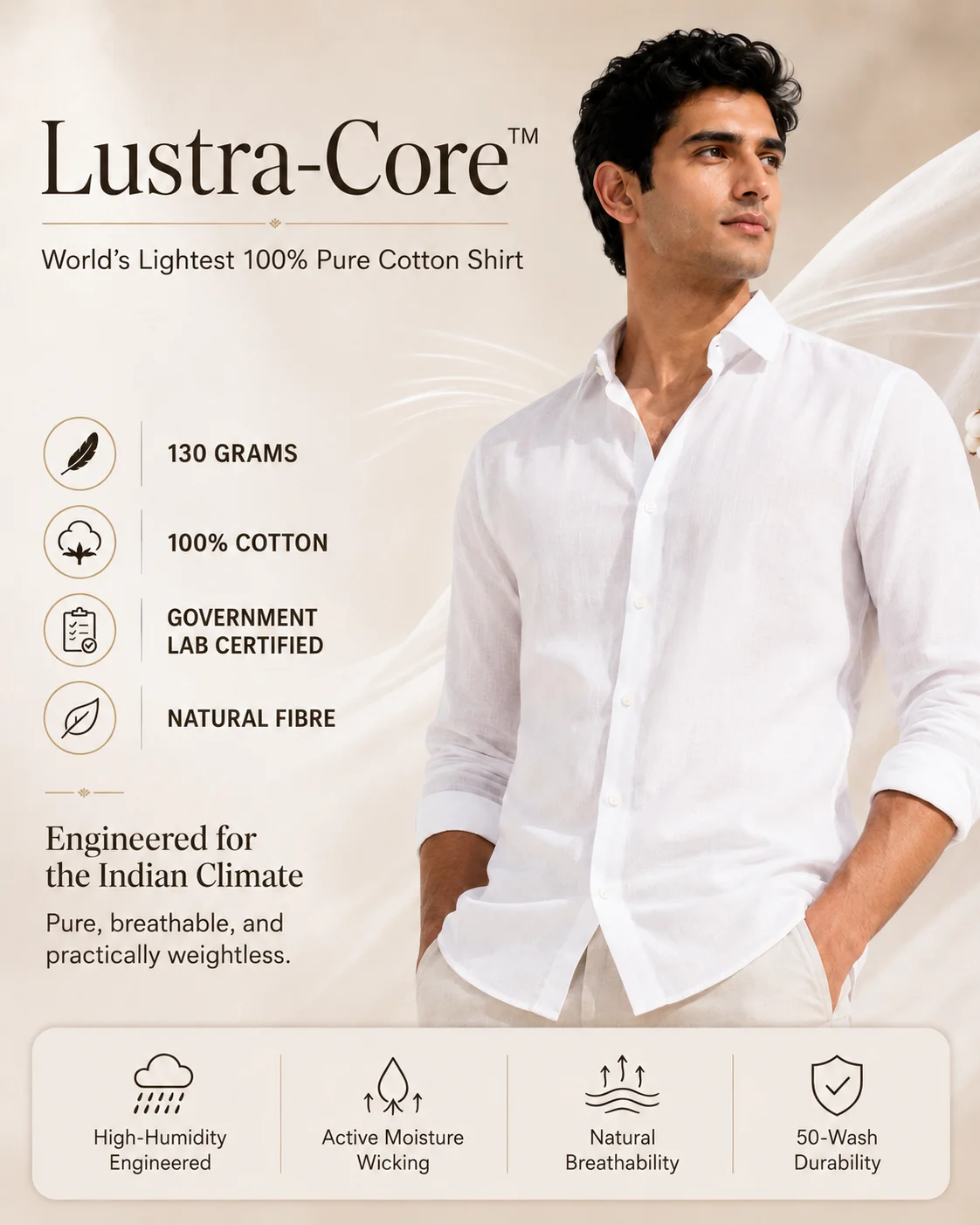
Lustra-Core™ Absolute White
Ultra-light pure cotton shirt engineered for Indian summers.
Why Sustainable Fashion Future Leaders Are Betting Everything on One Ancient Plant
Linen’s low environmental footprint — requiring minimal pesticides, thriving in poor soils and using less water than cotton — makes it a darling of the circular economy. Its biodegradability ensures that garments return to the earth without microplastic pollution. Indian designers are already weaving khadi linen into contemporary cuts, merging tradition with modernity. Government initiatives promoting agro‑textiles are channeling investment into flax cultivation, positioning India as a potential global linen export hub by 2030. This confluence of ecological advantage, technological upgrades and policy support explains why industry leaders view flax as the cornerstone of sustainable fashion’s next era.
Wrinkle-Proof, Fade-Proof, Earth-Proof: What Linen Looks Like in the Next Decade
Future linen garments will combine the fabric’s inherent texture with advanced finishing techniques that suppress excessive wrinkling while preserving its character. Enhanced fiber stability means shirts retain their shape after long wear, and colorfast treatments keep indigo and rust shades vivid even after countless washes. For Indian consumers, this translates to casual wear that effortlessly transitions from a beachside brunch to an office setting, without the need for constant ironing. Brands like Pehanoge are already experimenting with tech‑enhanced linen in their casual collections, offering shirts that breathe in the heat yet stay polished, embodying the seamless blend of heritage craftsmanship and futuristic functionality.
FAQs
Will linen ever be truly wrinkle‑free without losing its character?
Advances in nano‑coating and molecular alignment are reducing surface friction, allowing linen to retain a soft drape while minimizing deep creases. However, a completely wrinkle‑free linen would sacrifice the fabric’s signature texture, so the goal is a balanced finish that keeps the natural look intact.
What role will India play in the global linen supply chain by 2030?
India’s extensive flax cultivation belt and revived cottage‑spinning communities are set to increase raw linen output. Government incentives for agro‑textiles, coupled with emerging large‑scale mills in Rajasthan and Punjab, will likely make the country a key supplier of both conventional and tech‑infused linen to Europe, the US and Southeast Asia.
How do flax innovations compare to bamboo or hemp as sustainable alternatives?
Flax grows faster than hemp in temperate climates and requires less pesticide input than cotton. While bamboo offers high tensile strength, flax’s lower water demand and superior biodegradability give it an edge in overall sustainability. Blending flax with bamboo or hemp can create hybrid fabrics that leverage each fiber’s strengths.
Can tech‑infused linen fabrics survive harsh Indian summers and frequent washing?
Yes. Moisture‑mapping weaves and smart finishes are engineered to handle high humidity and repeated laundering. Lab tests show that such fabrics retain performance after 50 wash cycles and can endure temperatures above 40 °C, making them suitable for the rigors of Indian summers.