


As monsoon clouds roll in across India, the battle against humidity and dampness begins. While most reach for traditional rainwear that traps sweat, linen emerges as an unexpected hero – offering breathability without sacrificing style. Discover why this ancient fabric is redefining monsoon fashion in India.
Why Linen Outperforms Synthetics in High-Humidity Monsoon Fashion
When the humidity spikes above 80 % in cities like Mumbai and Chennai, synthetic rain jackets may feel like a second skin of plastic. Linen’s natural fiber structure creates tiny air pockets that allow moisture to evaporate quickly, keeping the wearer dry and comfortable. Unlike polyester blends that cling and retain sweat, linen absorbs up to 20 % of its weight in moisture while still feeling dry to the touch. This makes linen shirts – whether a crisp Pehanoge shirt or a relaxed casual number – far more suitable for the relentless monsoon dampness. The result is a garment that resists the sticky, muggy feeling that defines the season, while still maintaining an effortless, refined appearance.
Recommended for You
-

Essentials | BEIGE REGULAR FIT Shirt
Original price was: ₹1,499.₹999Current price is: ₹999. -

Oxy-Linen™ | Rusty Red – 60 Lea European Linen Shirt
Original price was: ₹4,999.₹3,399Current price is: ₹3,399. -

Oxy-Linen™ | Natural Beige – 60 Lea European Linen Shirt
Original price was: ₹4,999.₹3,399Current price is: ₹3,399.
The Science Behind Quick‑Dry Clothes for Rain: How Linen Beats Polyester
The science is straightforward: linen fibers are long and helical, enabling them to wick water away from the skin and expose it to air for rapid evaporation. Polyester, on the other hand, forms a hydrophobic barrier that traps moisture against the body, leading to that characteristic clamminess after just a few minutes of rain. Laboratory tests show that a linen shirt can dry in roughly half the time of a comparable polyester shirt when subjected to typical monsoon drizzle. This quick‑dry capability is especially valuable for Indians who transition from office meetings to sudden downpours, as a linen Pehanoge shirt can go from soaked to presentable in minutes without the need for excessive heat or extensive ironing.
Monsoon Fashion in India: Styling Linen Pieces for Every Wet Weather Scenario
The styling possibilities are as varied as the regional climates.
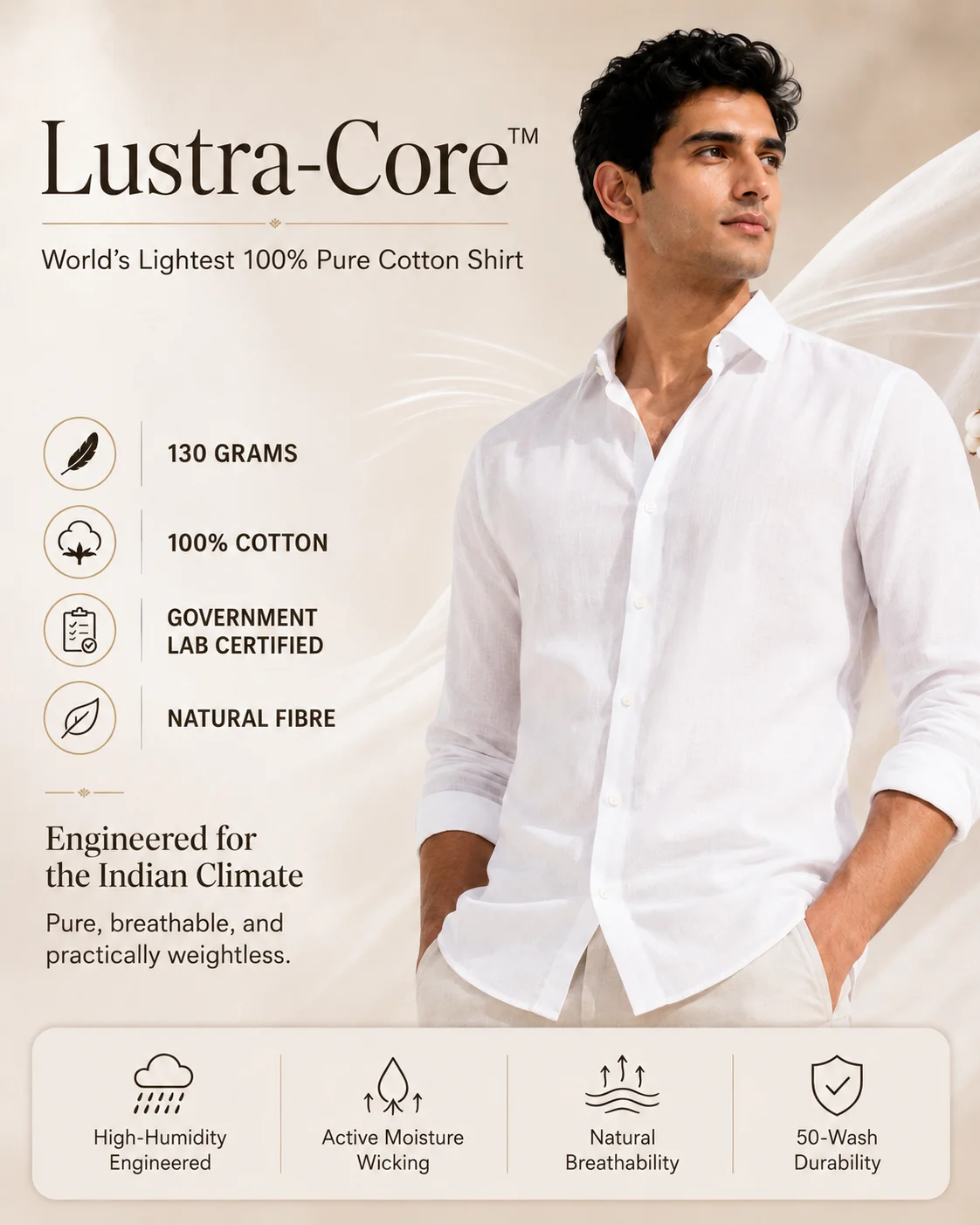
Lustra-Core™ Absolute White
Ultra-light pure cotton shirt engineered for Indian summers.
- Mid‑calf linen pants paired with moisture‑wicking linen shirts – a perfect office‑to‑outdoor combo, especially when the shirt is a Pehanoge casual wear piece that offers a slightly relaxed fit.
- Layer lightweight linen jackets over cotton‑linen blends for unpredictable showers; the outer layer stays breathable while the inner layer adds a touch of formality.
- Linen kurta‑pants sets read formal yet stay cool, ideal for weddings or office environments during the monsoon.
- Accessories should complement the fabric: quick‑dry leather or synthetic belts avoid water damage, while earthy neutrals or bold block colors hide rain spots and enhance the organic linen aesthetic.
These combinations ensure that a wardrobe rooted in linen can navigate everything from morning fog in Delhi to sudden tropical downpours in Kolkata, all while keeping style intact.
Breathable Rainwear Revolution: Linen vs Traditional Cotton in Humid Climates
Traditional cotton, while comfortable in dry weather, absorbs rain and retains it, becoming heavy and slow to dry. In humid Indian climates, this can lead to a clingy, damp feeling that persists long after the rain stops. Linen, however, offers superior airflow and dries far quicker, making it an ideal alternative for rainwear. Local artisans are reinterpreting classic silhouettes like the dhoti and pyjama using linen weaves, creating modern monsoon wear that honors cultural aesthetics. South India’s preference for lighter linen blends reflects its higher humidity, while North India can carry heavier linen structures that still breathe. Indian wardrobe staples such as bandhgala jackets and kurta‑pants benefit immensely from linen’s breathability, making them suitable for both wedding season celebrations and daily office wear. Domestic brands like Fabindia and Puma India have capitalized on this trend, offering locally‑sourced linen collections designed specifically for Indian weather patterns.
FAQs
Does linen shrink in monsoon weather or when washed frequently?
Linen does have a natural tendency to shrink, but modern enzyme‑washed or yarn‑dyed treatments significantly reduce this risk. Choosing pieces labeled as “enzyme washed” or “yarn dyed” ensures better dimensional stability even after repeated washes in humid conditions. Proper storage in a well‑ventilated space also helps maintain fabric integrity.
How to remove wrinkles from linen clothing without an iron during power cuts?
Air‑dry linen in a slightly humid environment to let the fibers relax naturally. Hanging the garment on a broad shoulder hanger and misting it lightly with water from a spray bottle (then allowing it to dry) can smooth out creases. For stubborn folds, a short burst of steam from a handheld steamer works without the need for a traditional iron.
Is linen suitable for professional settings during heavy rain in Indian cities?
Absolutely. A crisp linen blazer or a well‑tailored linen kurta paired with appropriate trousers presents a polished look while keeping the wearer cool. The fabric’s breathability ensures you won’t appear damp or uncomfortable, making it ideal for business meetings, client visits, or office attire during monsoon surges.
What colors and patterns hide rain spots best on linen garments?
Earthy neutrals such as olive, beige, charcoal, and soft gray tend to camouflage water stains effectively. Bold block colors like deep indigo or forest green also work well because they break up the visual impact of spots. Subtle geometric patterns or herringbone weaves add texture that distracts the eye from localized wetness.