



The quiet alchemy that turns a simple green stalk into the crisp, breathable fabric we call linen begins long before the loom. In the sun‑drenched fields of India, flax plants are harvested and then left to undergo retting – a natural, microbial process that loosens the fibers from the woody core. This transformation is not just a step; it is the chemistry that decides whether the resulting linen feels luxe or merely functional. By understanding how moisture, temperature, and time interact with the plant’s natural enzymes, we can appreciate why a piece of cloth made from properly retted flax carries a story of patience, place, and precision.
Understanding the Flax Retting Process: From Field to Fiber
When the flax stems are cut, they are bundled and spread across a damp field or a shallow tank. Over several weeks, bacteria and fungi feast on the pectin that glues the long cellulose fibers together. As these microorganisms break down the pectin, the fibers become loosened, making them easy to separate later. The process can be carried out in water retting, where the bundles soak in a river or pond, or in dew retting, where they lie on the ground and are misted by nightly dew. Each method imparts a subtle variation in color and strength, but the core principle remains the same: a controlled decay that prepares the fiber for extraction.
Recommended for You
-

RUGGED-NAP | BLACK CHECKED SHIRT
Original price was: ₹1,499.₹1,299Current price is: ₹1,299. -

Essentials | CHARCOAL GRAY Enriched Cotton Shirt
Original price was: ₹1,499.₹999Current price is: ₹999. -

Oxy-Linen™ | Earth Green – 60 Lea European Linen Shirt
Original price was: ₹4,999.₹3,399Current price is: ₹3,399.
Key Variables in Retting: Water Quality, Temperature, and TimeThe quality of the retted fiber hinges on three intertwined variables. First, water quality – clear, slightly alkaline streams are preferred because they foster the right microbial community without introducing harmful contaminants. Second, temperature influences microbial activity; warmer water accelerates breakdown but can also lead to over‑retting, where fibers become brittle. Third, time is the most delicate knob – a few extra days can shift the fiber from ideal softness to weakness. In many Indian rural setups, farmers monitor the process by simply feeling the bundles; when the woody core splits easily, retting is complete.
From Retting to Yarn: Integrating Linen Manufacturing Steps
Once retted, the bundles are dried in the sun, then scutched to remove the broken woody parts, and finally hackled to comb out shorter fibers, leaving behind long, uniform strands. These strands are spun into yarn, a step that requires a gentle twist to preserve the fiber’s integrity. The resulting yarn can be woven into a variety of textiles, from lightweight shirts to sturdy home furnishings. The continuity from field to finished fabric underscores why the initial retting stage holds such sway over the final product’s feel and durability.
Comparative Insight: Flax Retting vs. Modern Mechanical Decortication
Traditional water or dew retting relies on natural microbial action, producing a fiber that is often softer and more uniform. Modern mechanical decortication, on the other hand, uses crushers and rollers to strip the fiber without microbial assistance, offering speed but sometimes at the cost of fiber length and tensile strength. While the industrial route can meet high volume demand, many discerning menswear enthusiasts still gravitate toward naturally retted linen because of its subtle sheen, organic texture, and the story embedded in each thread.
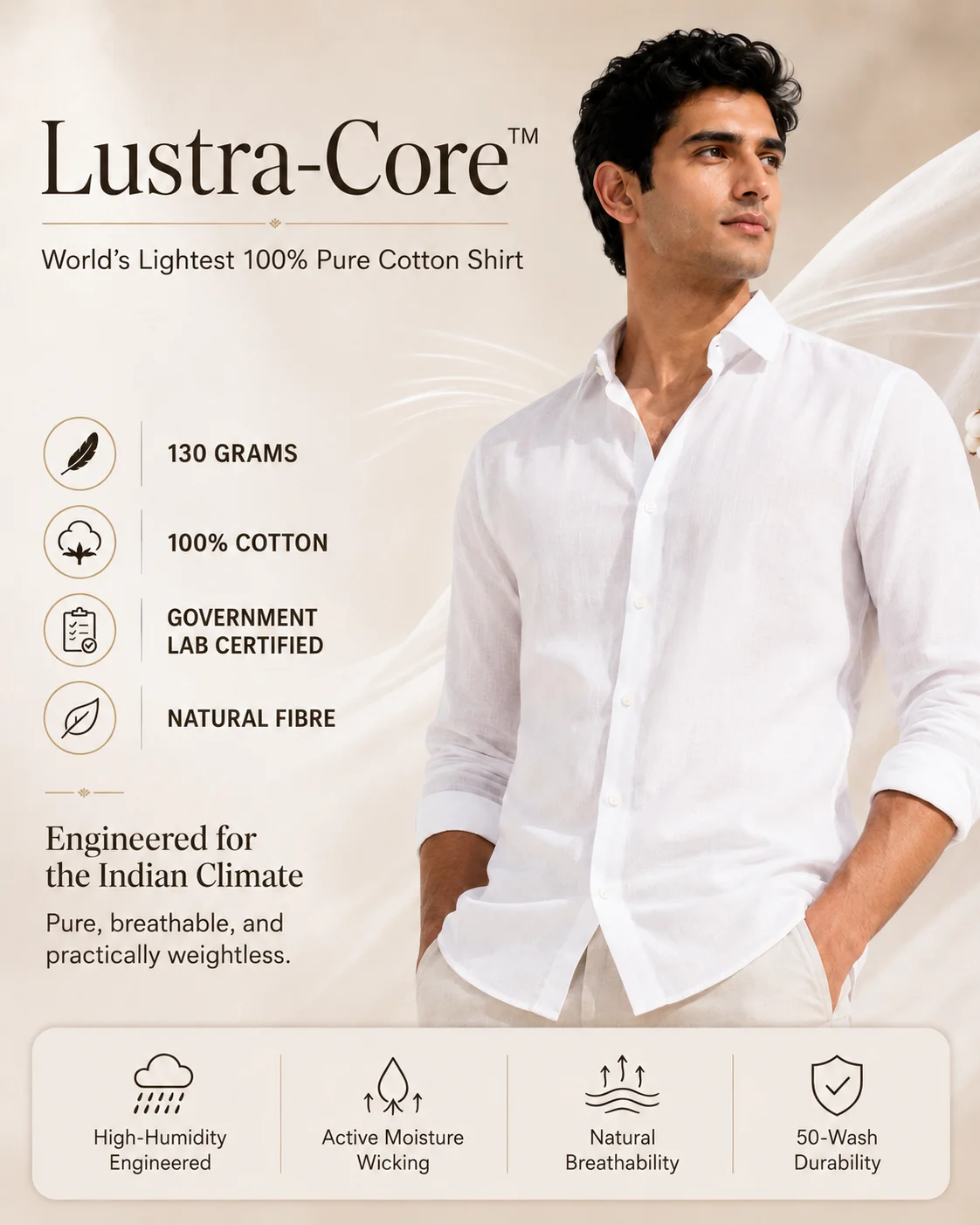
Lustra-Core™ Absolute White
Ultra-light pure cotton shirt engineered for Indian summers.
How the Unique Texture of Naturally Retting Linen Shapes Contemporary Menswear Styling – From Breathable Summer Shirts to Structured Suiting
The soft, slightly irregular grain of naturally retted linen lends itself to garments that breathe effortlessly in humid climates. A linen shirt crafted from this fiber drapes with a relaxed elegance, making it a staple for summer office wear or weekend brunches. Designers increasingly pair such shirts with tailored trousers to create a Smart‑Casual look that feels both refined and laid‑back. Brands like Pehanoge have embraced this balance, offering shirts that combine the crispness of linen with contemporary cuts – perfect for a casual yet polished vibe. Because the fiber retains moisture and releases it quickly, a linen shirt stays cool even when the temperature climbs, a quality that resonates with Indian summer wardrobes seeking comfort without sacrificing style.
Buying Guide: What to Look for When Purchasing Linen Garments – Decoding Fiber Weight, Retting Type, and Certifications
- Fiber weight: Measured in grams per square meter (GSM), lighter GSM suits breezy shirts while heavier GSM works for structured jackets.
- Retting type: Look for “water‑retted” or “dew‑retted” on the label; these indicate natural processes that preserve fiber length.
- Certifications: Labels such as GOTS (Global Organic Textile Standard) or OEKO‑Tex assure that the linen is produced sustainably and without harmful chemicals.
- Country of origin: Indian‑grown flax often carries a distinct texture due to regional climate conditions.
When shopping, feel the fabric – it should be supple yet sturdy, with a subtle sheen that hints at its natural origins.
Indian Context: The Resurgence of Traditional Retting Methods in Gujarat and Punjab and Their Blend with Modern Science
In recent years, artisans in Gujarat’s Kutch region and Punjab’s fertile plains have revived age‑old dew retting techniques, spacing bundles on sandy fields and allowing nightly mist to work its magic. At the same time, collaborations with textile research institutes are introducing controlled water‑retting tanks that reduce variability and shorten retting time. This hybrid approach preserves the tactile authenticity prized by heritage makers while meeting the consistency demanded by modern markets. The result is linen that carries the scent of monsoon winds and the precision of scientific oversight – a perfect embodiment of tradition meeting innovation.
FAQs
What is the flax retting process and why is it essential for linen production?
Retting is a natural decomposition where microbes break down the pectin binding flax fibers to the woody core, loosening them for easy extraction. Without retting, the fibers would remain tangled and unusable, making the process a prerequisite for producing clean, strong linen.
How does retting affect the strength and softness of the final fiber?
Adequate retting removes just enough pectin, preserving fiber length and integrity, which translates to a soft yet durable yarn. Over‑retting weakens fibers, while under‑retting leaves them too stiff, both compromising the final fabric’s feel.
Can retting be done environmentally without polluting water sources?
Yes, by using low‑impact water sources, recycling the water after treatment, or opting for dew retting on open fields, the process can be managed with minimal ecological footprint. Some Indian initiatives also employ bio‑filters to treat runoff.
What are the main differences between linen made from natural retting versus chemically processed flax?
Natural retting relies on microbial action, yielding a fiber with subtle irregularities, a gentle sheen, and an organic story. Chemical retting uses acids or enzymes to accelerate separation, often producing a more uniform but harsher fiber that may lack the nuanced texture valued in premium linen.