


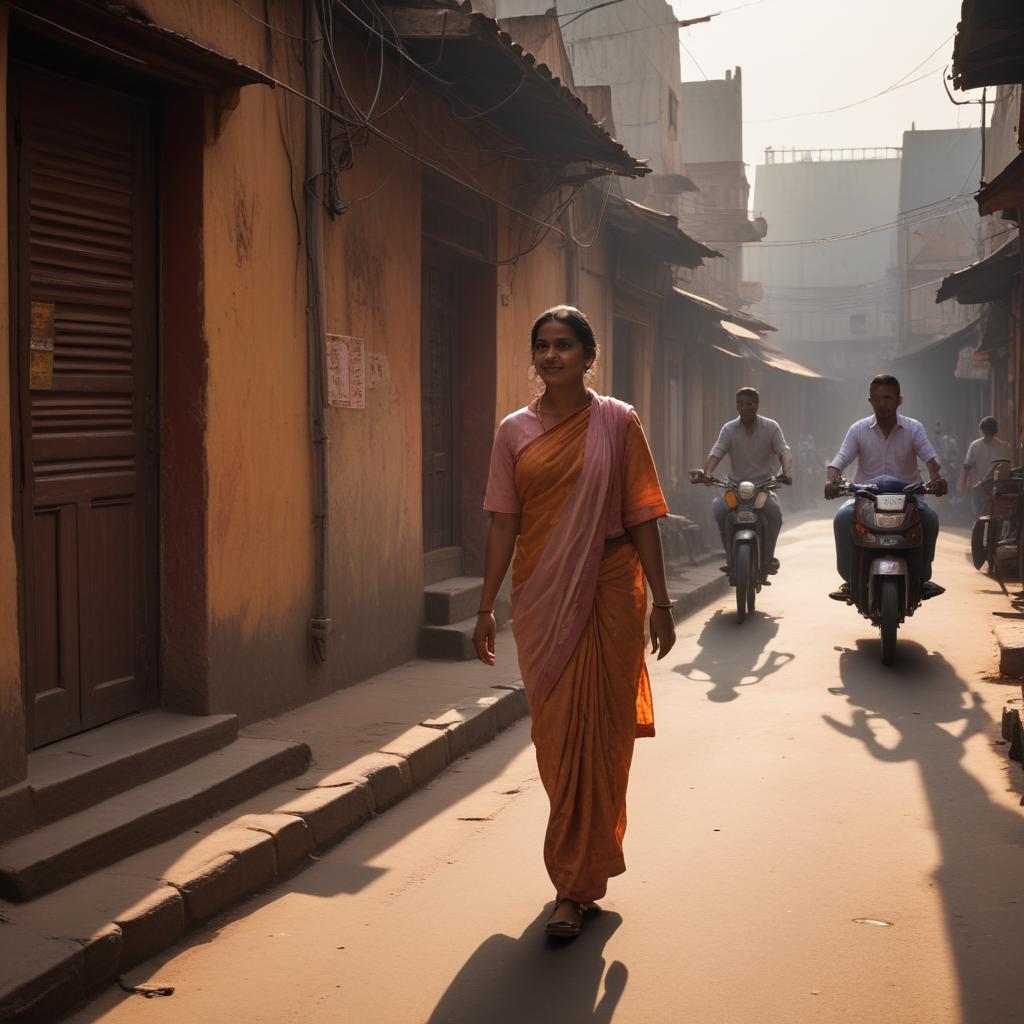
As temperatures soar and monsoons arrive, Indian wardrobes face their annual test of breathability and comfort. Among the many fabric choices, linen has emerged as a quiet revolution in menswear, offering something that cotton alone cannot: effortless coolness that actually works in our climate. Unlike the heavy cotton shirts that cling uncomfortably in humidity, linen creates its own microclimate, allowing air to circulate freely while drawing moisture away from the skin.
Humidity-Proof Fabrics in Indian Living
Indian cities present a unique challenge for menswear. From Mumbai’s relentless humidity to Delhi’s dry heat, our climate demands fabrics that can adapt without sacrificing style. Linen excels in these conditions because of its natural fiber structure. The elongated yarn creates a texture that’s inherently more breathable than tightly woven cotton or synthetic alternatives.
Recommended for You

Oxy-Linen™ | Office Blue – 60 Lea European Linen Shirt
Original price was: ₹4,999.₹3,399Current price is: ₹3,399.-
Oxy-Linen™ | Pure White – 60 Lea European Linen Shirt
Original price was: ₹4,999.₹3,399Current price is: ₹3,399. -
Essentials | WINE Enriched Cotton MANDARIN Coller Shirt
Original price was: ₹1,499.₹999Current price is: ₹999.
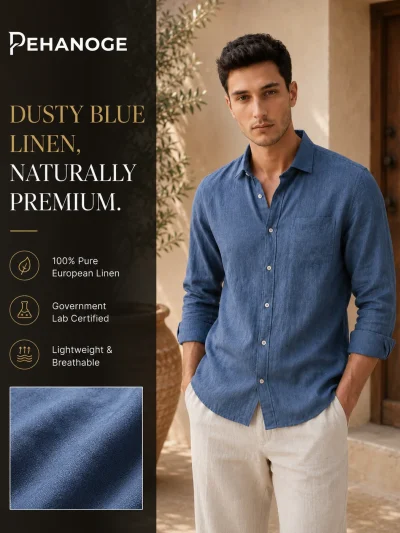


This becomes particularly evident in daily wear scenarios. A linen shirt from Pehanoge or similar brands doesn’t just feel light – it actively fights against the oppressive feeling that so many synthetic blends create. The fabric’s ability to maintain its structure while remaining cool translates into garments that look intentional even after hours in challenging conditions.
Linen’s Monsoon Advantage
Monsoon season often means abandoning fashion considerations for pure functionality, but linen defies this compromise. While water-resistant synthetics might seem logical, they trap heat and often pill or lose shape. Linen’s natural protein fiber actually responds differently to moisture – instead of becoming waterlogged, it manages dampness through evaporation.
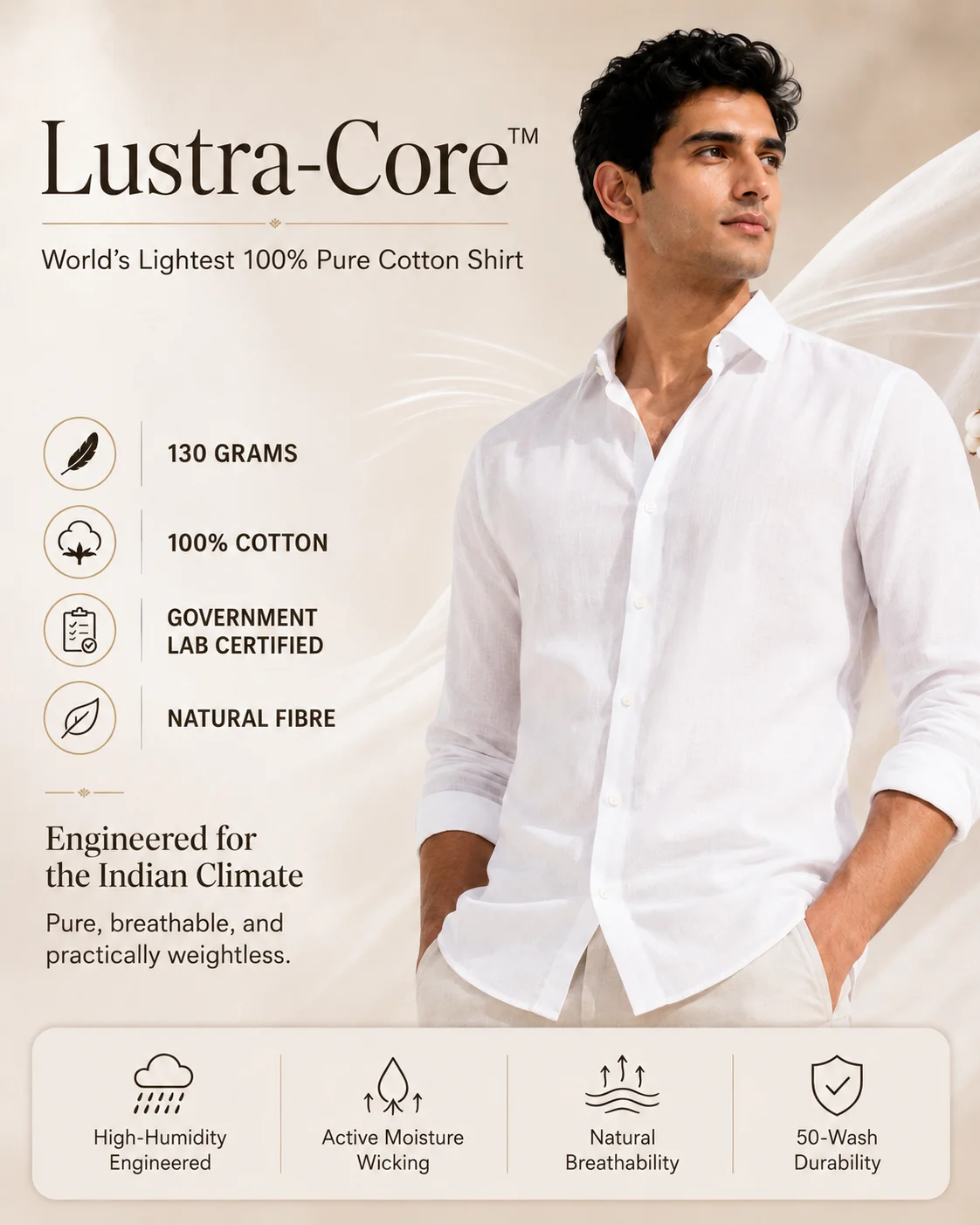
Lustra-Core™ Absolute White
Ultra-light pure cotton shirt engineered for Indian summers.
For the Indian monsoon, this means shirts and casual wear that don’t cling or develop that telltale synthetic sheen. The natural slubs and texture that define authentic linen also hide any minor water spots, making recovery from unexpected showers much more forgiving than smoother fabrics.
Sweat Resistance in Indian Heat
The science behind linen’s performance in extreme heat is straightforward: moisture management. When sweat contacts linen fibers, the natural crimp structure absorbs and distributes it evenly, allowing rapid evaporation. This differs significantly from cotton, which can hold large amounts of moisture before releasing it, or synthetics that bead and roll off without proper absorption.
For Indian summers, this translates to comfort that lasts. A linen shirt worn during a Mumbai local commute maintains its cool factor longer than cotton alternatives. The fabric’s natural antimicrobial properties also mean reduced odor development, a consideration that becomes critical in our warm, densely populated urban environments.
Cooler Alternatives for Hot Conditions
When temperatures consistently exceed 35 degrees Celsius, the choice between comfort and style becomes less binary with linen. Unlike synthetic cooling fabrics that rely on chemical treatments, linen’s cooling effect is built into its DNA. This makes it particularly suitable for the extended heat periods common across northern and central India.
Pehanoge and similar contemporary Indian brands have recognized this potential, creating linen casual wear that respects traditional cuts while embracing modern functionality. The result is formal-adjacent pieces that perform better than their cotton counterparts without looking out of place in professional settings.
Selecting Linen for Maximum Comfort
Understanding linen quality matters more in the Indian context than many realize. Lower quality linen can pill or lose shape quickly under constant wear and washing. Look for:
- Proper weight (heavier linen holds shape better in our climate)
- Natural slubbing rather than pressed smoothness
- Pre-shrunk construction for longevity
- Blends only when necessary (pure linen performs best)
Cultural Synergy Between Linen and Tradition
Linen’s relationship with Indian fashion runs deeper than recent trends. Traditional Indian garments like dhoti and lungi share linen’s emphasis on airflow and comfort. Contemporary Indian designers have embraced this connection, creating modern interpretations that honor traditional wisdom while addressing current lifestyle needs.
This cultural resonance makes linen feel less like an imported solution and more like a natural evolution of established sartorial principles.
FAQs
How does linen compare to cotton in Indian conditions?
Cotton holds moisture longer and tends to cling in humidity, while linen actively manages moisture through its fiber structure. In Indian summers, linen maintains coolness significantly longer than cotton, which often feels heavy once saturated with sweat. Linen also resists wrinkling less dramatically than many assume, especially in the relaxed aesthetics popular in Indian menswear.
Is linen suitable for monsoon wear?
Absolutely. While linen does absorb some moisture initially, it releases it quickly and doesn’t become waterlogged like synthetic alternatives. The natural texture also conceals minor water spots effectively. For Indian monsoon conditions, linen represents a practical middle ground between purely water-resistant synthetics and traditional cotton.
Can linen outperform synthetic fabrics?
In breathability and comfort, yes. Synthetics may dry faster but trap heat and often develop odors more quickly. Linen’s natural moisture management and antimicrobial properties make it superior for extended wear in Indian conditions. Additionally, linen’s biodegradability aligns with growing environmental consciousness in Indian urban centers.
Is linen eco-friendly for Indian wardrobes?
Extremely. Linen requires less water to produce than cotton and gets better with age rather than wearing out. In the Indian context, where sustainable fashion adoption is growing, linen represents a responsible choice that doesn’t compromise on performance. The durability also means fewer replacements, reducing overall wardrobe waste.