



Linen and polyester are two popular fabrics that often find themselves in a head-to-head comparison, especially when it comes to summer wear. Both have their unique characteristics, and understanding their differences can help you make an informed choice for your wardrobe. Let’s dive into a detailed comparison of these fabrics, exploring their breathability, durability, comfort, and more.
Breathability Battle: How Linen and Polyester Handle Heat
When it comes to beating the heat, breathability is a crucial factor. Linen, a natural fabric made from flax fibers, is renowned for its exceptional breathability. It allows air to circulate freely, keeping you cool and comfortable even on the hottest days. The loose weave of linen also contributes to its airy feel, making it a favorite for summer clothing.
Recommended for You

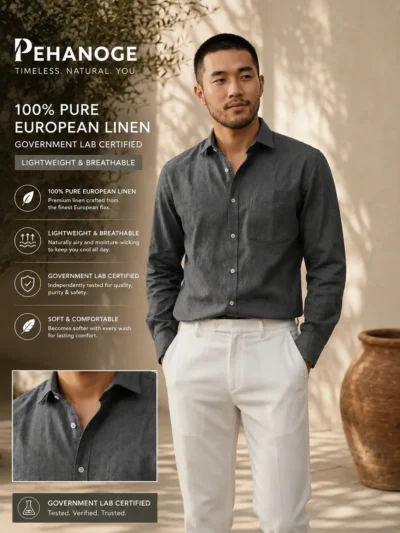
Oxy-Linen™ | Charcoal Grey – 60 Lea European Linen Shirt
Original price was: ₹4999.00.₹3399.00Current price is: ₹3399.00.-
Noble Stitch | Golden Bloom Giza Cotton Shirt
Original price was: ₹1999.00.₹1599.00Current price is: ₹1599.00. -
Giza-Silk | Sky Blue Long-Staple Giza Cotton Shirt
Original price was: ₹1499.00.₹1199.00Current price is: ₹1199.00.

On the other hand, polyester, a synthetic fabric, is not as breathable as linen. It tends to trap heat and moisture, which can make you feel sweaty and uncomfortable in hot weather. However, modern polyester blends often incorporate moisture-wicking technology to improve breathability, making them more suitable for active wear.
Durability Face-Off: Which Fabric Lasts Longer?
Durability is another important consideration when choosing between linen and polyester. Linen is a strong and durable fabric, but it can be prone to wrinkling and may require more careful handling. Over time, linen garments can develop a soft, lived-in look that many people find appealing.
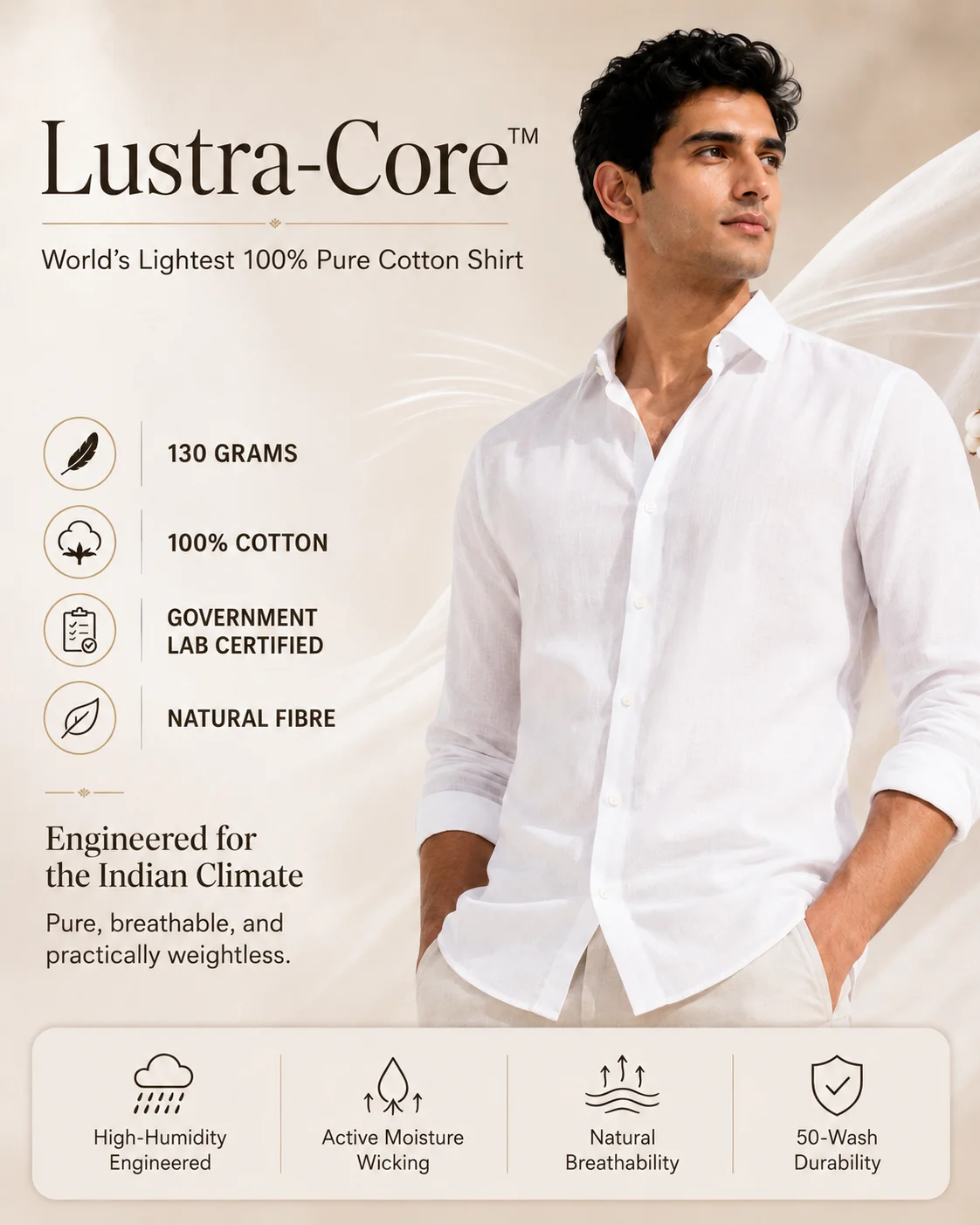
Lustra-Core™ Absolute White
Ultra-light pure cotton shirt engineered for Indian summers.
Polyester, being a synthetic fabric, is generally more durable than linen. It’s resistant to wrinkles, shrinking, and stretching, making it a low-maintenance option. Polyester garments can withstand frequent washing and wear without losing their shape or color, which is why they’re often preferred for everyday clothing.
Comfort vs. Convenience: Feel and Maintenance Compared
The feel of a fabric against your skin can significantly impact your comfort level. Linen has a unique texture that many find appealing – it’s crisp, cool, and gets softer with each wash. However, some people find linen a bit rough initially. It’s also prone to wrinkling, which can be a drawback if you prefer a crisp, pressed look.
Polyester, in contrast, has a smooth, silky feel that many find comfortable. It’s less likely to wrinkle and holds its shape well, making it a convenient choice for those who don’t want to spend time ironing. However, some people find polyester less breathable and more prone to static cling.
When it comes to maintenance, polyester is generally easier to care for. It’s machine washable, quick-drying, and doesn’t require ironing. Linen, while also machine washable, often benefits from air drying and may require ironing to look its best.
Linen vs Polyester: Cost and Value Analysis
The cost of linen and polyester garments can vary widely depending on quality and brand. Generally, linen is considered a premium fabric and tends to be more expensive than polyester. However, the higher cost of linen is often justified by its superior breathability, natural feel, and eco-friendly properties.
Polyester is typically more affordable than linen, making it an attractive option for budget-conscious shoppers. Its durability and low maintenance requirements also contribute to its value proposition. However, the lower upfront cost of polyester should be weighed against its potential environmental impact and shorter lifespan compared to linen.
Styling Tips: How to Wear Linen and Polyester
Both linen and polyester can be styled for various occasions, but they lend themselves to different looks. Linen is often associated with a relaxed, casual aesthetic. It’s perfect for beach outings, garden parties, or casual Fridays at the office. A linen shirt paired with chinos or shorts creates a laid-back yet put-together look.
Polyester, being more versatile, can be dressed up or down. It’s commonly used in formal wear, sportswear, and everyday clothing. For a smart-casual look, you might opt for a polyester-blend shirt with tailored trousers. For more active pursuits, moisture-wicking polyester t-shirts and shorts are an excellent choice.
Buying Guide: Choosing Between Linen and Polyester
When deciding between linen and polyester, consider your lifestyle, budget, and climate. If you live in a hot, humid area and prioritize breathability and natural fabrics, linen might be the better choice. It’s ideal for those who don’t mind a slightly wrinkled look and are willing to invest in higher-quality garments.
If you need low-maintenance, durable clothing that can withstand frequent wear and washing, polyester might be more suitable. It’s also a good option if you’re on a tight budget or need clothing for active pursuits.
Indian Context: Linen and Polyester in India’s Diverse Climates
In India, where climates can vary dramatically from region to region, the choice between linen and polyester becomes even more nuanced. In the humid coastal areas of the south and east, linen’s breathability makes it a popular choice. Many people in these regions prefer linen shirts and trousers for their ability to keep cool in the heat.
In the dry, hot interiors of central and western India, both fabrics have their merits. Linen remains popular for its cooling properties, but polyester’s durability and low maintenance make it a practical choice for everyday wear.
For those looking for a balance of comfort and convenience, many Indian brands now offer blended fabrics that combine the best qualities of both linen and polyester. These blends can provide the breathability of linen with the durability and wrinkle-resistance of polyester.
FAQs
Is linen better than polyester for summer wear?
Linen is generally considered better for summer wear due to its superior breathability and ability to keep you cool. However, modern polyester blends with moisture-wicking properties can also be suitable for summer, especially for active wear.
Can polyester mimic the look of linen?
While polyester can be manufactured to have a similar texture to linen, it doesn’t quite replicate the natural look and feel of real linen. Some polyester fabrics are designed to mimic linen’s appearance, but they often lack the breathability and natural texture of the real thing.
How do I care for linen vs polyester garments?
Linen garments often benefit from gentle washing and air drying to maintain their shape and texture. They may require ironing to look crisp. Polyester is more durable and can usually be machine washed and dried without special care. It’s wrinkle-resistant and doesn’t typically require ironing.
Which fabric is more eco-friendly: linen or polyester?
Linen is generally considered more eco-friendly as it’s made from natural flax fibers and is biodegradable. Polyester, being a synthetic fabric made from petroleum, has a larger environmental footprint. However, recycled polyester options are becoming more available, which can reduce its environmental impact.